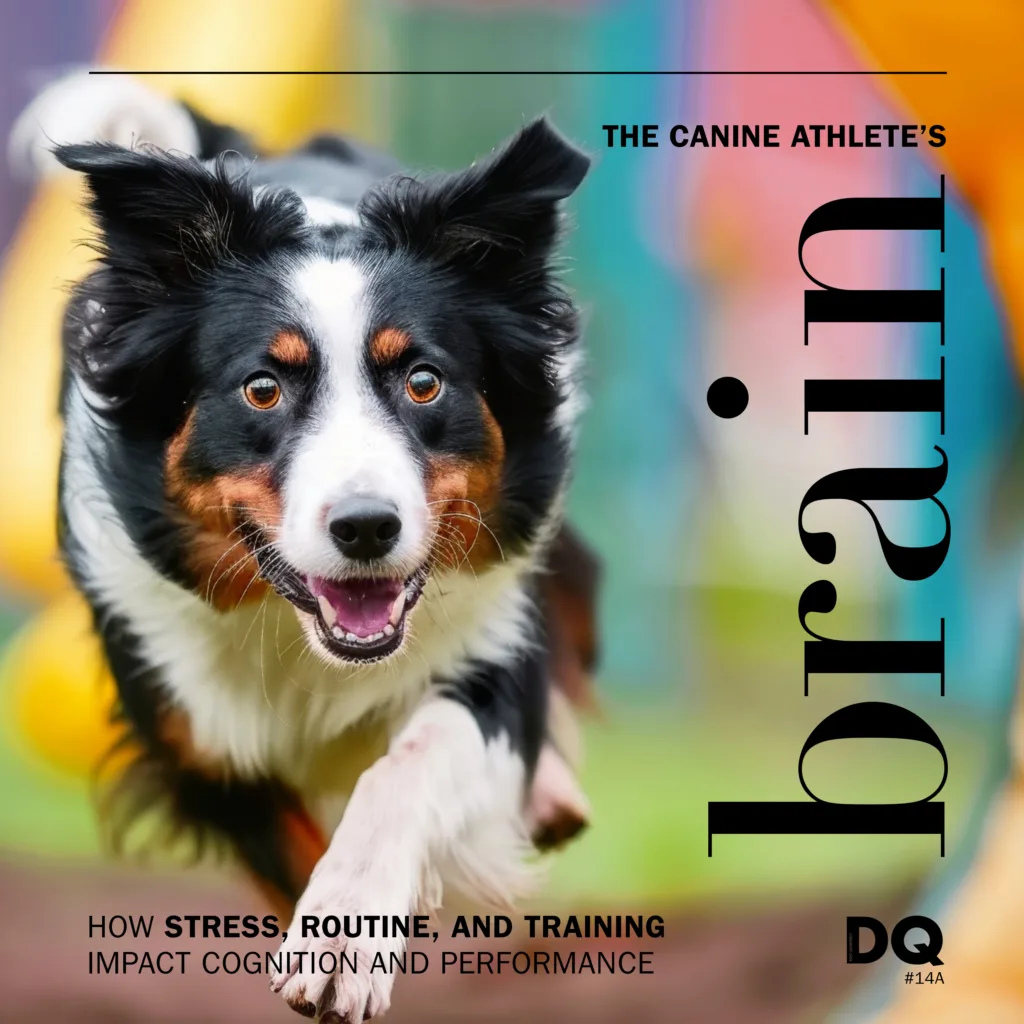
How stress, routine, and training impact cognition and performance
When we talk about canine athletes, whether agility dogs, working gundogs, flyball stars, or protection sport competitors, we tend to focus on muscles, joints, diet, and cardiovascular health. Yet, just like in human sport, the brain plays a central role in performance. From learning and memory to stress resilience and focus, the canine brain is constantly shaping how our dogs train, compete, and recover.
The stress factor
Stress is not inherently negative. In fact, moderate, short-term stress can sharpen a dog’s focus and readiness; this is the equivalent of a human athlete’s adrenaline spike before a big event. This is state is called eustress, and it primes the brain to perform. However, chronic stress results in a different picture entirely. Firstly, elevated cortisol levels over time can impair memory and learning, making it harder for dogs to retain new skills. In addition, prolonged stress reduces the brain’s neuroplasticity and its ability to adapt and form new connections. Behaviourally chronic stress may show up as reactivity, poor impulse control, or shutdown behaviours during training or competition.
In sports settings, stress often comes from unpredictability: inconsistent routines, unclear cues from the handler, or overwhelming environments. Dogs that repeatedly experience this may burn out, just as human athletes do.
The role of routine
Routine is more than convenience; it is a neurological anchor. Predictable schedules help regulate a dog’s circadian rhythms, hormone release, and cognitive expectations. Studies in both humans and animals show that regular sleep, feeding, and activity times reduce baseline stress and improve learning efficiency.
For the canine athlete, this means:
- Consistent pre-training rituals help the brain recognise it’s ‘time to work.’
- Regular sleep–wake cycles consolidate memory, which is crucial after learning new skills.
- Predictable recovery days prevent overtraining syndrome, which can affect the brain as much as the body.
Routine also gives the handler an advantage: it reduces decision fatigue for the dog, allowing more brainpower to go into performance tasks rather than constantly interpreting shifting circumstances.
Training and neuroplasticity
Training is where the brain truly shines. Every repetition of a jump sequence, weave pole, or obedience exercise strengthens neural circuits. The brain’s capacity to adapt to experience in this way, is true neuroplasticity in action.
High-quality training does more than teach skills:
- Shaping and reward-based training activate the brain’s reward pathways, releasing dopamine. This not only enhances learning but builds a positive emotional state tied to training.
- Variable reinforcement keeps dogs motivated and cognitively flexible.
- Cross-training (e.g., scentwork alongside agility) stimulates different brain regions, improving problem-solving and reducing monotony.
Conversely, harsh methods or over-repetition without reward can lead to neural inhibition, where the brain ‘shuts down’ pathways associated with learning. That’s why positive, varied, and carefully dosed training is so important for long-term cognitive health.
The emotional brain
The canine limbic system, the brain’s emotional centre, is closely linked to performance. Confidence, enthusiasm, and resilience are not just personality traits; they are neurobiological states shaped by early life, training experiences, and environment.
- Dogs trained with positive reinforcement show more optimism in cognitive bias studies, indicating healthier emotional processing.
- Fear or punishment-based systems can create long-term changes in the amygdala, leading to anxiety and reduced performance under pressure.
This means protecting the emotional brain is just as critical as conditioning the body.
Practical takeaways
- Manage stress wisely: Accept small doses as performance fuel, but guard against chronic stress by providing downtime, safe spaces, and stress-relieving outlets (like sniffing or off-leash walks).
- Build predictable routines: Stick to regular feeding, training, and resting cycles. Small rituals, like a consistent warm-up, help anchor the brain.
- Train for the brain, not just the body: Keep sessions short, positive, and varied. Celebrate problem-solving as much as physical achievement.
- Prioritise recovery: Mental fatigue is real. Give the brain as much time to recover as the muscles.
- Protect the emotional core: Nurture confidence, reward effort, and ensure your dog’s sense of safety is never compromised.
Final thoughts
The canine athlete’s brain is not just a control centre for the body; it is a living, adapting organ that shapes how dogs perceive, learn, and perform. By understanding how stress, routine, and training sculpt cognition, we not only improve results in terms of performance but also protect the long-term well-being of the animals we love.