For many reactive dogs—those that bark, lunge, or get overly excited at certain triggers—window watching can provide a unique outlet for their curiosity and energy. While it might seem counterintuitive, giving a reactive dog controlled access to the sights and sounds outside while you are present can be a valuable training tool and a way to help them manage their reactions. Let’s explore how window watching, when handled correctly, can support reactive dogs in building confidence, honing focus, and reducing reactivity.
-
Builds confidence by allowing controlled exposure

Many reactive dogs feel a heightened sense of alertness in the presence of unfamiliar sounds, sights, or people. Window watching provides a safe way to expose them to these stimuli at a distance, reducing the intensity of their reactions and helping them build tolerance to common triggers. By reducing the novelty of these triggers in a controlled way, reactive dogs can experience less stress in real-life scenarios.
– Desensitisation in a safe space: Window watching allows your dog to observe potential triggers—like other dogs, people, or passing cars—from the safety of home. This ‘protected contact’ can be especially beneficial for nervous or fearful dogs. Over time, repeatedly seeing the triggers, can reduce the novelty and anxiety associated with these stimuli.
– Controlled, predictable environment: Because your dog is at home and with you, he is less likely to feel threatened, which can help lower stress levels and encourage calmness over time, even in the presence of normal triggers.
– Empowering the dog: When dogs feel they’re in a safe, controlled environment, they’re more likely to feel empowered and less reactive. Window watching allows dogs to observe without needing to respond, which can improve their confidence and feeling of control over their environment.
-
Provides mental stimulation as well as an energy outlet

For many reactive dogs, window watching is like their own version of TV. Dogs are naturally curious animals, and watching the world outside provides them with mental stimulation that’s low-impact but highly engaging.
– Enrichment opportunity: Reactive dogs often have a high need for enrichment. Giving them a comfortable spot to watch the outside world provides variety and novelty to their day, which can help prevent boredom and associated behaviours like barking or chewing.
– Satisfying natural instincts: Reactive dogs often have a strong instinct to monitor their surroundings. A safe window seat allows them to fulfil this instinct without causing disruption.
– Channelling energy positively: Providing a designated time and place for your dog to watch the outside world can help release some excess energy, especially for dogs that need extra outlets beyond physical exercise.
-
Helps improve focus and impulse control
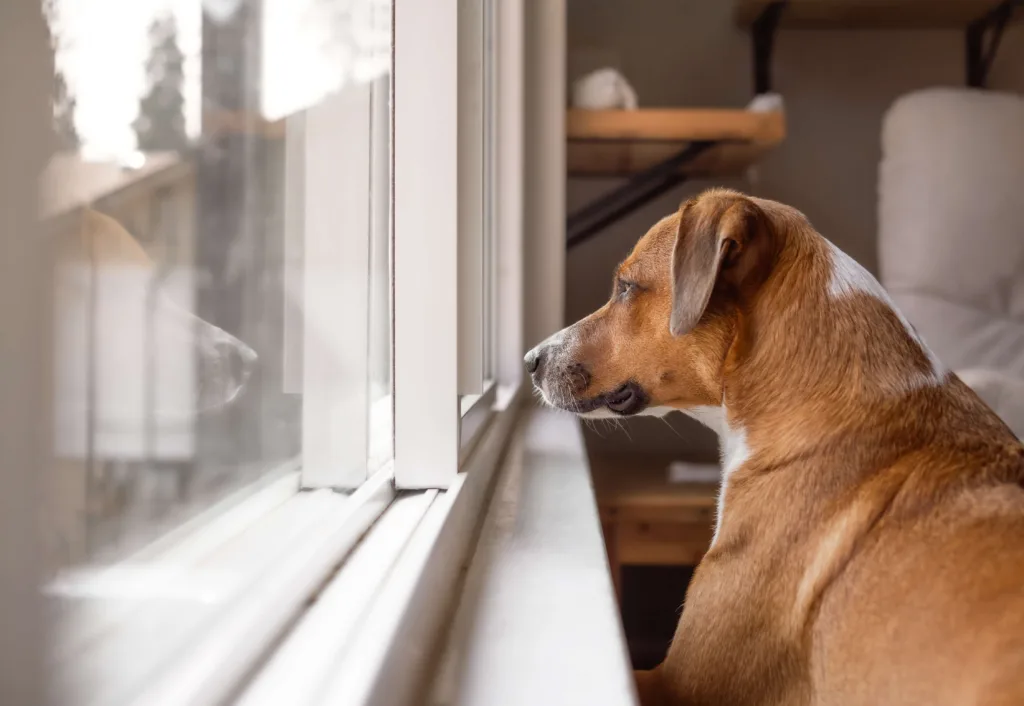
With guidance, window watching can teach your dog valuable skills, such as controlling his impulses and responding to you rather than reacting automatically to outside stimuli.
– Practice calm behaviours: Use window watching as a training opportunity to encourage calm behaviours. When your dog sees a trigger outside, you can reward him for staying calm or looking at you instead of barking or lunging at the window.
– Redirecting attention: This practice, sometimes called ‘Look at That’ training, helps your dog learn to look at a trigger and then return his focus to you for a reward. Over time, this method can help reactive dogs maintain better control when faced with triggers, even outside the house.
Tips for managing window watching with a reactive dog
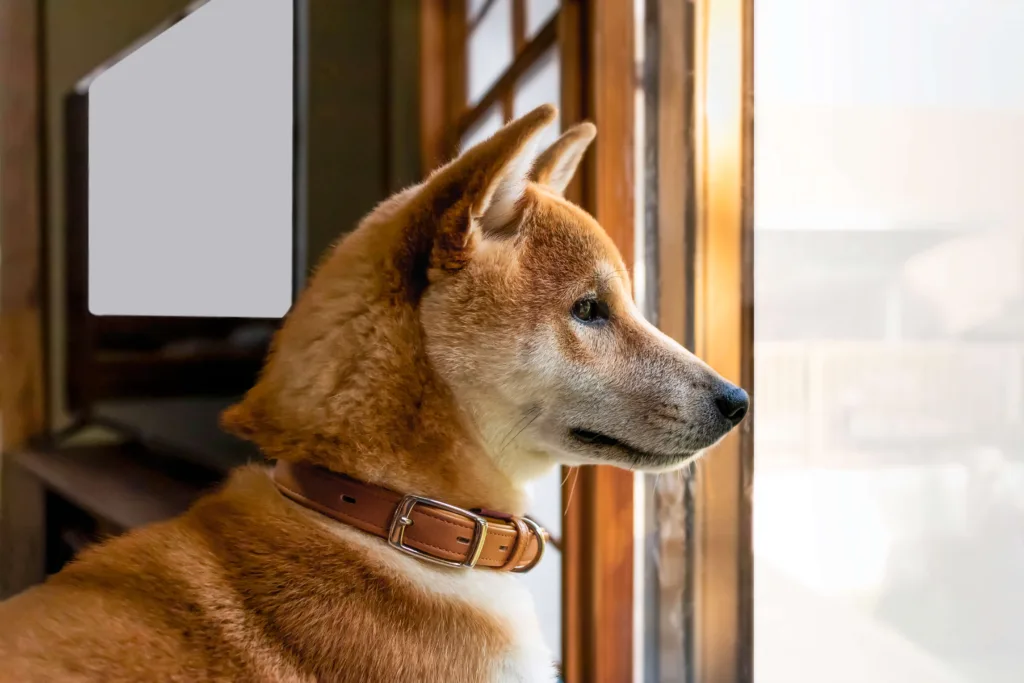
While window watching can be beneficial, it’s essential to set boundaries and use techniques that promote calm behaviour:
– Designate a window-watching spot: Choose a single window with a comfortable perch for your dog. This will help him understand that window-watching happens only in a particular space, reinforcing his sense of control over their environment.
– Practice quiet commands: If your dog starts to bark or growl, gently guide him to sit or lie down and reward him for being calm. Over time, this will teach him to look without reacting.
– Limit overstimulation: If your dog becomes too excitable, it may be helpful to limit window-watching time to certain periods of the day or to pull the shades when needed. Keeping window-watching short and structured can prevent it from becoming an overstimulating activity.
Final thoughts
Window watching can be a powerful tool for helping reactive dogs build confidence, learn impulse control, and become more familiar with everyday triggers. By offering this controlled environment, you’re empowering your dog to be curious and calm, skills that ultimately benefit him both at home and in the outside world.