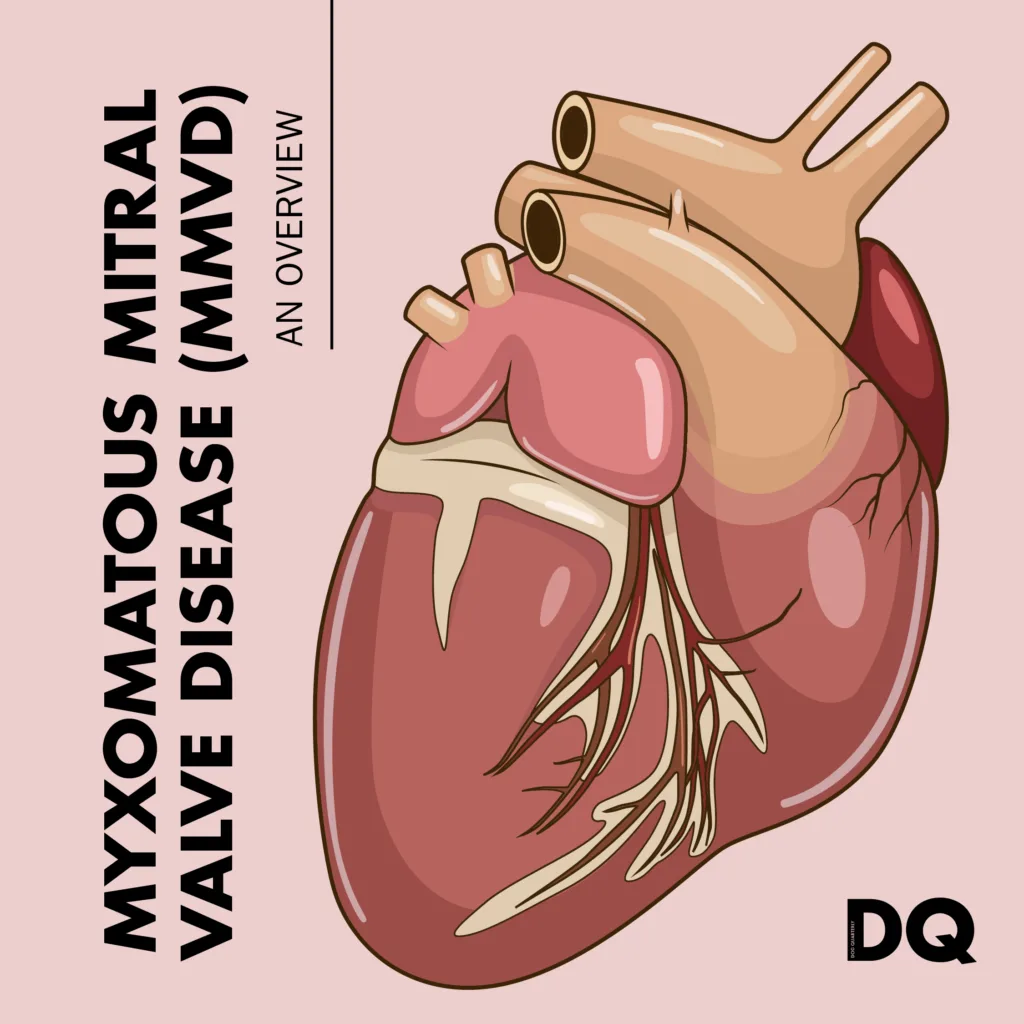
Myxomatous Mitral Valve Disease (MMVD) is a common degenerative heart condition in dogs, especially in small to medium-sized breeds. It affects the mitral valve, one of the valves in the heart responsible for ensuring blood flows in the correct direction.
What happens in MMVD?
The disease involves the gradual thickening and weakening of the mitral valve’s leaflets, which become deformed and can no longer close properly. This causes blood to leak backwards (regurgitation) into the left atrium when the heart pumps. Over time, this regurgitation can lead to:
- Increased pressure in the heart: The heart has to work harder to compensate, leading to enlargement of the left atrium and left ventricle.
- Fluid accumulation: As the condition progresses, it can result in congestive heart failure, with fluid accumulating in the lungs (pulmonary oedema).
Who is affected?
– Breeds: Common in small and toy breeds like Cavalier King Charles Spaniels, Dachshunds, Chihuahuas, and Poodles.
– Age: Most cases develop in middle-aged to older dogs.
– Gender: Both males and females are affected, though some breeds may show a slight predisposition in one gender.

Symptoms of MMVD
In the early stages, MMVD may not cause any noticeable symptoms. As the disease progresses, signs can include:
– A heart murmur detected during routine veterinary exams.
– Coughing, particularly at night or after exercise.
– Difficulty breathing (dyspnoea).
– Reduced stamina or exercise intolerance.
– Rapid or irregular heartbeat.
– Collapse or fainting episodes in severe cases.
Diagnosis
MMVD is often suspected when a veterinarian hears a characteristic heart murmur during auscultation. To confirm the diagnosis and determine its severity, additional tests may be performed:
– Echocardiography (ultrasound of the heart): To evaluate valve function, heart size, and regurgitation severity.
– Chest X-rays: To check for heart enlargement or fluid in the lungs.
– Electrocardiography (ECG): To detect irregular heart rhythms.
– Blood tests: Biomarkers like NT-proBNP can help assess heart strain.
Latest research
The study aimed to develop a machine-learning model to analyse heart sounds from electronic stethoscopes to identify heart murmurs and stage MMVD. The purpose of this was to address variability in veterinary interpretation of murmurs and reduce the need for costly diagnostics like echocardiography.
The researchers collected a large dataset from 756 dogs, both healthy and those with various heart conditions. Dogs then underwent complete clinical and echocardiographic exams by specialists to determine murmur intensity and MMVD stage. A machine-learning model, initially developed for humans, was fine-tuned using the dog heart sound data to classify murmur intensity and detect MMVD stages.
The results showed that the algorithm successfully detected murmurs with a sensitivity of 87.9% and specificity of 81.7%. It accurately matched expert cardiologist murmur grades in 57% of cases and was within one grade in 95% of cases.
Ultimately, the model showed potential in detecting common cardiac diseases, such as MMVD, pulmonic stenosis, and aortic stenosis.
The study’s findings suggest that machine learning can be an effective tool for improving heart murmur detection and classification in conditions like MMVD, ultimately aiding in better management of cardiac diseases in dogs.
Reference:
Andrew McDonald et al. ‘A machine learning algorithm to grade canine heart murmurs and stage preclinical myxomatous mitral valve disease.’ Journal of Veterinary Internal Medicine (2024). DOI: 10.1111/jvim.17224

Treatment
There is no cure for MMVD, but treatment aims to manage symptoms and slow disease progression:
- Medications:
– Pimobendan: Improves heart muscle function and delays the onset of heart failure in dogs with moderate to severe MMVD.
– ACE Inhibitors: Reduce blood pressure and ease the heart’s workload.
– Diuretics: Help remove excess fluid from the lungs in cases of heart failure.
- Lifestyle adjustments:
– Regular, moderate exercise.
– Maintaining a healthy weight to reduce the strain on the heart.
- Monitoring: Regular check-ups to adjust treatment as needed.
Prognosis
Many dogs with MMVD live for years with proper management, especially when diagnosed and treated in the early stages. However, in advanced cases, complications like congestive heart failure can significantly impact quality of life and longevity.
Final thoughts
MMVD is a progressive condition, but early detection and tailored care can significantly improve a dog’s quality of life. Regular veterinary check-ups are essential for breeds prone to this disease.