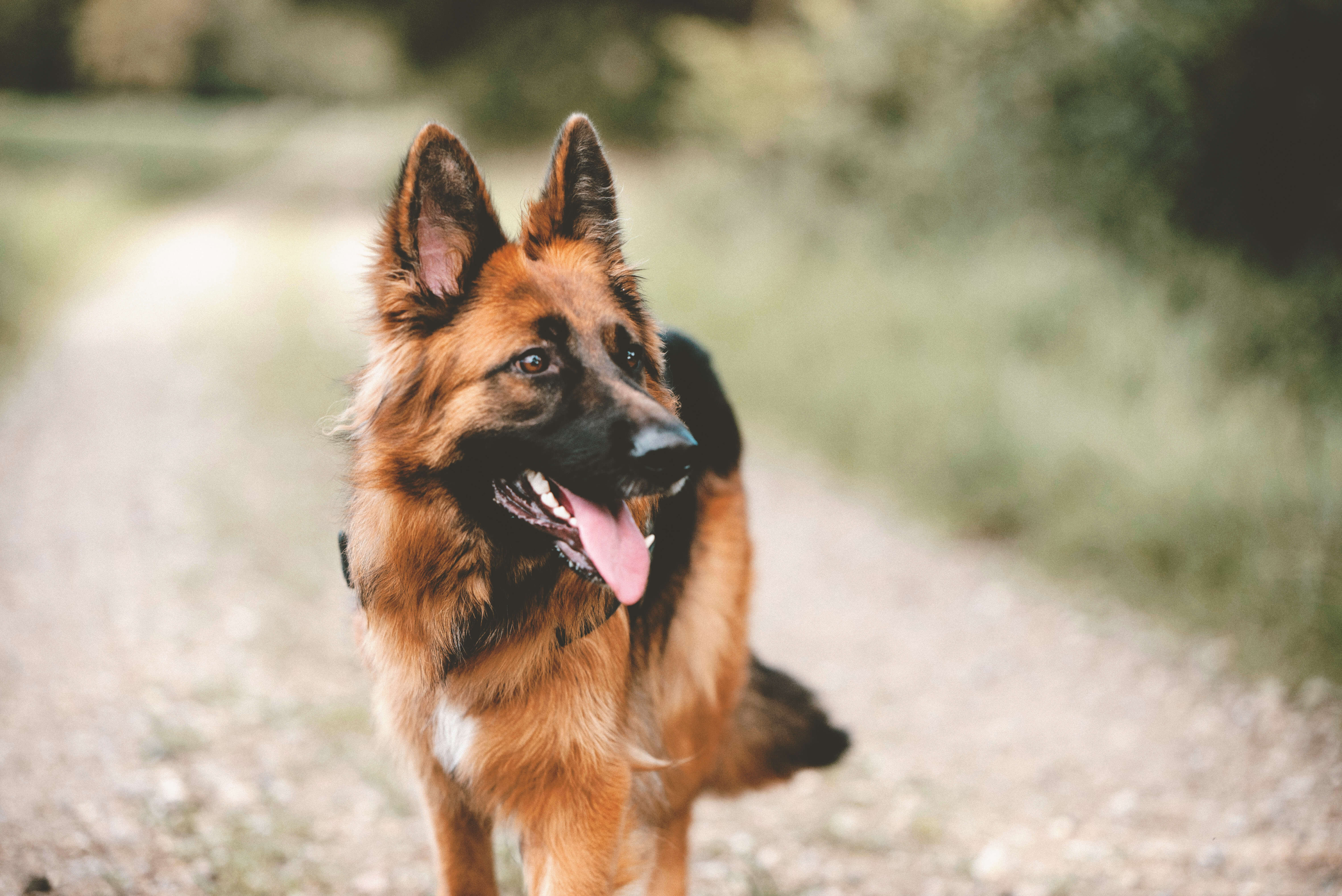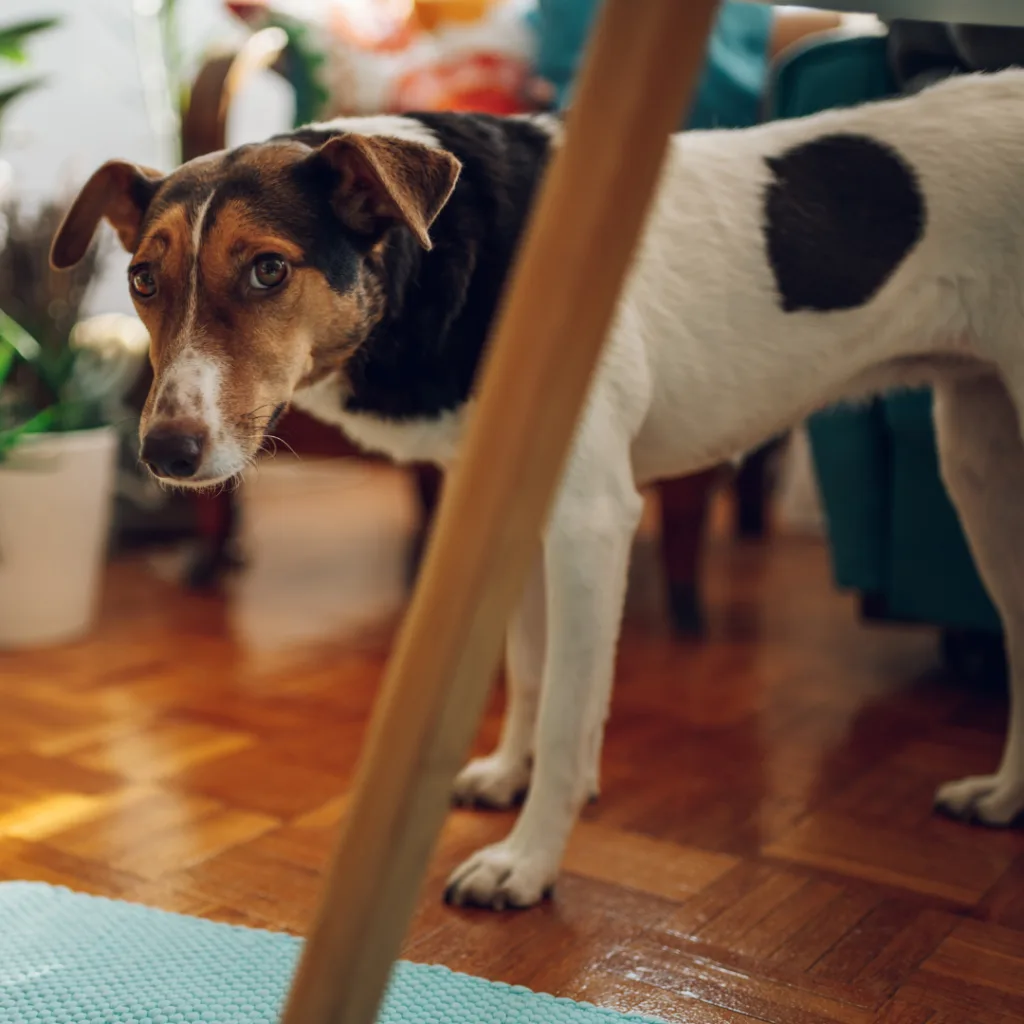
You come home, find the bin tipped over, and there is your dog: ears flat, head low, eyes sliding away from yours. It looks exactly like guilt. The research says it almost certainly isn’t.
That posture, ears back, head lowered, gaze averted, tail tucked, is an appeasement response. It is a dog reading your body language and tone and trying to defuse tension. In a well-known study, the behavioural scientist Alexandra Horowitz found that dogs gave this ‘guilty’ look in response to their owner’s manner, not to anything they had actually done. Dogs scolded by owners who only believed their dog had misbehaved looked just as guilty as dogs who genuinely had. The look tracked the human’s reaction, not the dog’s conscience.
This matters for more than curiosity. Telling a dog off after the event, when you discover the mess, teaches it almost nothing useful, because it cannot connect a scolding now to something it did hours ago. What it learns instead is that your return is sometimes frightening. The cowering that follows is then misread as proof that ‘he knows he did wrong,’ which encourages still more telling off, which raises the dog’s anxiety further.
The way forward is to set the dog up to succeed: manage the environment so the unwanted behaviour cannot happen, reward the behaviour you do want, and deal with mistakes as they occur rather than afterwards.
One thing worth flagging: a dog that regularly destroys things or toilets indoors only when left alone may not be bored or naughty at all. That pattern often points to separation anxiety, which is a genuine welfare problem, and a qualified behaviourist can help address it properly.