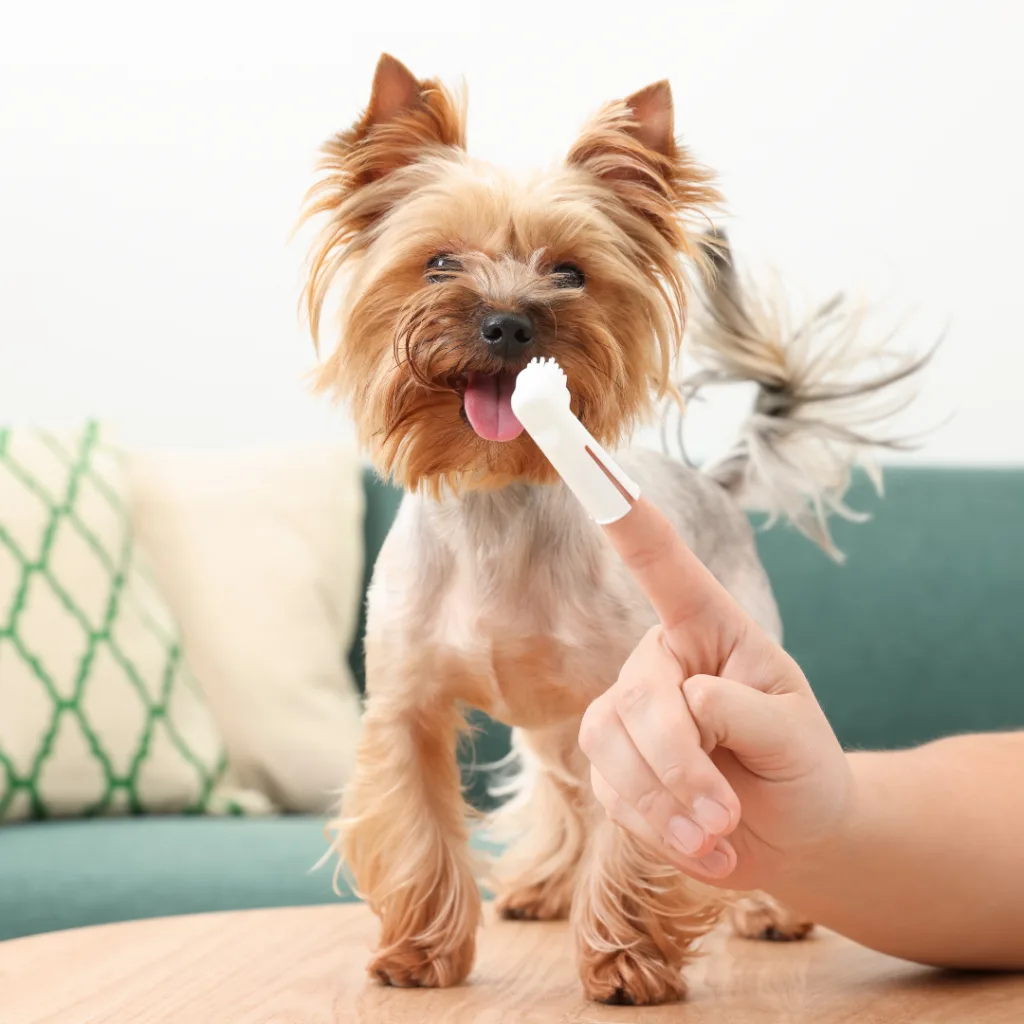
Many of us have been guilty of treating ‘doggy breath’ as a normal part of life with a dog. It is not. Persistent bad breath is usually the first sign of dental disease, which affects the majority of dogs by the age of three.
The smell comes from bacteria. Plaque builds up, hardens into tartar, and inflames the gums. Left alone, this progresses to periodontal disease, which is painful and slowly destroys the tissue and bone holding the teeth in place.
The trouble is that dogs hide oral pain remarkably well. They carry on eating because the alternative is going hungry, so most owners notice nothing until the disease is advanced. And it is not only a problem in the mouth. Bacteria from diseased gums can enter the bloodstream, and dental disease has been linked to extra strain on the heart, liver and kidneys.
What to watch for:
- Bad breath that does not go away
- Yellow or brown tartar along the gum line
- Red, swollen or bleeding gums
- Dropping food, chewing on one side, or pawing at the mouth
Daily tooth brushing with a dog specific toothpaste is the gold standard. NOTE: Never use human toothpaste, as ingredients such as xylitol and fluoride are toxic to dogs. Toothbrushing is not always popular with dogs so build the habit up slowly so it stays pleasant. Dental chews and the right diet can help, but they do not replace brushing.
If tartar has already built up, a professional scale and polish under anaesthetic is often the only way to deal with it, and your vet can assess whether that is needed. Even if you don’t see any visible issues, an annual dental check is the simplest way to catch problems while they are still small.