In much of the world, rabies vaccination is a travel-document formality, but here, in South Africa, the disease is endemic, almost always fatal, and vaccination is required by law.
Rabies sits in an odd blind spot for many South African owners. We know the word, we half-know it is serious, and we tend to assume vaccination is just a box the vet ticks at the annual visit. What gets lost is how genuinely different our situation is from the Northern Hemisphere content that fills most pet websites. In the United Kingdom, rabies has been absent from the domestic animal population for decades, and dogs are vaccinated primarily to allow them to travel. In South Africa, the picture is reversed.
Rabies is endemic here. The National Institute for Communicable Diseases records, on average, around ten laboratory-confirmed human deaths from rabies each year (NICD, National Guidelines for the Prevention of Rabies in Humans), and almost every one of those deaths traces back to a bite from an unvaccinated dog. Globally, most human rabies cases are attributed to dogs, with the large majority of deaths occurring in Africa and Asia (SAVC, DALRRD). The disease is effectively one hundred per cent fatal once symptoms appear, in animals and people alike, and almost one hundred per cent preventable by vaccination. There is no middle ground and devastatingly, no treatment to fall back on.
What the law actually requires
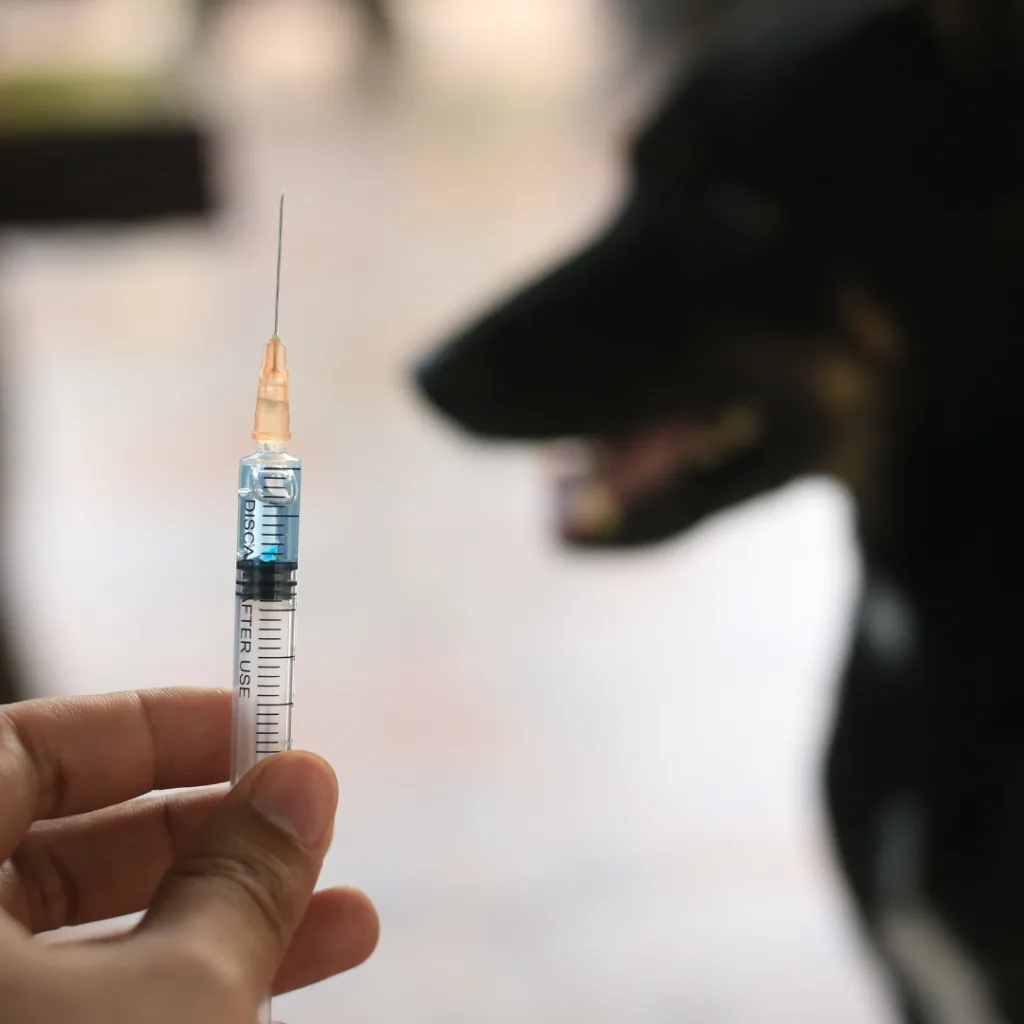
This is where local information matters more than imported advice. Rabies vaccination is not optional in South Africa. It is a legal requirement under national animal-health regulations, and rabies is a notifiable disease, meaning suspected cases must be reported to state veterinary services. The standard protocol, reflected in the South African vaccination guidelines, is a first vaccination from around three months of age, a booster within the first year, and revaccination thereafter (SAVA, Dog and Cat Vaccination Guidelines for South Africa).
The frequency of those boosters is worth being honest about, because it is a point of real nuance. The duration-of-immunity science behind modern rabies vaccines supports protection lasting around three years, and some guidelines reflect a three-yearly schedule. South African law and practice, however, frequently require annual revaccination, and the position of the Department of Agriculture is that animals should be vaccinated at least every three years, but annually in high-risk areas (DALRRD, via SAVC). For most owners the practical answer is simple: follow what your vet and local authority require, which in much of the country means every year, and keep the certificate. That certificate is not bureaucratic clutter; it is what protects your dog from being treated as a rabies risk if he is ever involved in a bite incident.
Why it matters beyond your own garden
It is tempting to reason that an indoor or well-fenced suburban dog is not at risk. The flaw in that logic is that rabies in South Africa is maintained in cycles that move between domestic dogs and wildlife, including black-backed jackal and mongoose (NICD). Spill-over into suburban and peri-urban areas does happen, and Gauteng has recorded cases on its rural fringes. Vaccination is not only individual protection. It is the single intervention that stops the disease re-establishing in the domestic dog population, which is why mass dog vaccination, not human treatment, is what actually eliminates rabies in a region.
The owner’s checklist
• Confirm your dog’s first rabies vaccine was given from around three months of age.
• Keep boosters current to whatever interval your vet and municipality require, often annual.
• Store the vaccination certificate somewhere you can find it quickly.
• Report any contact between your dog and a stray or wild animal to your vet promptly.
Sources for this article
NICD, National Guidelines for the Prevention of Rabies in Humans, South Africa.
SAVA, Dog and Cat Vaccination Guidelines for South Africa (2019).
SAVC and DALRRD, World Rabies Day statements on vaccination frequency.