The German Shepherd, renowned for its courage, loyalty, and guarding instincts, stands as one of the most popular and recognisable breeds of dog worldwide. Originating from Germany in the late 19th century, these dogs were initially bred for herding sheep but quickly became a favourite in various roles due to their intelligence, strength, and adaptability.
History
Developed by Max von Stephanitz, who is often credited as the father of the breed, the German Shepherd was designed to be the ultimate herding dog. Stephanitz emphasised utility and intelligence in his breeding program, which led to a versatile and capable breed that excelled far beyond the realm of herding. The breed was introduced to the United States in the early 20th century and rapidly gained popularity, particularly after World War I, thanks to returning soldiers who witnessed the breed’s abilities first-hand.
The remarkable roles of German Shepherds during World War I
The breed’s involvement in the war highlighted its potential beyond traditional herding tasks, leading to its recognition and adoption in various roles across different sectors. Here are some of the key functions German Shepherds served in World War I:
- Message delivery: German Shepherds were trained to deliver messages between groups on the battlefield. Their speed and ability to navigate through dangerous and complex environments made them reliable couriers, able to reach destinations that were inaccessible or too risky for human soldiers.
- Sentry duty: The dogs were used as sentries or guards at military sites. Their acute senses, particularly their ability to hear and smell over great distances, enabled them to detect enemy movements and alert soldiers to potential threats, often before they were visible.
- Search and Rescue: These dogs were used to locate wounded soldiers on battlefields. They could navigate through bombed-out areas and trenches to find and aid injured personnel, proving invaluable in saving lives by speeding up medical assistance.
- Carrying supplies: German Shepherds were also used to carry supplies, such as medical kits or ammunition, to front lines during combat, often in situations where human movement would draw too much attention.
- Moral support: Beyond their physical contributions, German Shepherds served as companions and provided emotional support to troops, boosting morale in the harsh conditions of trench warfare.
The effectiveness of German Shepherds in these roles during World War I significantly raised their profile and led to their increased use in police and military work in the post-war years. Their heroic contributions during the war also helped cement their reputation as capable and dependable working dogs.
Physical characteristics
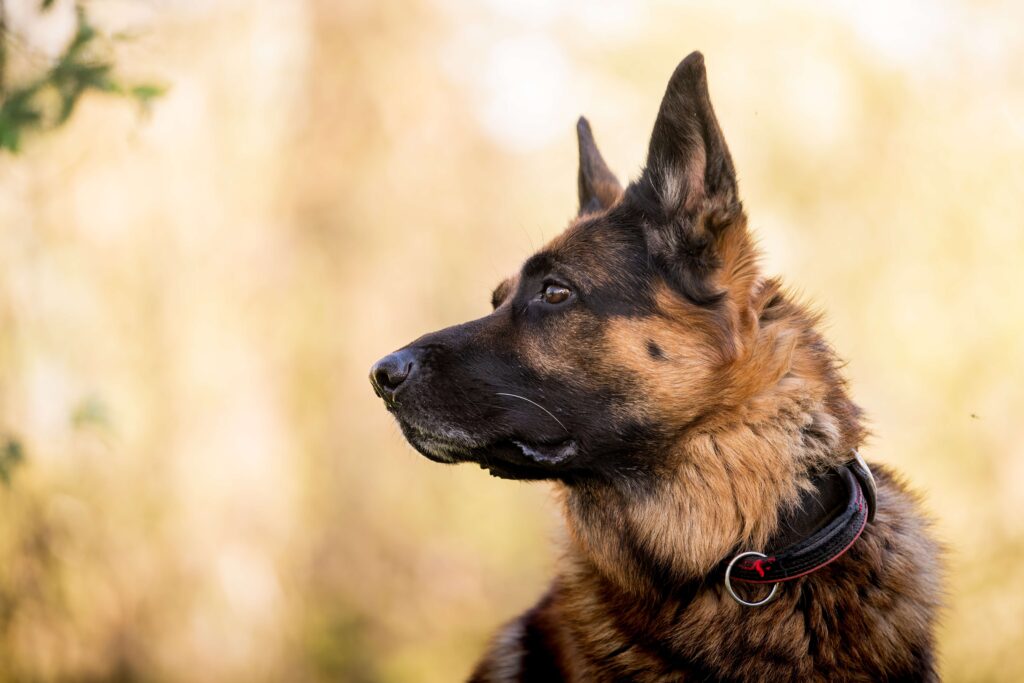
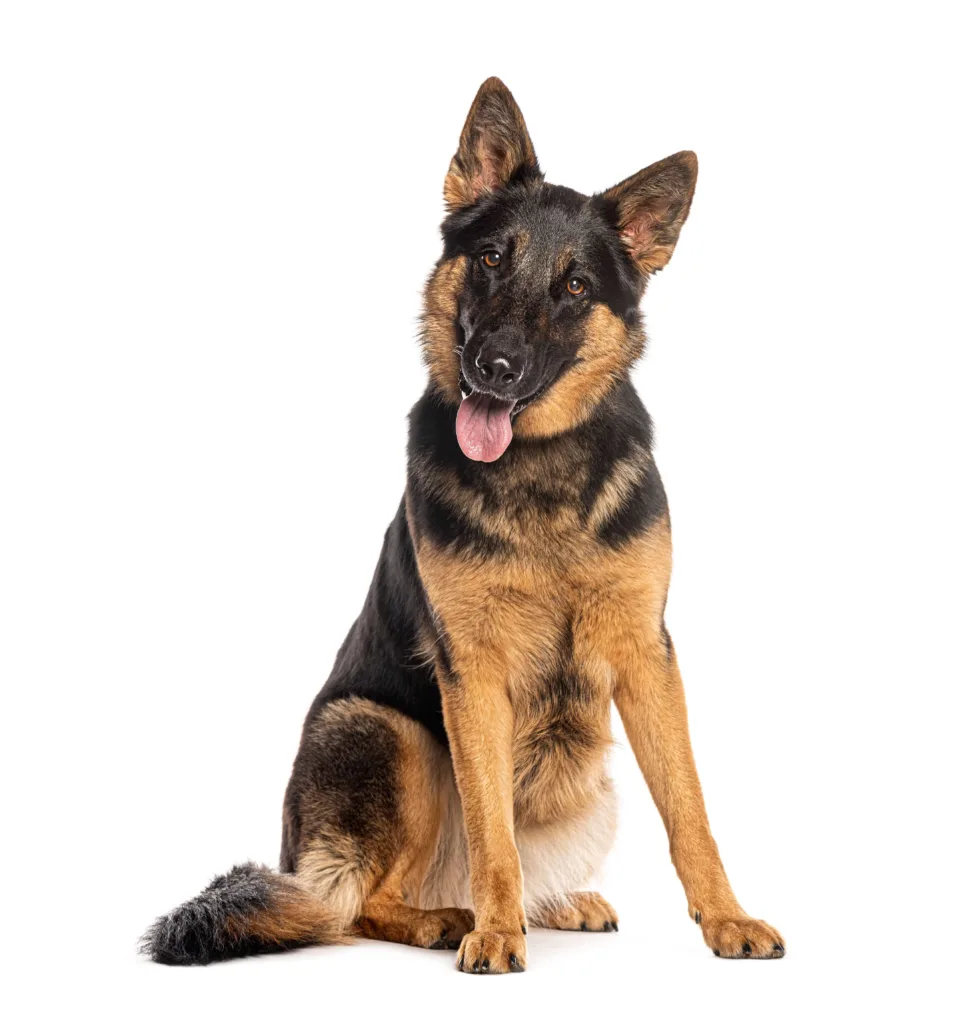
German Shepherds are large dogs, typically weighing between 22-40 kg, with males generally larger than females. They possess a noble, elongated, slightly wedge-shaped head with keen, almond-shaped eyes that convey a look of intelligence and alertness. Their ears are large and stand erect when they are alert. The breed features a double coat, which can be either medium or long, with colours ranging from black and tan to sable or all black.
What is the difference between a German Shepherd and an Alsation?
The terms ‘German Shepherd’ and ‘Alsatian’ refer to the same breed of dog. The difference in the names stems from historical and geopolitical influences rather than differences in the breed itself.
Background
– German Shepherd: This breed was originally developed in Germany in the late 19th century by Max von Stephanitz, who wanted to create an ideal working dog. The breed quickly became popular in Germany and then worldwide for its intelligence, strength, and versatility.
– Alsatian: During and after World War I, anti-German sentiment was strong in many countries, including Britain and parts of the Allied nations. To avoid the negative connotations associated with the word ‘German,’ the UK began referring to the German Shepherd as the ‘Alsatian Wolf Dog,’ after the Alsace region on the France-Germany border. Over time, the ‘Wolf Dog’ part was dropped, and the breed was simply called ‘Alsatian.’
Modern usage
In 1977, the breed’s name was officially changed back to German Shepherd in the UK, aligning with international naming conventions. However, some people in the UK and other parts of the world might still use the term ‘Alsatian.’
In summary, there is no difference between a German Shepherd and an Alsatian; they are the same breed with different names due to historical reasons.
Temperament and personality
This breed is best known for its confidence, fearlessness, and loyalty. German Shepherds are fiercely protective of their families and can be wary of strangers, making them excellent guard dogs. However, they are also known for their kind and loving nature, especially towards children in their family. They are eager to please and highly trainable, thriving on purposeful activity and mental stimulation.
Famous German Shepherds
German Shepherds have gained fame in various fields, from entertainment to military service. Here are some of the most famous German Shepherds:
- Rin Tin Tin: Perhaps the most famous German Shepherd, Rin Tin Tin was rescued from a World War I battlefield by an American soldier, Lee Duncan. He went on to star in many films and is credited with popularising the breed in America. His legacy continues to be celebrated in film and television.
- Strongheart: Another early canine film star, Strongheart starred in several movies and helped establish the German Shepherd as a charismatic and intelligent breed onscreen.
- Chips: A decorated war hero, Chips served as a sentry dog for the U.S. Army during World War II. He is known for his heroic actions during the invasion of Sicily, where he helped capture an enemy machine-gun nest. He was awarded the Silver Star and Purple Heart, which were later revoked due to policy against awarding military decorations to animals.
- Appollo: Serving with the K-9 unit of the New York Police Department, Appollo was one of the first search and rescue dogs to arrive at the World Trade Centre site on September 11, 2001. For his bravery, he received the Dickin Medal, which is the highest award for valour an animal can receive in military conflict.
- Capitan: Known for his incredible loyalty, Capitan is a German Shepherd who spent six years guarding his owner’s grave in Argentina. His story is a touching example of the breed’s loyalty and emotional depth.
These German Shepherds have not only demonstrated the capabilities and character of the breed but also have endeared themselves to people around the world through their remarkable stories of bravery, loyalty, and charm.
Training and exercise
German Shepherds require regular exercise and mental engagement to remain healthy and happy. They excel in various canine sports, including agility, tracking, and obedience, and are famously used as police and military dogs due to their trainable nature and physical prowess. Early socialisation and consistent, positive training sessions are crucial for raising a well-adjusted dog.
Health considerations
Generally healthy, German Shepherds can be prone to certain genetic conditions such as hip and elbow dysplasia, which are common in larger breeds. Regular vet check-ups, a well-balanced diet, and maintaining an appropriate weight can help manage these risks. They typically have a lifespan of about 10 to 14 years.
Grooming needs
Their double coat sheds year-round and more heavily during the spring and autumn. Regular brushing, at least a few times a week, is necessary to help manage shedding and keep their coat healthy. They also require basic grooming routines like nail trimming, ear cleaning, and dental care to prevent common issues.
Role in society
Beyond their role as companions, German Shepherds serve in various prestigious capacities. They are prevalent in work as service dogs, in search and rescue missions, and in military and police roles worldwide. Their intelligence and training ability make them an irreplaceable asset in these fields.
Conclusion
The German Shepherd is a breed of noble character and versatility. Ideal for active households that can accommodate their exercise and mental stimulation needs, they are not just pets but lifelong companions and protectors. Their enduring loyalty and courage make them a beloved breed for all who have the pleasure of their company. Whether as a family pet, a working dog, or both, the German Shepherd excels in every role it is given, truly embodying the title of ‘man’s best friend.’