What a phase two study in India found and what comes next
Researchers in India tested whether dogs could detect multiple cancers from breath samples with accuracy approaching clinical laboratory tests. The results from a 1502 person study are promising but preliminary. This is the kind of emerging work that positions dogs as potential biosensors for the future, but several important caveats apply.
The promise of cancer detection dogs has circulated in research circles for years, mostly in small studies from high-income countries. A new phase two study from six hospitals in Karnataka, India, tested the idea at scale, asking whether trained detection dogs combined with mathematical modelling could reliably identify multiple cancer types from breath samples. The answer was yes, but with important context around how the study was funded and what the findings mean.
The study and its results
Researchers enrolled 3275 participants across two groups: 1773 for training the system and 1502 for testing it. The test cohort included 283 people with confirmed cancers across seven cancer types and 1219 controls (healthy people, people with non-cancer chronic disease, and people with benign biopsy results). Breath was collected on cotton masks, stored at minus 20 degrees Celsius, and presented to trained detection dogs. Individual dog responses were integrated using Bayesian fusion modeling that incorporated historical dog performance and individual level variables.
The results: 91.5 percent sensitivity and 90.8 percent specificity, with an area under the ROC curve of 0.962. Early stage cancers (stage one and two) showed 89.6 percent sensitivity. The accuracy remained relatively consistent across major cancer types.
The context
This is unreviewed research funded by Dognosis India Pvt. Ltd., the company that owns the detection system being tested, which creates a potential conflict of interest. The preprint explicitly states it “should not be used to guide clinical practice,” which means this is preliminary work awaiting peer review and external validation.
That said, the results are genuinely interesting. If a system combining trained dogs with mathematical modelling can achieve 91 per cent sensitivity for cancer detection from breath samples in an Indian population where screening coverage is low, that’s a potentially valuable tool for early detection triage, particularly in low- and middle-income countries where blood-based multi-cancer early detection tests are too expensive.
What happens next
The research is moving toward prospective screening, meaning testing the system on people who don’t already have a cancer diagnosis to see if it can identify cases in a real-world screening context. That’s the next test this technology needs to pass before anyone considers using it clinically.
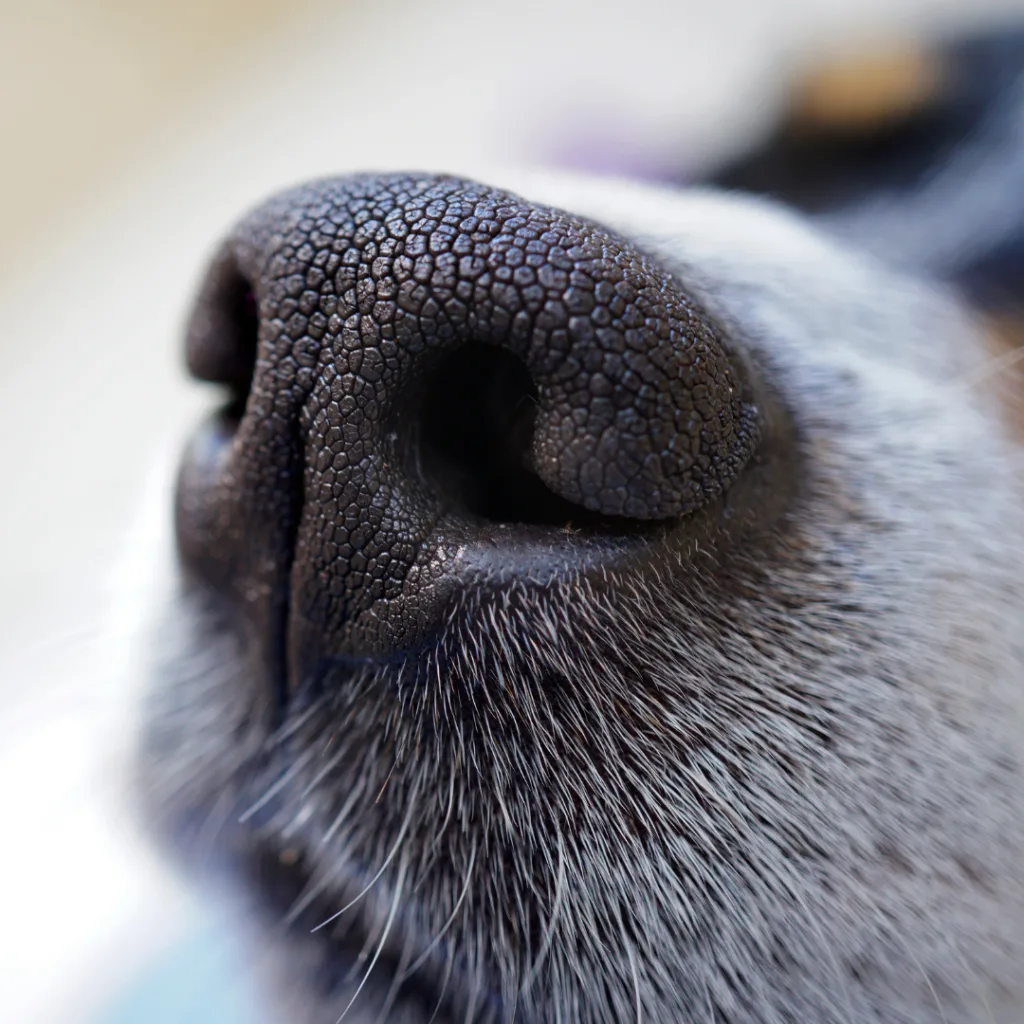
Dogs matter in this work because their olfactory systems remain unmatched by electronic sensors in complex odour detection. Humans globally have spent hundreds of millions of dollars trying to make a sensor as good as a dog’s nose and never gotten close. However, as we all know, dogs are living beings whose performance varies with the day, stress levels, health, and training. That’s why Bayesian modelling matters: it accounts for dog-to-dog variation and day-to-day performance fluctuations, making the system more reliable than relying on individual dogs’ accuracy alone.
Bottom line
This is proof-of-concept work showing that multi-cancer breath detection using dogs is possible and might work at scale. It’s not yet evidence that it should be deployed clinically. Peer review, publication in a conventional journal, and independent validation in different populations will be necessary before that becomes the case. The funding source doesn’t disqualify the findings, but it means the work needs sceptical scrutiny and external verification.
For now, it’s worth understanding what dogs can do in this domain. The fact that they can do this work at all suggests a different approach to early detection that might complement or eventually rival conventional biomarker testing in certain contexts.
Sources
Canine olfaction combined with Bayesian modeling for multi cancer detection from breath samples: a phase 2 study in India. MedRxiv preprint, September 2025.
DOI: 10.1101/2025.09.21.25336259
Note: This research is an unreviewed preprint funded by Dognosis India Pvt. Ltd. and explicitly states it should not be used to guide clinical practice.
Clinical trial registration: CTRI/2024/10/075938.