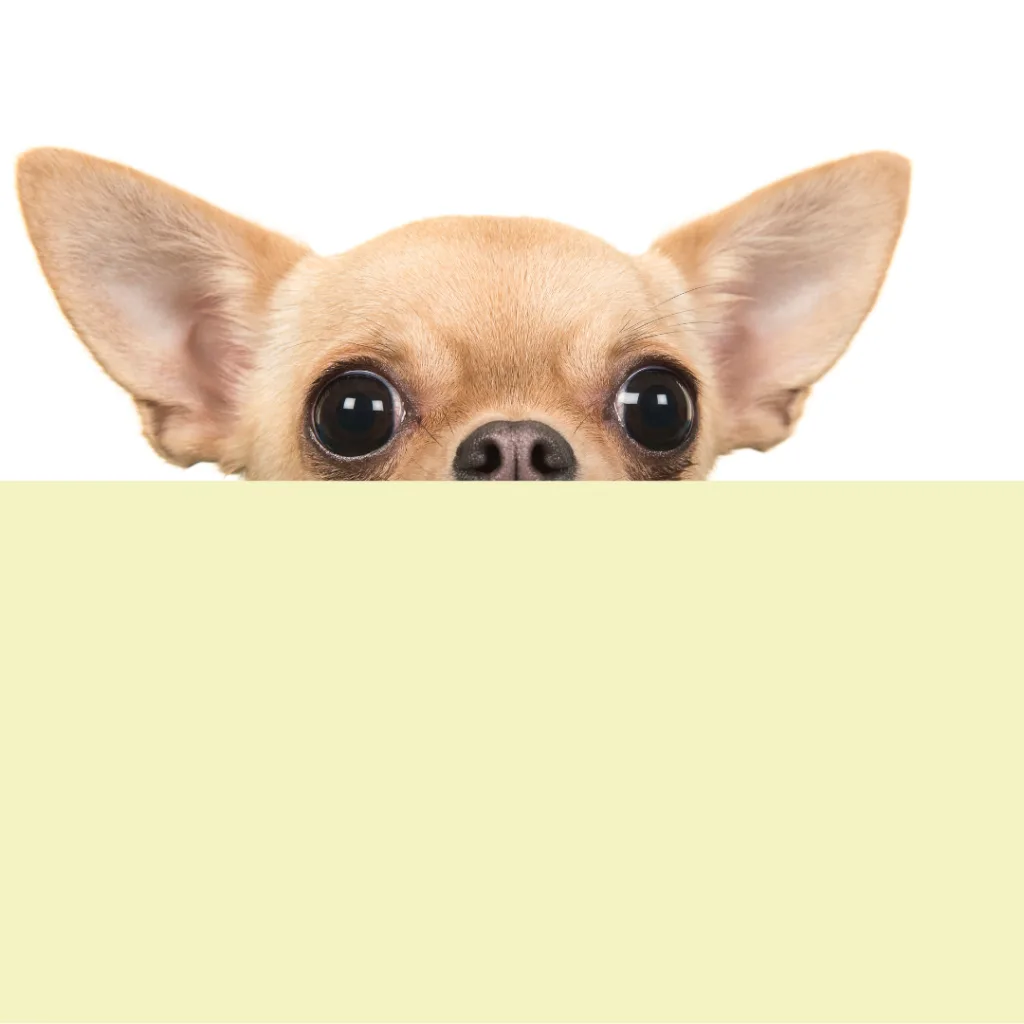
If you share your home with a Chihuahua, a Pomeranian, a Brussels Griffon or a Cavalier King Charles spaniel, you may have looked at that small, domed head and wondered whether it is entirely normal. It is a fair question, and until recently a surprisingly hard one to answer, even for vets. A new study from Cornell’s College of Veterinary Medicine has now made it a little easier to tell an ordinary small-dog skull from one that signals a problem.
The researchers examined CT scans of 852 dogs from many different breeds, none of which were known to have any skull disease, and measured the shapes of the skull, cranium, and face in detail. What they found is that when dogs get smaller, their skulls do not simply shrink in proportion; rather, they change shape. The vault of the cranium, the part that houses the brain, effectively balloons outward, so the whole head becomes rounder and more domed. Scientists call this allometric scaling, and the plain-English version is that a tiny dog is not just a miniature version of a big one; his body is built to a slightly different plan.
This matters for a practical reason, as a rounder, more domed head in a small dog is, in most cases, simply what miniaturisation looks like, and not a sign of anything wrong. Knowing this helps prevent normal variation from being mistaken for disease and spares owners a great deal of unnecessary worry.
The syringomyelia link
There is a more serious thread to the research, though, and it is the reason the study is worth owners’ attention rather than just vets’.
The same kind of rounded skull shape also shows up in dogs affected by conditions involving the fluid around the brain and spinal cord, including syringomyelia, a painful disorder in which fluid-filled cavities form within the spinal cord. The study found that the breeds predisposed to syringomyelia tend to share two things: a rounder, more domed skull, regardless of how long or short the nose is, and a small body size, generally under about 20 kilograms.
In fact, for every kilogram lighter a dog is, they found roughly a 25 percent increase in the likelihood of falling into the group predisposed to syringomyelia, and the rounder and wider the skull, the higher that likelihood climbs. It is worth being precise about what that means. This is about the risk of being in a higher-risk group, not a 25 percent chance of the disease itself, and the breeds most often affected are familiar ones: Cavalier King Charles spaniels, Affenpinschers, Brussels Griffons, Chihuahuas and Pomeranians, all popular here in South Africa.
What the study does and does not say
The study shows an association, not a cause and the researchers are very clear to point this out. The study does not prove that skull shape causes syringomyelia, and the team is clear that the reverse is also possible: that the changes to the skull could be a consequence of the disease process rather than a driver of it. Untangling which comes first is work still to be done, and it could eventually shape both how the condition is treated and how at-risk breeds are bred. For now, the value of the study lies in a clearer map of what is normal and a better sense of which dogs deserve a closer look.
When to see your vet
A domed head is not a reason to panic. What warrants a professional opinion is a domed head, along with signs that something is uncomfortable. The signs vets most associate with syringomyelia are worth knowing, drawn from established understanding of the condition rather than this particular study: persistent scratching at the neck or shoulder, often into the air without actually making contact, sometimes called phantom scratching; sensitivity or pain when the neck or head is touched; yelping for no obvious reason, especially at night or when being picked up; and a general reluctance to be handled around the head and neck. If you see these in a small, domed-headed dog, it is worth a vet visit. None of this is something to diagnose at home, and a rounded skull alone, in a bright and comfortable dog, is usually just the shape of a small dog.
For anyone breeding these dogs, the study is an argument for taking skull shape and size seriously as part of health screening, alongside the traits shows tend to reward. And for the rest of us, it is a useful reminder that with the smallest breeds, what looks unusual is often normal, and what matters is not the shape of the head but whether the dog is happy and free of pain!
Reference
Cornell University College of Veterinary Medicine; corresponding author P. V. Scrivani. “Miniaturization in Domestic Dogs: Relationships Among Cranial Shape, Head Indexes, and Body Weight.” Veterinary Radiology & Ultrasound, published 22 May 2026. https://doi.org/10.1111/vru.70178