From rhino horn at reserve gates to rare tortoises hidden in the veld, the Endangered Wildlife Trust’s dogs do some of conservation’s most specialised fieldwork. Now the Trust is asking the public to help keep them in the field.
The role
Most of us picture a working dog’s nose in fairly narrow terms: contraband at an airport, perhaps, or a search dog on a mountainside looking for lost skiers. Yet, the Endangered Wildlife Trust has been quietly widening that picture for years; the Trust’s canine teams now span detection, tracking, anti-poaching operations, scientific research and even the rediscovery of rare species, helping researchers and wildlife-protection teams work far more effectively than they can alone. As the Trust puts it, ‘not every conservation specialist walks on two legs.’
These dogs really are remarkable. Some are trained to confront wildlife crime head on, where others spend their days helping scientists find living animals so rare and so well hidden that people struggle to locate them at all. These are vastly different jobs, but all with the same mission of protecting our wild species.
Meet the team
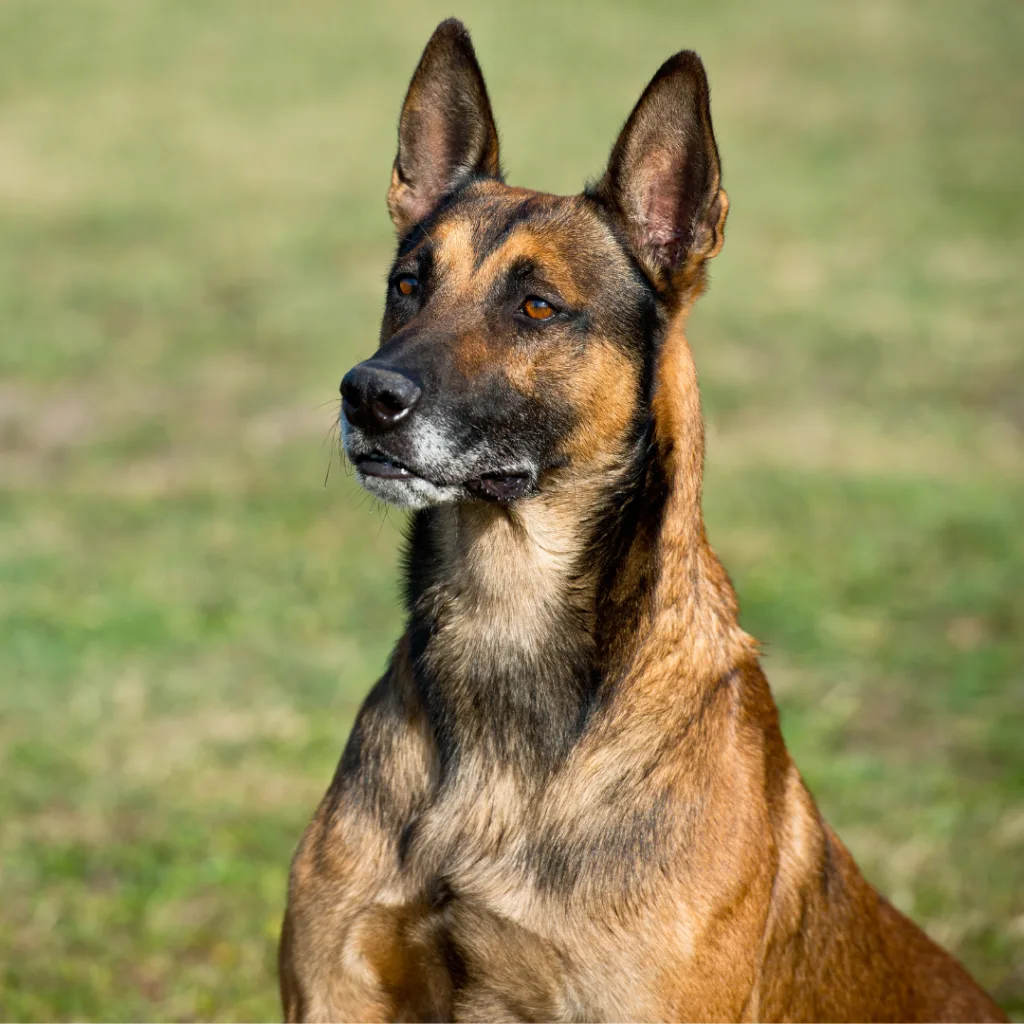
The current line-up of the team is a study in breed and temperament. Kisha, a six-year-old Belgian Malinois, works in detection and tracking. Ruger, a five-year-old Dutch Shepherd, is a tracking specialist. Remi and Gold, both German Shepherds, are detection dogs, while three more Malinois, Juice, Reaper and Mufasa, make up much of the working core. The youngest recruit, a ten-month-old Malinois named Cliff, is still in training.
And then there are Dash and Delta, two Border Collies who do something quite different from their shepherd and Malinois colleagues. Rather than tracking poachers, they locate endangered and overlooked species so that researchers can study and protect them.
Anti-poaching
On the enforcement side, the dogs are trained to track people, locate snares, find arms and ammunition, and pick up evidence such as spent cartridges at crime scenes. At reserves, including Pilanesberg in the North West province, dog and handler teams work the entry and exit gates, screening vehicles for firearms and ammunition, as well as rhino horn, ivory, pangolin scales, and lion bone.
Tracking dogs, like Ruger, do much more than chase. When a reserve boundary is breached, his job is to read the ground: to work out where poachers entered and left, and which routes they took, so that rangers can be positioned where they will actually make a difference. That intelligence is often what turns the response from purely reactive to an active deterrent. Technology plays a role too, with some teams equipped with night-vision scopes for patrols after dark, but the consistent message from the field is that the dog remains an irreplaceable element.
Searching
The most surprising work done by the dogs, at least in our opinion, is some of the quietest. Wildlife crime in South Africa is not only about the well-known animals. The Succulent Karoo, across the Northern and Western Cape, is the most diverse succulent region on earth, and it is being stripped of small, often endemic plants to feed a collector market in Asia and Europe. The plants are easy to conceal and hard to identify, which makes them ideal for smuggling, so the EWT has trained scent-detection dogs to screen vehicles at roadblocks and parcels at courier depots for them.
Dash and Delta take the same precision in a different direction. The two Border collies are trained to locate rare and threatened species in the field, including elusive tortoises, the scat of the critically endangered riverine rabbit, threatened amphibians and rare succulents. Finding a single secretive animal across a wide landscape is exactly the kind of needle-in-a-haystack task a dog’s nose is built for, and dogs can hand researchers data they would otherwise have almost no way of gathering.
The ask
It would be very easy for us at DQ to focus solely on the VERY clever dogs, but the EWT would be the first to correct us. A conservation dog is only as good as the handler at the other end of the lead, and a dog and handler operate as a single unit, reading each other as much as they read the environment around them. Keeping that partnership working takes training, certification, veterinary care and steady funding, and it is the part of the picture the public rarely sees.
That is why the Trust has launched a public appeal asking people to contribute towards the care, training and deployment of its dogs. By the EWT’s own account, these animals deliver an outsized impact on conservation while receiving little recognition or support. For our readers, who know better than most what a working dog is capable of and just what the training involves, it is a cause that needs no real further explanation or justification. Donations can be made through the Trust’s campaign page.
References
Endangered Wildlife Trust public appeal, “Good dog, serious job”, as reported June 2026, including the named dogs, their breeds and roles.
Endangered Wildlife Trust, Canine Conservation Unit programme materials, including deployments at Pilanesberg and Madikwe and succulent scent-detection work in the Northern and Western Cape.
Campaign page: good-dog-serious-job.raiselysite.com