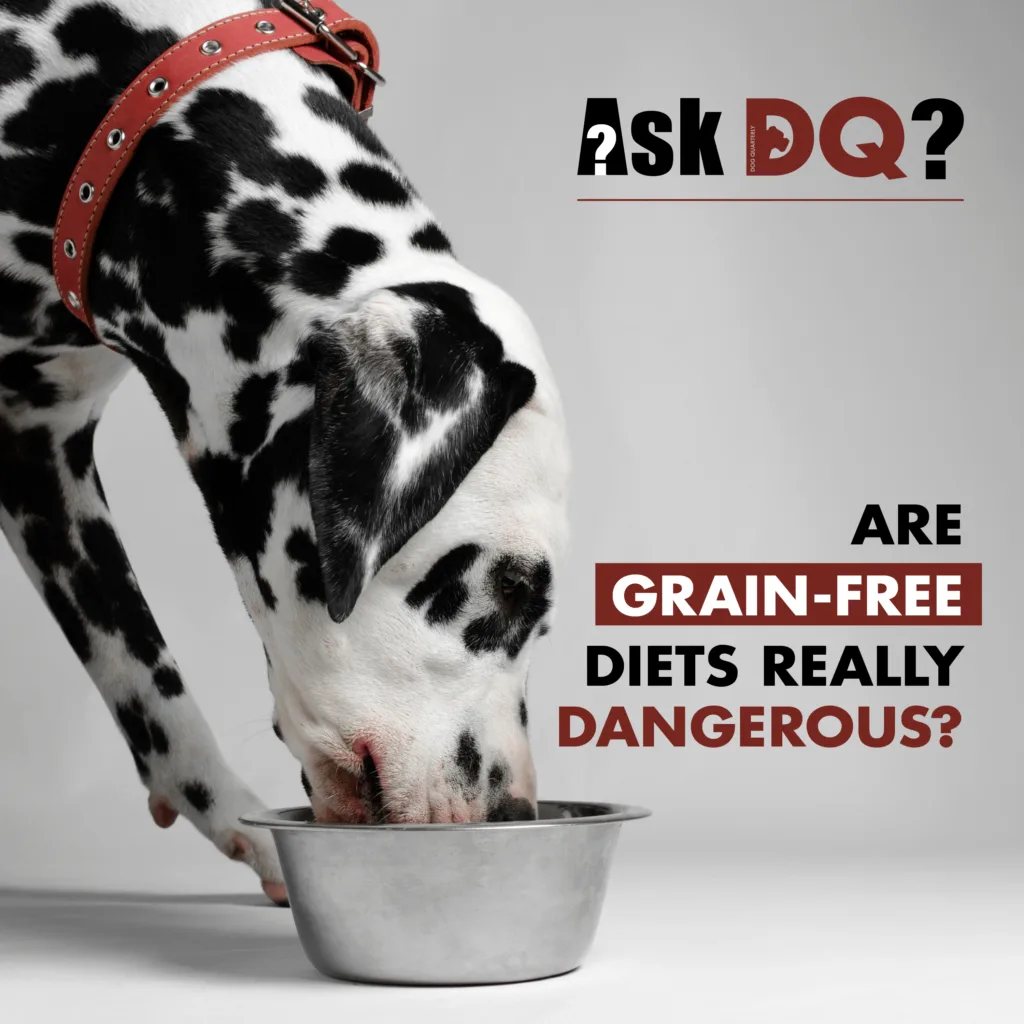
Q: Are grain-free diets really dangerous?
A: This has become one of the most debated topics in canine nutrition in recent times.
The bottom line is that grain-free diets aren’t inherently dangerous, but certain formulations have been linked to increased risk of heart disease (specifically dilated cardiomyopathy or DCM) in dogs.
The concern arose when the FDA began investigating unusual cases of DCM in breeds not typically prone to this heart condition. Many affected dogs were eating grain-free diets where legumes (lentils, peas, chickpeas) or potatoes were the main ingredients – essentially replacing grains entirely. The problem from research to date appears to be about what replaced the grain, not the absence of grain itself, but exactly how these ingredients might contribute to heart disease is still being researched.
For dogs without grain allergies or sensitivities (which are actually quite rare), grains like rice, oats, and barley aren’t ‘fillers’ – they’re perfectly digestible sources of energy and fibre that most dogs tolerate well.
High-quality grain-free diets formulated by veterinary nutritionists can still be safe, particularly for the small number of dogs with genuine grain allergies or intolerances diagnosed by a vet, but for most dogs, there’s no health benefit to avoiding grains.
The takeaways? Unless your vet has diagnosed a specific medical reason to avoid grains, most dogs do well with grain-inclusive diets. If you do choose grain-free work under the supervision of your vet and select established brands that conduct feeding trials and nutritional testing, and avoid diets where legumes or potatoes are the primary ingredients.