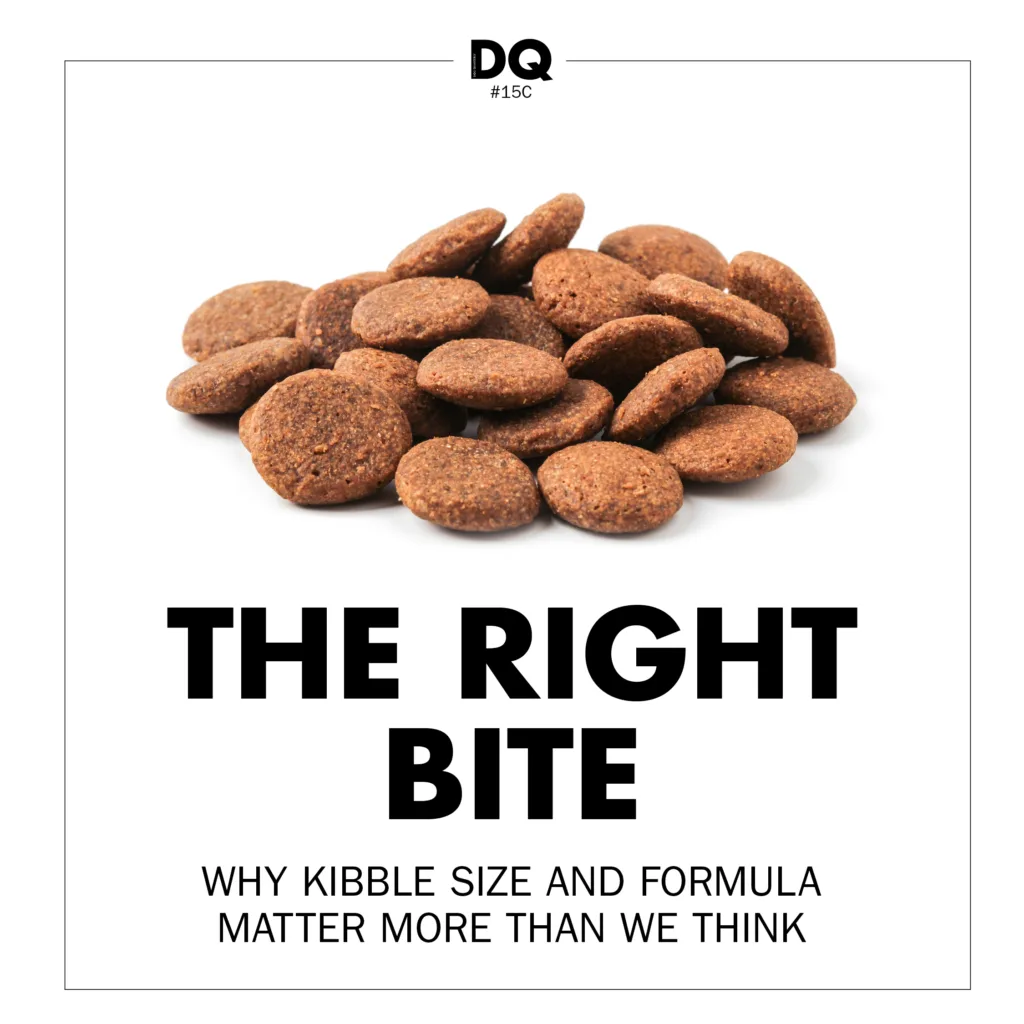
When my vet told me my Chihuahuas should have been eating small-breed kibble their entire lives, I was stunned. For years, I’d been buying high-quality, vet-approved food for our allergy-prone dog, along with fresh extras for longevity, assuming the kibble size was a secondary concern. But as my ageing dog began struggling with her meals, picking at her bowl and leaving half-eaten pieces scattered around, I learned there’s real science behind those ‘small breed’ and ‘large breed’ labels – and it goes far deeper than just the size of the pieces.
It’s not just about fitting into their mouths
The most obvious difference is physical: small-breed kibble pieces are typically 8-10mm in diameter, while large-breed kibble can be 20-25mm or larger. But this isn’t just about convenience. Dogs have evolved as carnivores with specific jaw mechanics, and a Pomeranian’s bite force and jaw structure are vastly different from a Great Dane’s.
Small dogs have shorter snouts and smaller mouths, which means they need kibble they can actually grasp and chew effectively. Too-large pieces can be difficult to pick up, frustrating to chew, and even pose a choking risk. Conversely, large breed dogs eating kibble that’s too small may not chew it properly, essentially inhaling their food, which can lead to bloating and digestive issues, particularly dangerous in deep-chested breeds.
Did you know?
Dogs have different eating styles based on size. Small dogs tend to be ‘nibblers’ who eat multiple small meals, while large dogs are often ‘gulpers’. Kibble design takes this into account – small breed kibble in a flatter, disc shape is easier to pick up precisely, while large breed kibble is often in chunky shapes that are harder to inhale.
The hidden difference
Here’s what surprised me most: small-breed and large-breed formulas aren’t just different sizes of the same recipe. They’re nutritionally distinct foods designed for completely different metabolic needs.
Small dogs burn calories at a much faster rate relative to their body size. Think of it like heating a house: a small room loses heat much faster than a large one because there’s more surface area relative to volume. Small dogs have higher metabolic rates, so small breed formulas are more calorie-dense – packed with more energy in each bite. They also contain more fat and protein per cup to fuel that faster metabolism.
Large breed dogs, meanwhile, face different challenges. They grow rapidly as puppies, and too much calcium or too many calories during this critical growth phase can lead to developmental orthopaedic problems – conditions affecting bones and joints that can cause lifelong pain. Large-breed puppy formulas are carefully calibrated with controlled calcium and phosphorus levels and a moderate calorie density to support steady, healthy growth rather than explosive spurts that stress developing bones.

Did you know?
The mechanical action of chewing kibble can reduce plaque buildup by up to 10-15% compared to soft food, but here’s the catch: the kibble needs to be the right size for your dog to actually chew it. If it’s too small, dogs swallow it whole and get zero dental benefit. If it’s too large, they may only bite it once or give up entirely.
In addition, some kibble is specifically designed with a texture that creates a ‘toothbrush effect’ – the kibble doesn’t shatter immediately on contact but instead slightly gives way, allowing the teeth to sink in before it breaks. This scraping action helps mechanically remove plaque.
The senior years
As dogs age, these differences become even more pronounced. Senior small-breed dogs often face dental issues, reduced jaw strength, and sensitive digestion. Smaller, more easily chewable kibble can make the difference between a dog who enjoys meals and one who struggles or avoids eating altogether – exactly what I experienced with my own dogs.
Senior formulas for small breeds typically include joint support supplements like glucosamine, antioxidants for immune health, and are easier to digest. For large breed seniors, joint health is paramount since their size puts more stress on ageing joints, but they also need careful calorie control to prevent obesity, which further burdens those joints.

What about medium dogs?
Medium-breed dogs – typically 10-25kg – often do well on either all-breed formulas or dedicated medium-breed foods. They don’t have the extreme metabolic rate of toy breeds or the developmental concerns of giant breeds, giving owners more flexibility. However, paying attention to your individual dog’s needs is still important.
How to choose the right kibble
The takeaway isn’t complicated: match the kibble to your dog’s size category and life stage. Check the packaging – reputable brands clearly indicate whether food is formulated for small (typically under 10kg), medium, large (25-45kg), or giant breeds (over 45kg).
If you’re unsure, your vet can help you identify the right category for your dog. And if your dog is struggling with their current food – leaving pieces uneaten, eating slowly, or showing digestive upset – kibble size and formula might be the issue.

Did you know?
Small dogs have shorter digestive tracts relative to their body size, and food passes through faster. This is why small breed formulas often include more easily digestible proteins and higher nutrient density, as small dogs need to extract maximum nutrition quickly.
The surface area to volume ratio of the kibble affects digestion, too: smaller kibble pieces have more surface area exposed to digestive enzymes, which can improve nutrient absorption in small dogs with rapid digestion.
A preventative approach
Looking back, I wish I’d known this when my dogs were puppies. While my senior has adapted well to her new small-breed senior formula and is eating enthusiastically again, I’m concerned that feeding the larger kibble (even if high quality and with an excellent allergy profile) may not have been the best thing for her.
The good news? This is an easy fix that can make a real difference in your dog’s health, energy, and quality of life. Whether you have a Mastiff or a Maltese, feeding them food designed for their specific needs isn’t just marketing – it’s nutrition based on real biological differences.
Fast fact
The shape of kibble isn’t random: triangular, X-shaped, or ring-shaped pieces encourage more chewing and slower eating compared to round pieces that can roll down the throat more easily.