The instinct to tell a growling dog off is understandable but almost always wrong. Here is what the growl is doing, and why punishing it by telling your dog off makes a bite more likely, not less.
A growl is alarming. It sounds like the start of something dangerous, and the natural human response is to shut it down, but the effect of doing this, as a fair amount of behavioural research now shows, tends to be the opposite of what the owner wants.
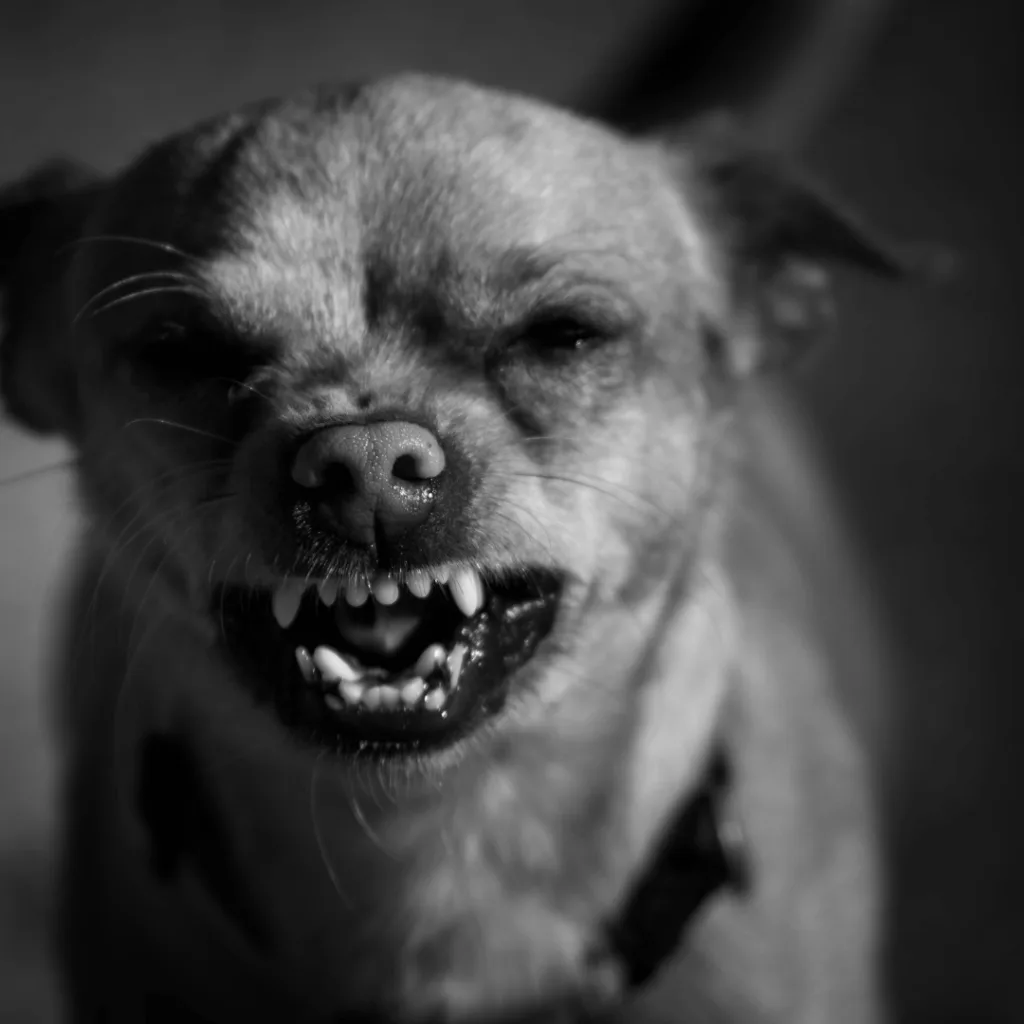
To understand why this is the case, we need to start with what a growl actually is. A growl is communication from our dog. Dogs move through a fairly predictable sequence when they are uncomfortable: they look away, they freeze, they growl, they show teeth, and only then, if nothing changes, do they snap or bite. The growl sits in the middle of that ladder and when a dog growls they are saying, clearly and without violence, that he needs more space or for something to stop. A dog that growls is a dog still choosing to warn rather than to act.
What punishment really teaches
When a dog is consistently corrected for growling, he can learn that the growl itself is what brings the unpleasant consequence. The underlying emotion, usually fear, pain or resource guarding, does not go anywhere. All that changes is that the dog stops communicating about his feelings. Behaviourists describe the result as a dog that bites ‘without warning’, except that the warning was there all along and was trained out (Australian Veterinary Association, policy on punishment in dog training). The bite that follows is faster and harder to read, which makes it more dangerous, not less.
This is not a fringe view. A widely cited study of owner-applied training methods found that confrontational, punishment-based techniques frequently provoked an aggressive response from the dog (Herron, Shofer and Reisner, 2009). Reviews of aversive training have linked it to increased fear, stress and aggression, and to a more negative emotional state overall (Ziv, 2017; Blackwell et al., 2008). Suppressing a symptom is not the same as resolving its cause, and with growling that suppression carries a specific, physical risk.
What to do instead
The moment a dog growls is not the moment to train him. The dog is already over threshold and is unlikely to learn anything useful except that the situation is as bad as he feared. The immediate priority is simply to lower the pressure: increase distance, remove whatever is causing the discomfort, and let the dog settle.
The longer-term work happens away from these flashpoints. It means identifying what the dog is genuinely worried about, whether that is strangers, handling, other dogs or guarding food, and changing how the dog feels about it through gradual, positive exposure, ideally with a qualified, reward-based behaviourist. The goal is a dog that no longer feels the need to growl, not a dog that has simply been silenced.
| If your dog growls
• Don’t punish him. Calmly create space and defuse the situation. • Note what triggered him: who, what, where, and how close. • Rule out pain with a vet check, especially if the growling is new. • For anything involving aggression, work with a qualified reward-based behaviourist rather than going it alone. |
References
Herron ME, Shofer FS, Reisner IR. Survey of the use and outcome of confrontational and non-confrontational training methods. Applied Animal Behaviour Science, 2009.
Ziv G. The effects of using aversive training methods in dogs: a review. Journal of Veterinary Behavior, 2017.
Blackwell EJ et al. The relationship between training methods and the occurrence of behaviour problems. Journal of Veterinary Behavior, 2008.
Australian Veterinary Association, policy on the use of punishment and negative reinforcement in dog training.