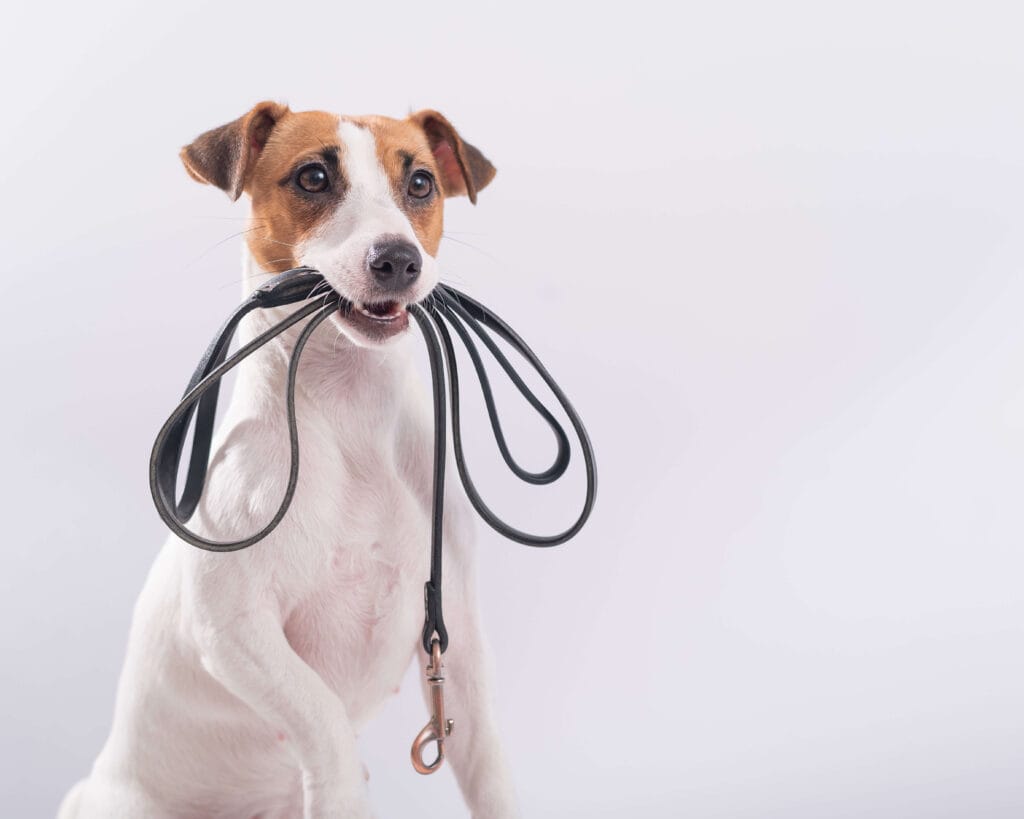
Training a dog not to pull on a lead can be challenging, but with patience, consistency, and the right techniques, you can teach your dog to walk politely beside you. Pulling on the lead is a common behaviour, often because dogs naturally want to explore their environment and are excited to get to their destination. Teaching loose lead walking is the best way to train your dog to walk calmly without pulling on the lead.
Teach ‘loose lead’ walking
Loose-lead walking means your dog walks beside you or slightly ahead without tension on the lead. Here’s how to get started:
Equipment:
Before you begin training, having the right equipment is essential for controlling your dog without causing harm.
– Front-clip harness: A front-clip harness is often more effective than a traditional collar or back-clip harness. It discourages pulling by redirecting the dog’s movement when he pulls.
– Standard lead: Use a regular lead rather than a retractable one, as retractable leads can encourage pulling.
NOTE: Do not ‘jerk’ the lead with dogs who pull. This risks severe injury to the neck and back, whether acutely or over time.
NOTE: Back-clip vs front-clip harness
The design of your clip dog harness significantly impacts your pet’s comfort and control when walking. The two most common harness types are the back-clip and front-clip harness. With back-clip dog harnesses, the lead attachment is on the dog’s back, while on front-clip dog harnesses, the lead clip is on the chest area.
Advantages of back-clip harnesses
Back-clip dog harnesses offer several advantages. Top among these are comfort and visibility. These harness types are comfortable for most dogs as the lead does not tangle in their legs. This makes them perfect for breeds with sensitive trachea. The back-clip harness also allows better visibility of the lead for both the pet and the pet parent. Another essential advantage of a back-clip dog harness is that it doesn’t encourage pulling. This is particularly useful during the dog’s training phase. Back-clip dog harnesses are also easier to put on than other types, making them a favourite for pet parents and dog trainers.
Advantages of front-clip harnesses
On the other hand, a front-clip dog harness has a lead attachment on the chest, which dog trainers often prefer as it gives them more control over energetic and hard-to-train dogs. The benefits of front-clip dog harnesses are numerous. First, they enable corrective training for dogs that perceive outdoor walks as an opportunity to chase every moving object. The handler can gently steer the dog’s head, discouraging pulling behaviour.
As most sporting dog breeds are sturdy and muscular, front clip harnesses offer some level of control over them. Pet parents often find front-clip dog harnesses helpful in managing the energetic bursts these breeds are famous for, preventing them from swerving abruptly and avoiding possible accidents for both the dog and themselves.
Experts suggest that front-clip dog harnesses are best for dogs undergoing lead training. They provide an excellent basis for instilling good walking habits, thus contributing to a well-behaved dog.
Training process:
- Step 1: Start in a low-distraction environment
Begin training in a quiet area with minimal distractions, such as your garden or house. This allows your dog to focus on you without the excitement of new sights and smells.
- Step 2: Reward for a loose lead
Hold the lead at a comfortable length, giving your dog some freedom but not enough to pull. As soon as your dog walks beside you without pulling, reward them with a treat and praise. Use a marker word like ‘yes’ or a clicker when they are in the correct position to reinforce the behaviour.
- Step 3: Stop when they pull
When your dog pulls on the lead, stop walking immediately. Stand still and wait until the lead is slack again. This teaches your dog that pulling doesn’t get them where they want to go. Once the lead is loose, start walking again, rewarding them when they walk calmly by your side.
- Step 4: Use a turn-around method
If your dog pulls and gets too far ahead, turn and walk in the opposite direction. This will interrupt their forward movement and encourage them to pay attention to you. Praise them when they follow you and the lead is loose.
- Step 5: Incorporate verbal cues
Once your dog begins to walk without pulling, add verbal cues like ‘heel’ or ‘let’s go’ to reinforce good behaviour. Use these cues whenever your dog is in the correct position, and always reward with treats or praise.
- Step 6: Increase distractions gradually
Once your dog is reliably walking without pulling in low-distraction environments, start introducing more distractions. Take them to parks, busy streets, or places with other dogs and people. Be prepared for setbacks—your dog may begin pulling again in these environments, so go back to basics with the training techniques when needed.
Positive reinforcement
Always use positive reinforcement when training your dog not to pull. Rewards can include:
– Treats: High-value treats your dog loves will motivate them during training.
– Praise: Verbal encouragement and affection can also reinforce good behaviour.
– Scratches: For some dogs, scratches in their favourite itchy spot can be just as motivating as treats.
Top tips for success
- Practice short, frequent walks
Training sessions should be short and positive to prevent frustration for you and your dog. Begin with 5-10-minute walks in low-distraction environments, gradually increasing the time as your dog improves. Be consistent with your training, practising multiple times a day if possible.
- Reward focus and attention
Training your dog to focus on you during walks can help prevent pulling. One way to do this is through attention exercises, like the ‘look at me’ command. Before starting your walk, ask your dog to make eye contact and reward them. This helps your dog learn that paying attention to you is rewarding and can lead to less pulling.
- Stay calm and consistent
It’s important to stay calm and patient throughout the training process. Pulling on the lead is often a behaviour that takes time to correct, and consistency is key. Ensure that everyone who walks your dog follows the same rules and uses the same techniques to avoid confusing the dog.
Consider professional help
If your dog is especially strong or reactive to other dogs or people, it might be beneficial to seek help from a professional dog trainer. Trainers can provide personalised guidance and troubleshoot specific issues to help you and your dog achieve success.
Final thoughts
Training a dog not to pull on the lead takes time, patience, and consistency, but with positive reinforcement and the right techniques, you can teach your dog to walk calmly by your side. Remember that each dog learns at their own pace, so don’t get discouraged if progress is slow. Stay consistent; over time, your dog will learn to enjoy walks without pulling, making walks more pleasant for both of you.