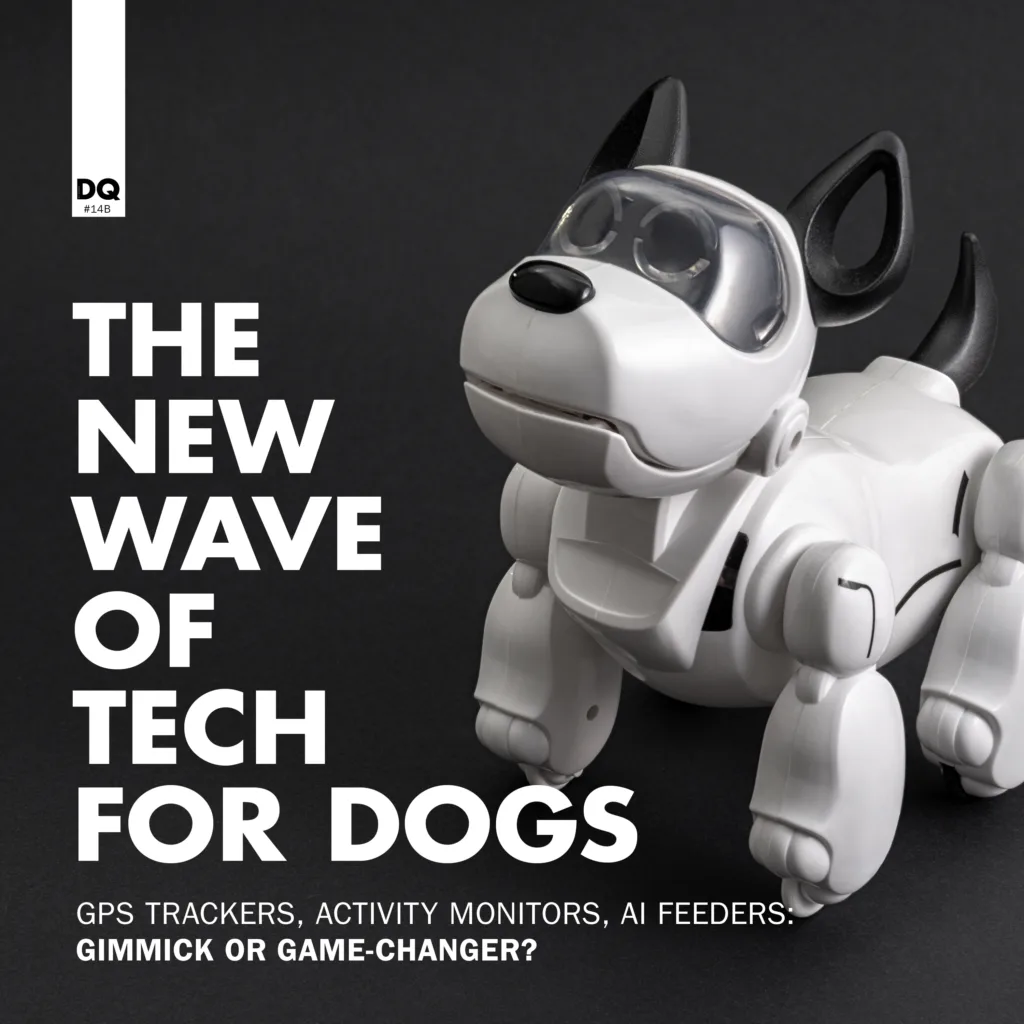
GPS trackers, activity monitors, AI feeders: gimmick or game-changer?
Technology has transformed almost every part of our lives, and now it’s making its way into how we care for our dogs. From GPS collars that track every step, to wearable monitors that measure sleep and heart rate, to AI-powered feeders that promise the perfect meal schedule, the pet tech industry is booming. But are these gadgets truly improving the way we understand and care for our dogs, or are they just another wave of expensive gimmicks?
GPS trackers: Safety nets or surveillance tools?
GPS collars and tags have grown in popularity, especially among owners of escape-prone breeds or rural dogs with plenty of space to roam. These devices can:
- Pinpoint a dog’s location in real time.
- Track exercise and walking routes.
- Offer ‘safe zone’ alerts if a dog leaves a designated area.
For worried owners, this tech undoubtedly provides some peace of mind and the ability to locate a missing dog quickly can be life-saving. However, some trackers rely on cellular coverage, which can be patchy in rural South Africa, and battery life often limits their usefulness.
Verdict: A game-changer for safety in the right contexts, but only if you manage expectations around coverage and battery life.
Activity monitors: Fitness trackers for dogs
Activity monitors measure steps, rest, sleep quality, and sometimes even heart rate or calories burned. For canine athletes or overweight pets on weight-loss programmes, these devices can provide valuable data. Research has shown that objective monitoring helps owners stick to exercise routines, and can even pick up subtle changes in rest or movement that may signal illness before it’s visible.
The downside? Not all data is accurate. Step counts can vary wildly between devices, and interpreting ‘sleep quality’ in dogs is more complicated than in humans. These tools are best viewed as trend-trackers rather than precise medical instruments.
Verdict: Useful for motivated owners and professionals, but not a replacement for human observation and veterinary insight.
AI-powered feeders: Convenience or overkill?
Automated feeders are nothing new, but the latest generation goes further. They use AI to:
- Portion food according to the dog’s weight, breed, and age.
- Track feeding times and adjust schedules.
- Link to apps that monitor how quickly your dog eats.
For busy households, these devices can reduce the risk of missed meals or inconsistent feeding. Some also claim to help prevent obesity by keeping portions precise. Yet, concerns remain. Feeding is more than nutrition; it’s part of bonding. Outsourcing it entirely to a machine risks losing that daily moment of connection. And, of course, no feeder can assess whether a dog is thriving on a particular diet; that still requires human observation and veterinary guidance.
Verdict: A convenience tool that may suit some lifestyles but not a substitute for mindful feeding and interaction.
Are these tools gimmicks or game-changers?
The truth lies somewhere in between. For some owners, tech devices bring real improvements in safety, health management, and daily routines. For others, they may become abandoned gadgets once the novelty wears off.
The key is context:
- For working or sport dogs, trackers and monitors can provide meaningful insights into fitness and recovery.
- For nervous owners, GPS collars can bring peace of mind.
- For busy households, AI feeders might help keep dogs on a steady routine.
But no piece of technology replaces observation, hands-on care, and the deep human-canine bond built through time, presence, and attention.
Practical tips for choosing dog tech
- Start with a need, not a product. Don’t buy a device just because it exists; identify whether it solves a real problem for you and your dog.
- Check the data. Look for independent reviews or studies on accuracy, not just company marketing.
- Consider lifestyle. For instance, GPS trackers that require daily charging may frustrate busy owners.
- Don’t ignore the basics. Tech should complement, not replace, vet care, training, and enrichment.
Final thoughts
Pet tech is not inherently good or bad. For some, it will genuinely improve canine welfare and owner peace of mind. For others, it’s a shiny distraction. The challenge is to use technology thoughtfully: as a tool to support health and safety, without forgetting that no app or AI can replace the joy of hands-on time with your dog.