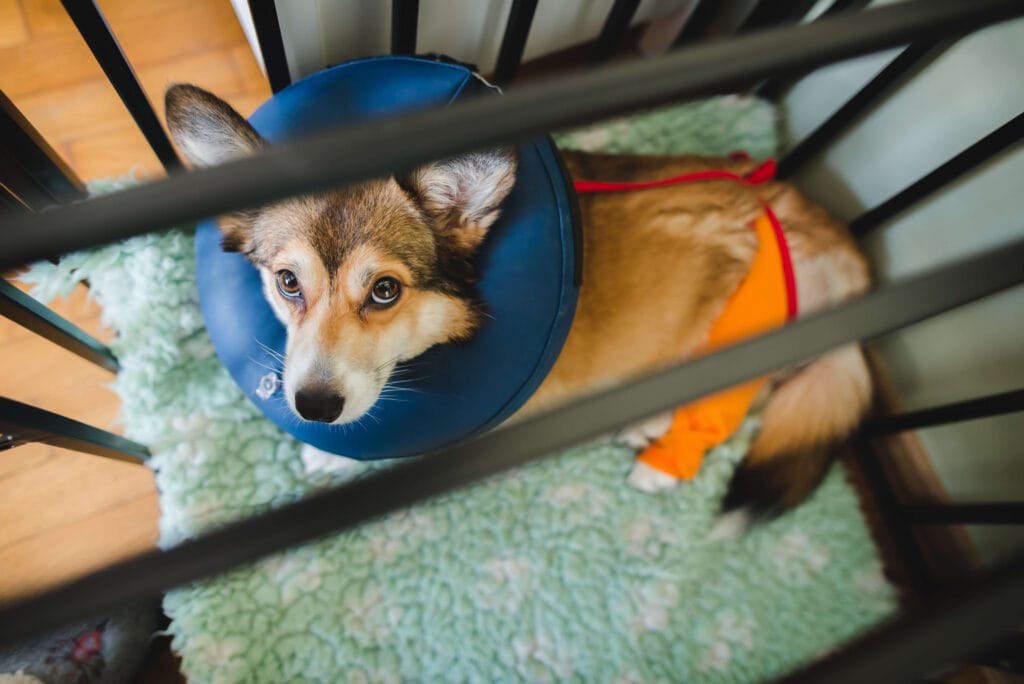
If your canine companion undergoes surgery, post-operative care will play a vital role in their recovery. In many cases, vets recommend crate rest to ensure your dog heals properly and doesn’t over-exert himself. While crate rest can be challenging for you and your pet, it is a necessary step in their recovery process. Here, we provide you with our top tips on how to help your dog cope with crate rest after surgery, ensuring a smooth and comfortable recovery.
- Choose the right crate
Selecting the appropriate crate is the first step in ensuring your dog’s comfort during recovery. The crate should be spacious enough for your dog to stand, turn around, and lie down comfortably. It’s also essential that the crate is well-ventilated, gives your dog a full view of his surroundings and is easy to clean.
- Comfort inside the crate
Place comfortable bedding inside the crate, such as a soft blanket or cushion. This will help alleviate discomfort and make your dog feel more at ease.
- Gradual introduction
Introduce your dog to the crate gradually, ideally before the surgery, if possible. Make it a positive experience by placing treats and toys inside, allowing your dog to explore it as they wish. Never put your dog in the crate as a punishment.
- Keep the crate in a sociable location
Place the crate in a quiet and comfortable area of your home where your dog can still feel like part of the family. Dogs are social animals and may experience anxiety if isolated from their family during recovery. Having said this, you don’t want to place the crate in a hugely busy area where your dog will struggle to get the rest he needs to recover. Take some time to find the right spot!
- Maintain a consistent routine
Dogs thrive on routine, and maintaining a consistent daily schedule can help reduce anxiety during crate rest. Stick to regular feeding, toilet breaks, and playtime routines as much as possible.
- Mental stimulation
Crate rest doesn’t have to be boring. Provide your dog with puzzles, interactive games, or treat-dispensing toys to keep their mind engaged and prevent boredom.
- Frequent short walks
Depending on your vet’s recommendations, allow your dog short, leash-guided walks to ensure they don’t become overly restless while confined. These walks should be controlled and not too strenuous, as overactivity can jeopardise their recovery.
- Pain management
Ensure that your dog’s pain is adequately managed as prescribed by your vet. Pain can exacerbate anxiety and stress, making crate rest more challenging for your pet.
- Stay calm and reassuring
Your dog may exhibit signs of restlessness, frustration, or anxiety during crate rest. It’s essential that you remain calm and reassuring, even if he is agitated. Talk to your dog in soothing tones and spend quality time with them when they are both in and outside the crate.
- Regular vet check-ups
Ensure you follow your veterinarian’s advice and schedule regular check-ups to monitor your dog’s progress. They can guide you on when it’s safe to increase activity levels or make any necessary adjustments to the recovery plan.
Take home message
Crate rest after surgery can be challenging, but it’s crucial to your dog’s recovery process. By selecting the right crate, maintaining a consistent routine, providing mental stimulation, and offering comfort and reassurance, you can help your dog cope with this period of confinement more effectively. Remember that patience and understanding are key, and always consult with your vet if you have any concerns or questions about your dog’s recovery. With your love and support, your canine companion will return to their happy, active self in no time at all!