If you’re a dog parent, you’ve probably faced the never-ending battle with fur! Shedding is natural for dogs, but with a few strategic steps, you can reduce loose hair around your home and keep your pup’s coat in top shape. Here’s a guide to understanding why dogs shed, how you can manage it, and when shedding might signal a health issue.
Why do dogs shed?
Shedding is a natural process in dogs where they lose old or damaged fur to make room for new growth. Some breeds shed year-round, while others have seasonal shedding, especially in spring and autumn. Factors like breed, age, diet, and overall health all affect how much a dog sheds.
Tips to reduce shedding
Here are some practical steps you can take to keep shedding under control and support your dog’s coat health:
-
Choose the right brush and brush often
Different coat types require different types of brushes. Regular brushing helps catch loose hairs before they end up on your couch, and it distributes natural oils to keep the coat healthy.
– Short-coated breeds (like Beagles or Boxers): A rubber curry brush or grooming glove is gentle and effective for these breeds.
– Double-coated breeds (like Golden Retrievers or Huskies): Use an undercoat rake or de-shedding tool to target the dense underlayer to the coat of these dogs.
– Long-haired breeds (like Shih Tzus or Afghan Hounds): A slicker brush and a comb help detangle and remove loose hairs without pulling and creating discomfort.
Top tip
For best results, brush your dog a few times a week or daily during heavy shedding seasons.
-
Use quality de-shedding tools
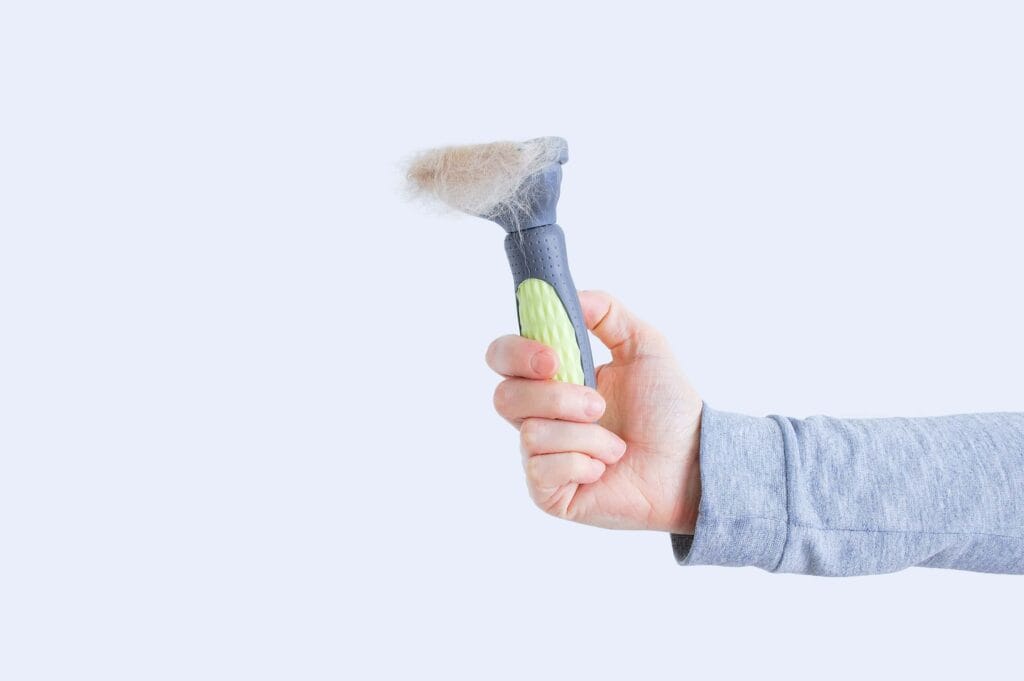
Deshedding tools, like the popular FURminator, are designed to remove loose undercoat hair without damaging the top coat. They’re ideal for dogs with thick or double coats and can significantly reduce shedding with weekly use. Always follow instructions to avoid skin irritation or discomfort for your dog.
-
Bathe your dog with shampoo for shedding control
Regular baths help wash away loose fur, dirt, and dander. For dogs that shed heavily, using a shedding-control or oatmeal-based shampoo once a month can reduce hair loss by conditioning the skin and coat.
- Frequency: Avoid overbathing, as it can strip natural oils from your dog’s coat, leading to more shedding.
- Water temperature: Use lukewarm water, as hot water can dry out the skin and increase shedding.
-
Feed a high-quality diet rich in omega fatty acids
Nutrition plays a crucial role in coat health. Omega-3 and Omega-6 fatty acids are especially beneficial, as they keep the coat shiny and prevent excessive shedding by nourishing the skin.
- Fatty fish and supplements: Look for food with salmon, sardines, or fish oils, or consider adding omega supplements after consulting with your vet.
- Avoid fillers: Low-quality dog foods with fillers and artificial additives can cause skin irritation, which may increase shedding.
-
Maintain a healthy hydration level
Dehydration can lead to dry, flaky skin and excess shedding. Ensure your dog has access to fresh water throughout the day, and consider wet dog food if your pup struggles to drink enough water.
-
Try regular coconut oil or olive oil treatments
Adding a small amount of coconut oil or olive oil to your dog’s diet can help moisturise his skin and coat from the inside out, reducing dryness and shedding. As with any dietary addition, check with your vet for the correct dosage for your dog’s size and breed.
-
Manage stress and anxiety
Stress can contribute to excess shedding. Everyday stressors for dogs include separation anxiety, changes in routine, or loud noises. Addressing stress with more exercise, interactive toys, or calming treats can help reduce stress-related shedding.
When to visit the vet
While some shedding is normal, excessive hair loss can indicate underlying health issues. Look out for signs like:
- Bald spots or areas with thinning fur
- Excessive scratching, biting, or licking
- Red, inflamed, or irritated skin
If your dog displays any of these symptoms, consult your vet to rule out skin allergies, hormonal imbalances, or parasites.
Final thoughts
Reducing shedding takes a combination of proper grooming, nutrition, and care, but the result is a cleaner home and a healthier, happier dog. Remember that shedding is natural and varies by breed, so don’t aim to eliminate it altogether. With these strategies, you’ll be well on your way to managing shedding and creating a more fur-friendly environment.