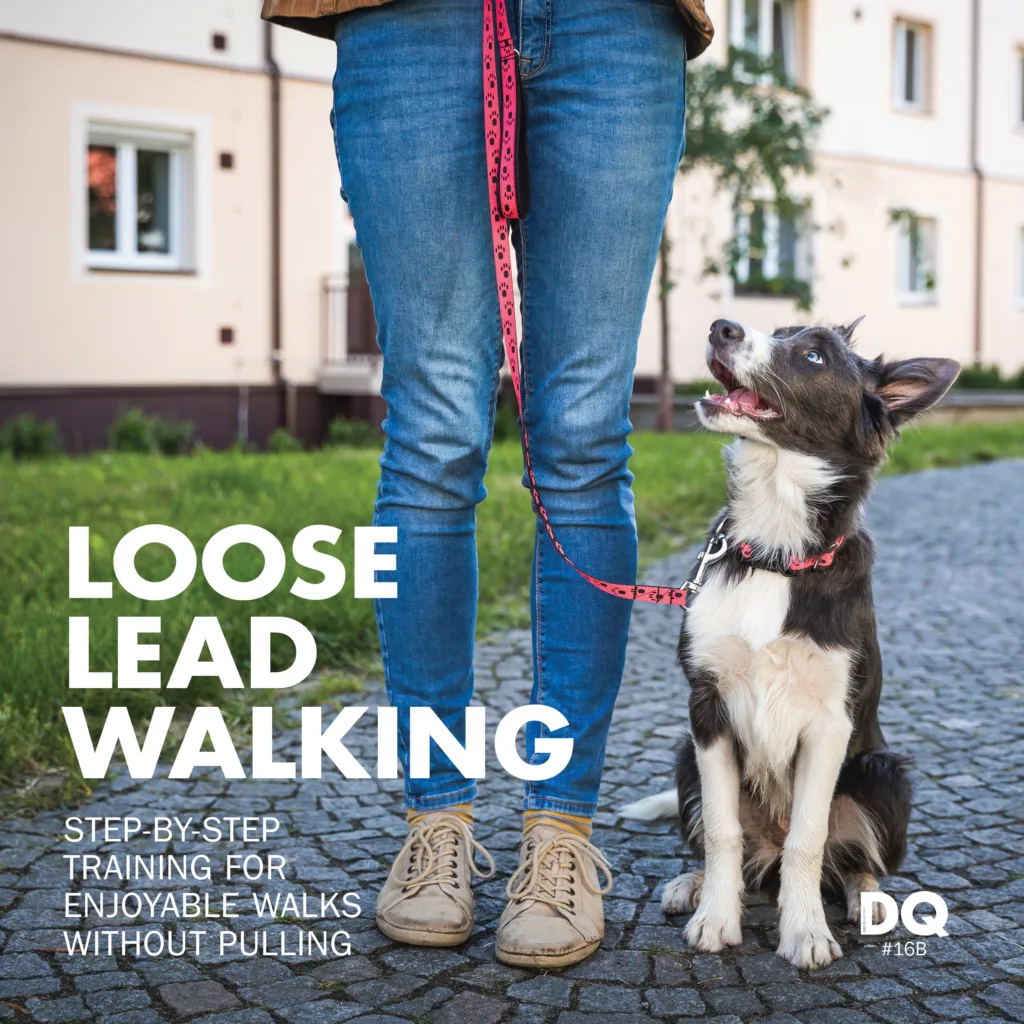
Step-by-step training for enjoyable walks without pulling
Lead pulling is one of the most common and most fixable canine behaviour problems. Many owners blame stubbornness or dominance, but the truth is simpler: pulling works. Every time your dog surges forward, and you follow, you reward the behaviour. After thousands of repetitions, pulling becomes a deeply ingrained habit. Your dog is not bad; they have simply learned the most effective strategy for getting where they want to go.
The answer is not stronger equipment or harsher corrections. Aversive tools such as prong collars or choke chains may suppress pulling temporarily, but do not teach dogs what you actually want. Worse, they create negative associations with walks and can increase anxiety and reactivity. What works is systematic positive reinforcement: teaching your dog that calm, loose-lead walking is more rewarding than pulling.
Getting started
Equipment
Choose equipment that supports training:
- Front-clip harness – redirects pulling dogs sideways rather than letting them use chest strength to drag you forward. Avoid back-clip harnesses, which make pulling easier.
- Standard 1.5 to 2m lead – gives enough freedom while keeping control. Never use a retractable lead during training: constant tension teaches pulling.
- Treat pouch – keeps rewards instantly accessible. You will be treating frequently in early training, so hands-free access matters.
- High-value treats – pea-sized pieces of cheese, chicken, or hot dog. Tiny size matters: you may deliver dozens per session without filling your dog up.
Environment
Always begin training in the least distracting environment available, for example, your living room or garden. Dogs cannot master new skills while overstimulated. Once your dog walks well in a boring space, gradually progress: a quiet street, the park’s periphery, and eventually busier locations. Expect to re-teach the behaviour in each new setting. ‘Learned in the garden’ does not automatically mean ‘learned everywhere.’
The Stop-and-Go Method
This is the core technique. It requires no corrections, no yanking, no raised voice, just one clear rule:
Lead tight → you stop. Lead loose → you move and reward.
In practice:
- Clip on the lead and start walking.
- The instant the lead tightens, stop completely. Stand still and silent.
- Wait – without pulling your dog back – until they create any slack: a step toward you, a glance back, a pause in pulling.
- The moment the lead loosens, mark with ‘yes!’ and immediately walk forward, treating continuously for a few seconds.
- In early sessions, you may stop every two steps. This is normal.
The method works because it removes the reward (forward movement) for pulling while making loose-lead walking pay well. In early training, treat every two to three seconds of calm walking. As your dog improves, gradually space out rewards: every 5 seconds, then 10, then on a variable schedule so they never quite know when the next treat is coming.
Building the skill
Consistency across the household
Dogs quickly learn that rules vary from person to person. If one family member lets pulling work, even occasionally, pulling will persist. Everyone who walks the dog must use the same method, every single time. Even 90% consistency is not enough: the 10% of successful pulls keeps the behaviour alive.
Using distractions as rewards
Once your dog understands the basics, use the Premack Principle: require loose-lead walking to ‘earn’ the thing your dog wants. For instance, before reaching a sniff-worthy lamppost, require 10 seconds of calm walking. Then ‘go sniff!’ becomes the reward. This transforms the environment from a distraction into a motivator, and eventually the walk itself becomes reinforcing.
Managing other dogs and people
These are the hardest distractions to cope with. Teach that pulling toward another dog means moving away from it – turn and walk the opposite direction the moment the lead tightens. Require a calm sit or stand on a loose lead before any greeting is permitted. Work at whatever distance allows your dog to think clearly; for some dogs, that means starting 20 metres away.
Troubleshooting
Progress is very slow
This is usually caused by training only during real walks, where the pressure of reaching a destination undermines consistency. Dedicate ten-minute sessions in the garden with no destination goal – just training. Also, check that every member of the household is stopping every single time the lead tightens.
Dog pulls despite treats being available
The environment is probably too distracting, or the treats are not valuable enough. Go back to a quieter space and upgrade to something extraordinary, e.g. freshly cooked chicken, not dry biscuits. Also, check your reinforcement rate: treat every two to three seconds in early training, not every 30.
Dog sits down and refuses to move
When pulling stops working, some dogs shut down rather than try a new strategy. Do not drag or force. Wait in silence; when they take even one small step, mark and reward generously. Also, rule out physical discomfort from the harness or collar.
Only walks well when treats are visible
The dog has learned that visible treats predict the availability of a reward. Fix this by keeping treats in a pouch, never in your hand, and occasionally going for walks without treats at all – substituting play, sniff time, or greetings as rewards. Good behaviour should be worthwhile even when a treat pouch is not in sight.
Final thoughts
Loose lead walking takes weeks or months, not days, to perfect, but the investment pays off in years of pleasant walks. The method works for every breed, age, and size. It just requires a lot of commitment to consistency and positive reinforcement! Good luck!