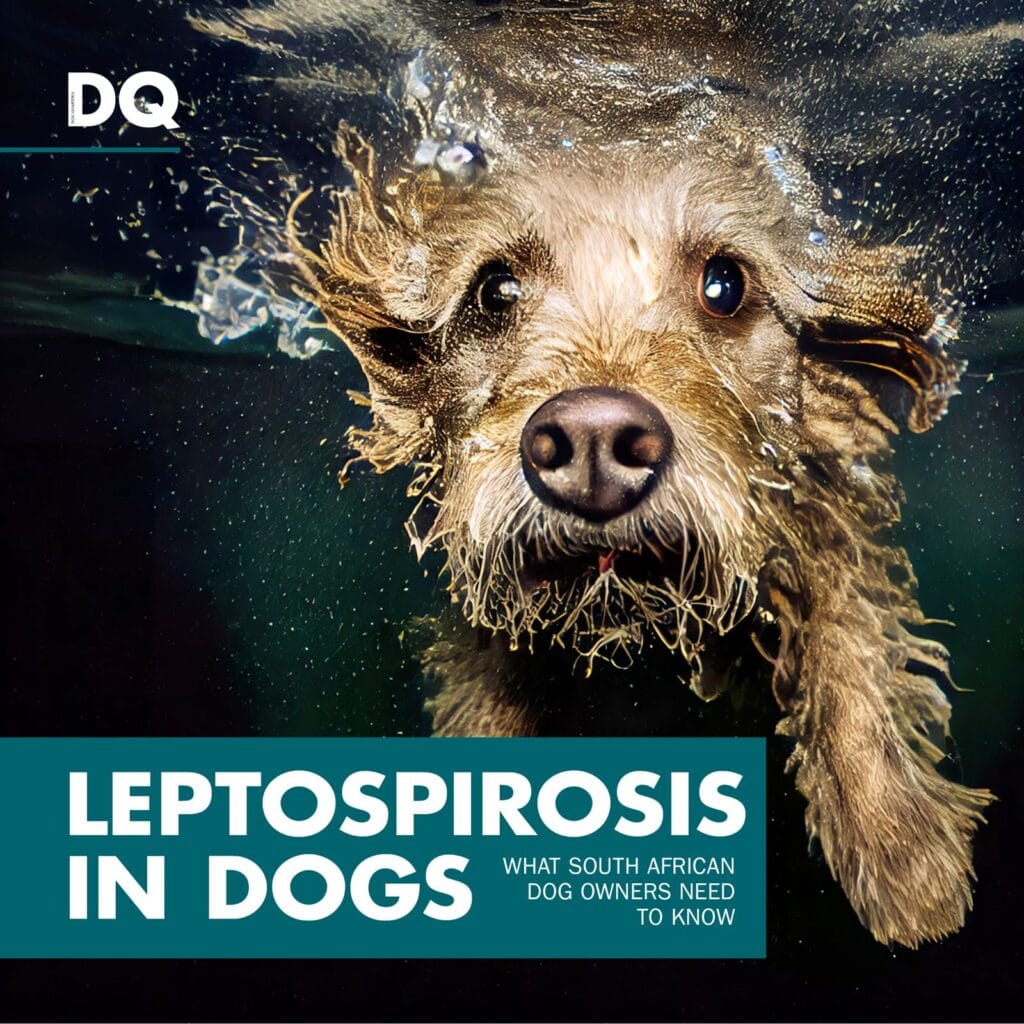
Leptospirosis is a serious bacterial infection that affects dogs, wildlife, and even humans. With South Africa’s warm climate and frequent rainfall in some regions, conditions are ideal for the spread of this disease. As a responsible dog owner, understanding leptospirosis, how it spreads, and how to prevent it can help protect your canine companion.
What is leptospirosis?
Leptospirosis is caused by bacteria of the Leptospira genus. These bacteria thrive in wet environments and are commonly found in water sources contaminated by the urine of infected animals, such as rodents, livestock, and wildlife. Dogs become infected when they drink, swim in, or walk through contaminated water or soil. The bacteria enter the body through mucous membranes (such as the eyes, nose, or mouth) or small cuts in the skin.
Symptoms
Leptospirosis can affect multiple organs, including the liver and kidneys, and symptoms may range from mild to severe. Watch for the following signs:
- Fever and lethargy
- Vomiting and diarrhoea
- Loss of appetite
- Increased thirst and urination (a sign of kidney involvement)
- Jaundice (yellowing of the skin and gums)
- Muscle pain and reluctance to move
- Difficulty breathing
In severe cases, leptospirosis can lead to kidney or liver failure, which can be fatal if left untreated.
Diagnosis
If your dog shows any of the above symptoms, especially after exposure to potentially contaminated water, consult your vet immediately. Diagnosis involves blood tests and urine analysis to detect the bacteria or measure antibody levels.
Treatment and prognosis
Leptospirosis is treated with antibiotics, usually doxycycline or penicillin-based medications. Dogs with severe infections may require hospitalisation, intravenous fluids, and supportive care. Early treatment increases the chances of recovery, but some dogs may suffer long-term kidney or liver damage.
Preventing leptospirosis in dogs
Prevention is key to keeping your dog safe from leptospirosis. Here’s how you can reduce the risk:
- Vaccination: The leptospirosis vaccine is available and recommended for dogs at risk, particularly those living in high-risk areas or those that frequently swim in lakes, rivers, or dams.
- Rodent control: Keep your home and garden free from rodents, as they are common carriers of leptospirosis.
- Avoid stagnant water: Prevent your dog from drinking or playing in stagnant or potentially contaminated water.
- Good hygiene practices: Wash your hands thoroughly after handling your dog, especially if they have been exposed to water or mud outdoors.
Can leptospirosis spread to humans?
Leptospirosis is a zoonotic disease, meaning it can spread from animals to humans. People can become infected through contact with contaminated water, soil, or infected animal urine. Symptoms in humans resemble those of a flu-like illness but can escalate to severe complications. If your dog is diagnosed with leptospirosis, follow strict hygiene measures and consult a doctor if you develop symptoms.
Final thoughts
Leptospirosis is a dangerous but preventable disease. South African dog owners should be aware of the risks, especially in areas with high rainfall and standing water. By vaccinating your dog, avoiding contaminated water, and maintaining good hygiene, you can significantly reduce the risk of infection and keep both your pet and your family safe.