Creative ways to keep dogs mentally stimulated when the weather, or life, keeps you indoors
Rain, cold, a recovery period after surgery, or simply a week with no time for long walks: every one of us faces stretches when normal outdoor exercise with our dogs is just not possible. A dog with energy to burn and nothing to do with it often turns to chewing, barking or pestering. The fix is not always more exercise. Mental work tires dogs as effectively as a walk, and sometimes more so. Fifteen to twenty minutes of concentrated problem-solving or scent work can leave many dogs ready to nap.
That is the principle behind enrichment: giving dogs the chance to use their senses, instincts and considerable brainpower in ways everyday life rarely demands. Wild canids spend much of the day searching for food, solving problems and investigating their surroundings.
A dog fed from a bowl in a quiet home misses all of that. Recreate even a fraction of it indoors and you get a calmer, more confident dog, fewer boredom behaviours, a sharper mind in old age, and a stronger bond along the way. Enrichment matters most precisely when exercise is limited, whether by weather, recovery or age. If your dog is on vet-prescribed rest, check which activities are safe before you start.
Food puzzles: make them work for it
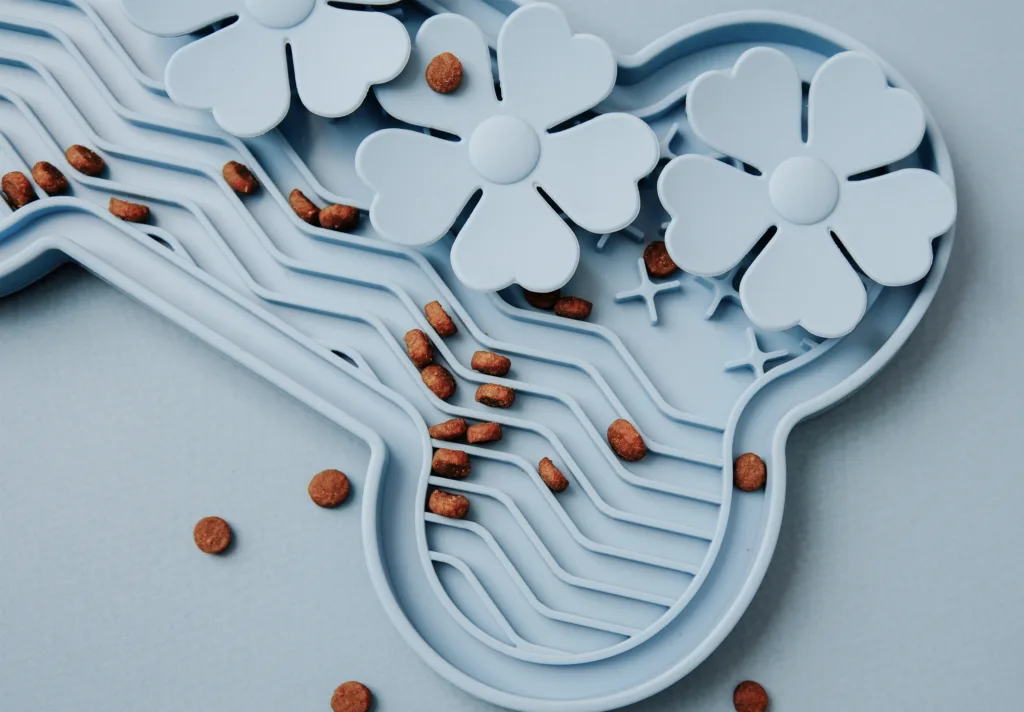
Turning a meal into a problem is the simplest place to begin. Commercial options run from beginner to expert: stuffable Kongs, snuffle mats, ridged slow-feeder bowls, and wobbler toys that dispense kibble as they tip. You do not need to buy anything, though. A muffin tin with treats in the cups and balls on top, a towel sprinkled with kibble and rolled up, a cardboard box to shred, or a clean plastic bottle with holes cut slightly larger than the kibble all work just as well.
Start easy so your dog succeeds, then build difficulty as they catch on to the game. Freezing a stuffed Kong or a tub of soaked food stretches the activity from minutes to the best part of an hour, and doubles as a cooling treat on hot days. Supervise anything with a choking or ingestion risk, including balls, cardboard, and plastic.
Scent work: their favourite superpower
Smell is a dog’s primary sense, and using it is deeply satisfying and genuinely tiring, with no physical strain at all. That makes scent games ideal for dogs of any age, including those with mobility limitations.
Begin with ‘find it’: let your dog watch you place a treat, then release them to fetch it, and gradually hide it in less obvious spots. From there, progress to scattering several treats around a room for a proper search, a ‘which hand’ guessing game, hiding a treat in one of several boxes, or dragging a treat across the floor to lay a trail to follow. Each step asks a little more of the nose.
Training and tricks: rainy days are made for this
With no outdoor distractions, a wet (or freezing cold) afternoon is ideal for short training sessions. Teach something new for fun, shake, spin or a nose touch to start, then roll over, bow or backing up, and eventually tidying toys into a box. Impulse-control work is especially tiring: waiting for permission before eating, ‘leave it’, and building up a solid stay. Keep sessions to five or ten minutes and repeat a few times throughout the day. Most dogs can learn a simple trick over a single rainy day.
Gentle movement indoors
Some dogs still need to move. Controlled options include hallway fetch with a soft toy, a calm game of tug with a reliable ‘drop it’, hide and seek where your dog searches for you, and a low obstacle course built from cushions, chairs and other items like broom handles. Stairs should only be used with physically sound dogs. Whatever you choose, lay down rugs or mats for traction, clear obstacles, and stop before your dog is exhausted. Slippery floors cause injuries, so don’t let movement indoors get out of hand.
Match the activity to the dog
Enrichment adapts to any dog. Puppies need very short sessions, easy wins and plenty of enforced naps. High-energy adults thrive on complex puzzles, advanced scent work and trick sequences. Seniors do well with gentle scent games and short sessions reviewing familiar commands, and yes, they can still learn new tricks! Dogs recovering from injury or living with mobility limits get the most from stationary scent work and lying-down puzzle feeders so they get all of the mental engagement, with none of the physical demand.
Keep it safe
Supervise anything that could be swallowed, anything made of cardboard or paper, and any new activity until you know how your dog handles it. Stuffed Kongs, durable puzzle feeders and appropriate chews can usually be left alone once your dog has proven they use them sensibly. Good traction and a hazard-free space prevent most injuries.
The real keys are variety, starting simple and keeping it fun. Rotate activities so they stay novel, and pay attention to what your individual dog enjoys: some love food puzzles and ignore scent games, others the reverse. If boredom-driven behaviours persist despite consistent enrichment, or you are unsure what is appropriate during recovery, a vet or qualified behaviourist can help you tailor a plan.
Five rainy-day starters
Muffin tin game
Treats in the cups with balls on top.
Towel roll
Scatter kibble on a towel and roll it up.
Find it
Hide a treat while your dog watches, then release.
Frozen Kong
Stuff with kibble and water or yoghurt, then freeze.
Box search
Hide a treat in one of several boxes and let them sniff it out.