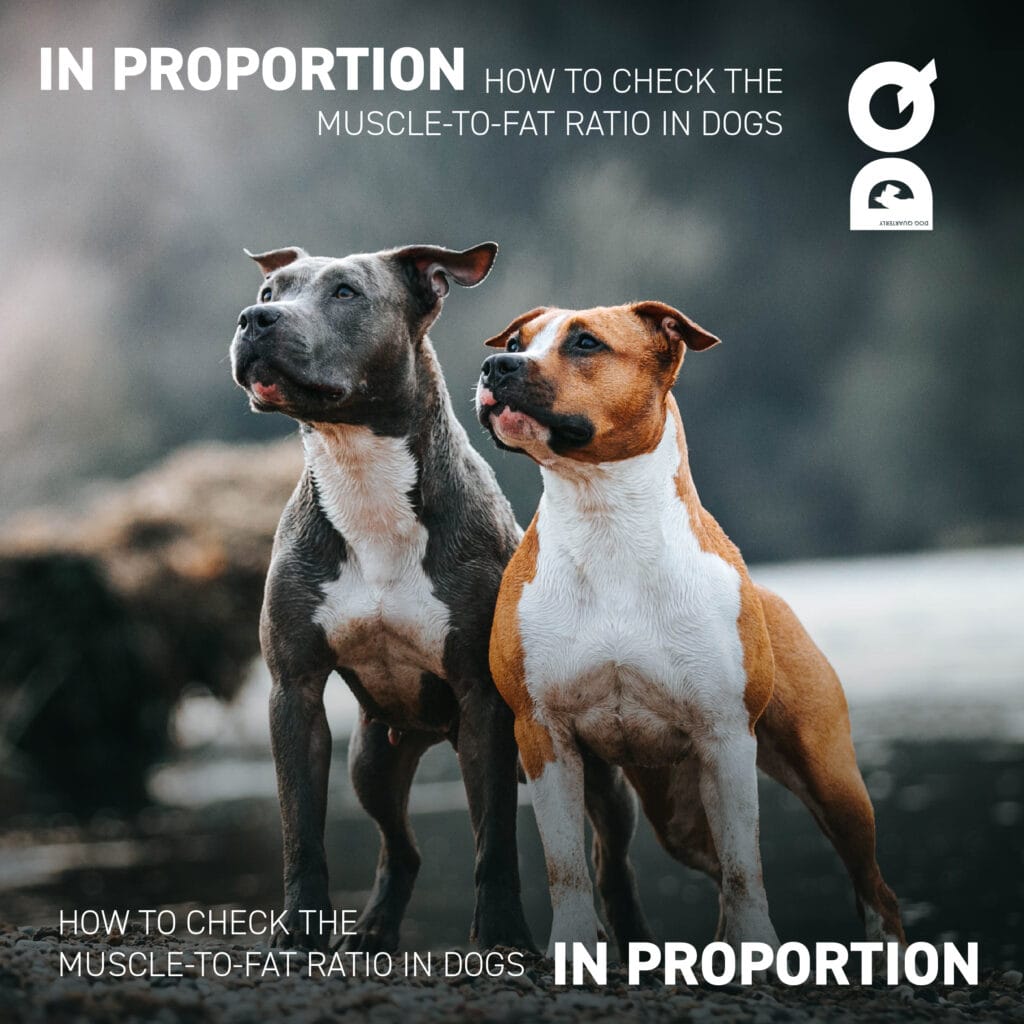
Maintaining a healthy muscle-to-fat ratio is essential for your dog’s overall health, fitness, and longevity. While there isn’t a precise formula for calculating this ratio at home, there are a few effective methods to assess whether your dog is in good condition or carrying too much fat. Here’s how to check for a healthy muscle-to-fat balance in your dog:
1. The ribs
Gently run your hands along your dog’s sides, particularly over their ribs. You should be able to feel their ribs without pressing too hard, but they shouldn’t be too prominent. A healthy muscle-to-fat ratio means you can feel the ribs with a thin layer of fat covering them, but the ribs shouldn’t be overly visible or too difficult to feel.
- Too thin: If you can see the ribs or feel sharp bones, your dog may have too little fat.
- Too heavy: If you can’t feel the ribs without pressing deeply, your dog may have too much fat.
2. Waistline
Stand over your dog and look down at their waist. A healthy dog will have a visible ‘tuck’ or narrowing behind the ribs before the hips. The waist should curve in slightly when viewed from above, and the abdomen should slope upward when viewed from the side.
- Good condition: There should be a clear waistline, with a smooth transition from ribs to hips.
- Too thin: If the waistline tucks in too sharply or the abdomen is excessively drawn up, your dog may have insufficient fat or muscle.
- Overweight: If there’s no visible waistline and the stomach appears to sag, your dog may be carrying too much fat.
3. Muscle tone
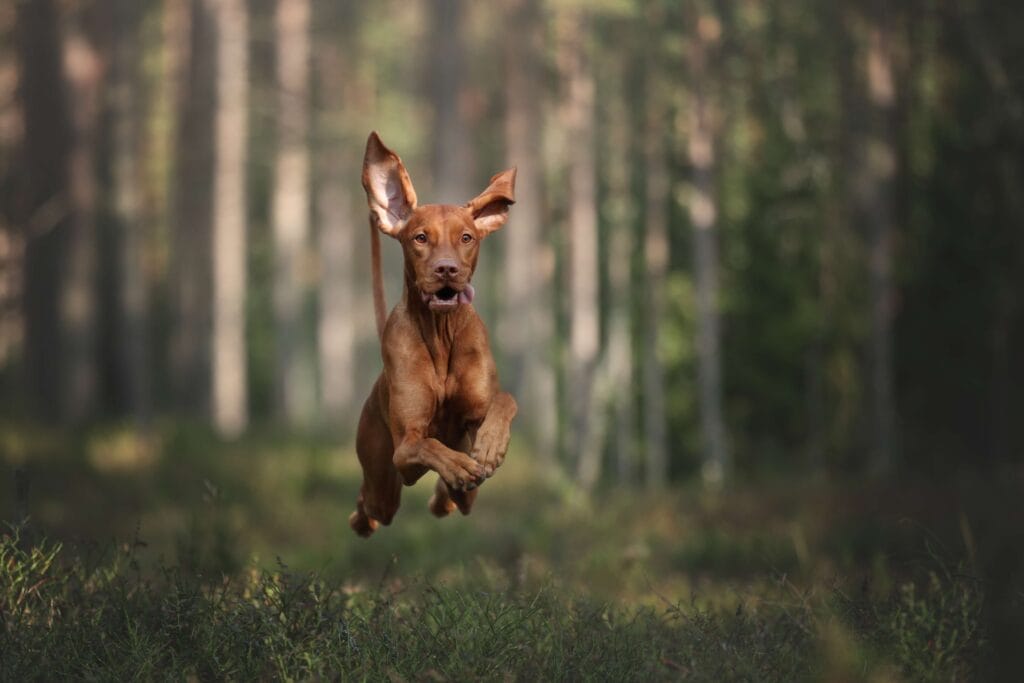
Check key areas for muscle development, particularly around the shoulders, thighs, and back. Muscular dogs will have firm, well-defined muscles in these areas, which you can feel when you pet them or watch them move.
- Good muscle tone: Well-toned muscles will feel firm and slightly raised beneath the skin. Watch for clear muscle definition in movement, especially in active or working dogs.
- Poor muscle tone: If these areas feel soft or saggy or lack definition, it may indicate that your dog is carrying excess fat or has low muscle mass.
4. Body Condition Scoring (BCS)
Veterinarians often use a Body Condition Scoring system to assess a dog’s fat and muscle ratio, usually on a scale from 1 to 9. A score of 4 to 5 is ideal, where the dog has a visible waist, ribs that are easily felt but not too prominent, and good muscle definition.
- Low score (1-3): This indicates that the dog is underweight, with too little fat and possibly muscle.
- High score (6-9): This indicates that the dog is overweight with excess fat and possibly poor muscle condition.
The BCS scale
1-3: Underweight
- 1 – Emaciated:
- Ribs, spine, and hip bones are easily visible and protrude sharply with no palpable fat.
- The waist and abdomen show a severe abdominal tuck with a very pronounced waist.
- Muscle mass may also be significantly reduced.
- 2 – Very Thin:
- Ribs and bones are easily seen and felt with minimal fat coverage.
- Very pronounced waist and abdominal tuck.
- Slight muscle loss.
- 3 – Thin:
- Ribs are visible and easily felt with little fat covering.
- The waist is clearly defined when viewed from above, and there’s a noticeable abdominal tuck.
- Muscle mass is slightly reduced.
4-5: Ideal
- 4 – Lean:
- Ribs are easily felt but not visible.
- The waist is visible when viewed from above, and the abdomen tucks up from the side.
- Muscle mass is well-developed.
- 5 – Ideal:
- Ribs can be felt with a slight fat covering, but they aren’t visible.
- Waist is evident when viewed from above, and there’s an abdominal tuck.
- Good muscle tone and mass.
6-9: Overweight
- 6 – Slightly Overweight:
- Ribs are hard to feel under a noticeable fat layer.
- The waist is less visible from above, and there’s little to no abdominal tuck.
- Slight fat deposits around the hips and base of the tail.
- 7 – Overweight:
- Ribs are difficult to feel due to a thick fat covering.
- When viewed from above, there is no clear waistline; the abdomen may appear rounded.
- Fat deposits are noticeable, especially at the base of the tail and along the chest.
- 8 – Obese:
- Ribs are very difficult to feel, with a heavy fat layer.
- No visible waistline and the abdomen may appear bulging or sagging.
- Significant fat deposits are present along the back, chest, and legs.
- 9 – Severely Obese:
- Ribs, spine, and hip bones are entirely hidden under thick layers of fat.
- There is no waistline or abdominal tuck; the abdomen is significantly distended.
- Extensive fat deposits over the entire body, particularly around the neck, back, and legs.
5. Consult a vet
While the above methods can help you get an idea of your dog’s muscle-to-fat ratio, your veterinarian can provide a more detailed assessment. They may use tools like body condition charts, palpation techniques, and even body fat analysers to give you an accurate evaluation of your dog’s physical health.
6. Maintaining a healthy ratio
- Diet: Ensure your dog eats a balanced diet for his age that is rich in quality nutrients.,
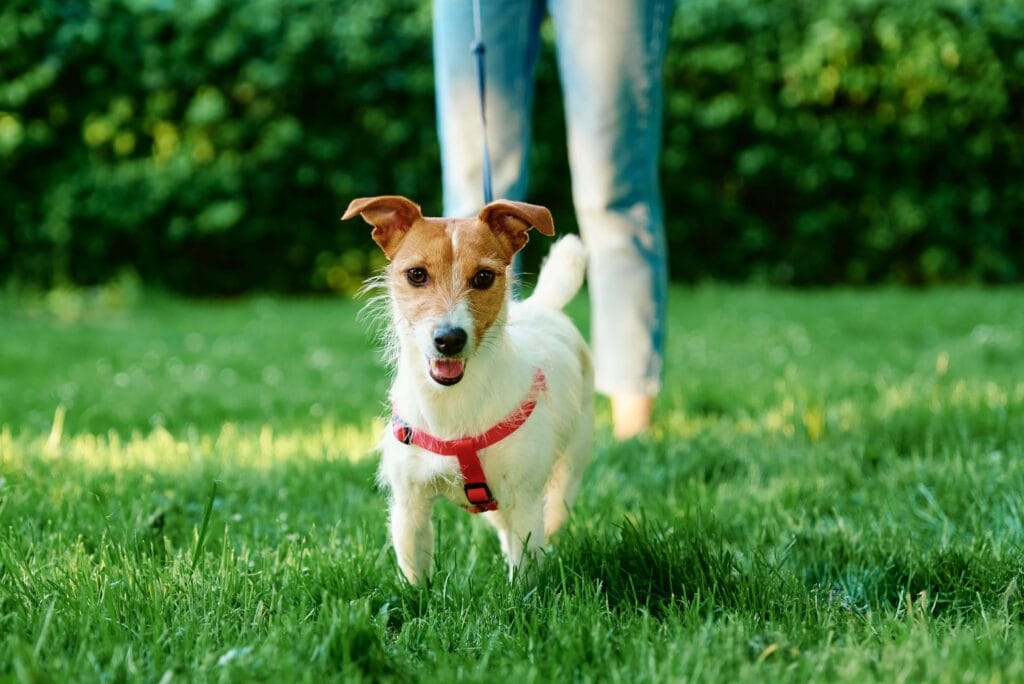
- Exercise: Regular physical activity is crucial for building and maintaining muscle mass. Walks, runs, and playtime all contribute to your dog’s muscle tone while helping prevent excess fat accumulation.
Regularly checking your dog’s muscle-to-fat ratio ensures they stay in good shape, giving them the best chance of a long, healthy life!