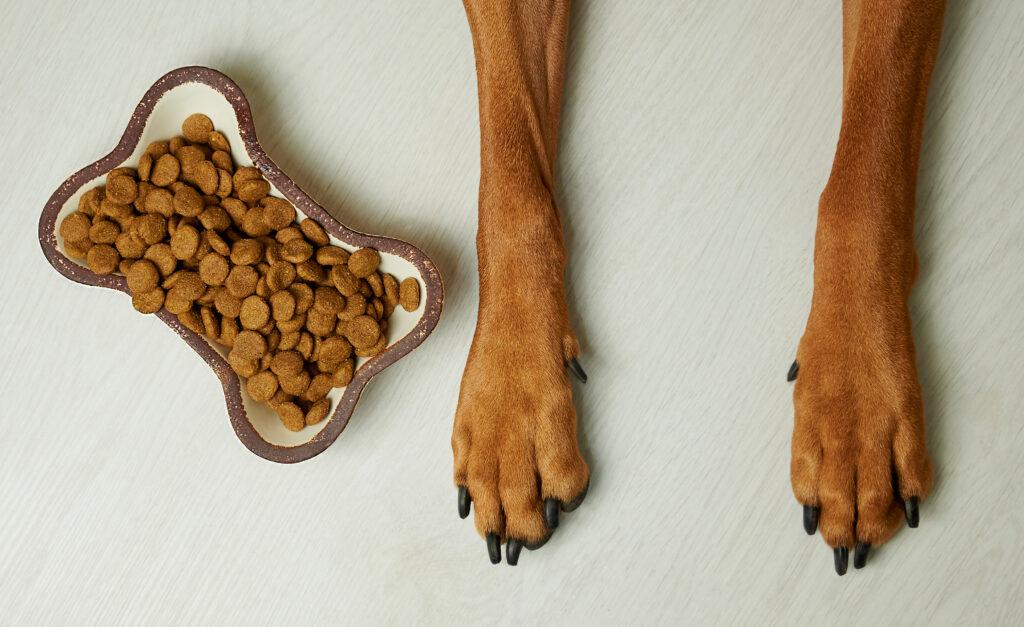
Ensuring that your dog stays properly hydrated is crucial for their overall health. If your dog doesn’t seem to be drinking enough water, there are several steps you can take to encourage better hydration. Here’s a guide to help increase your dog’s water intake and keep them hydrated:
1. Monitor water intake and hydration levels
First, assess whether your dog is truly dehydrated or just not drinking as much as you expect. On average, dogs should drink about 30ml of water per 500g of body weight each day. Factors like activity level, weather, and diet can affect their hydration needs.
To check if your dog is dehydrated, look for signs like:
– Dry gums (they should be moist to the touch)
– Lethargy or lack of energy
– Sunken eyes
– Loss of skin elasticity (gently lift the skin between their shoulder blades; if it doesn’t snap back quickly, they may be dehydrated).
If you notice these symptoms or your dog hasn’t been drinking for more than a day, it’s important to consult a vet.
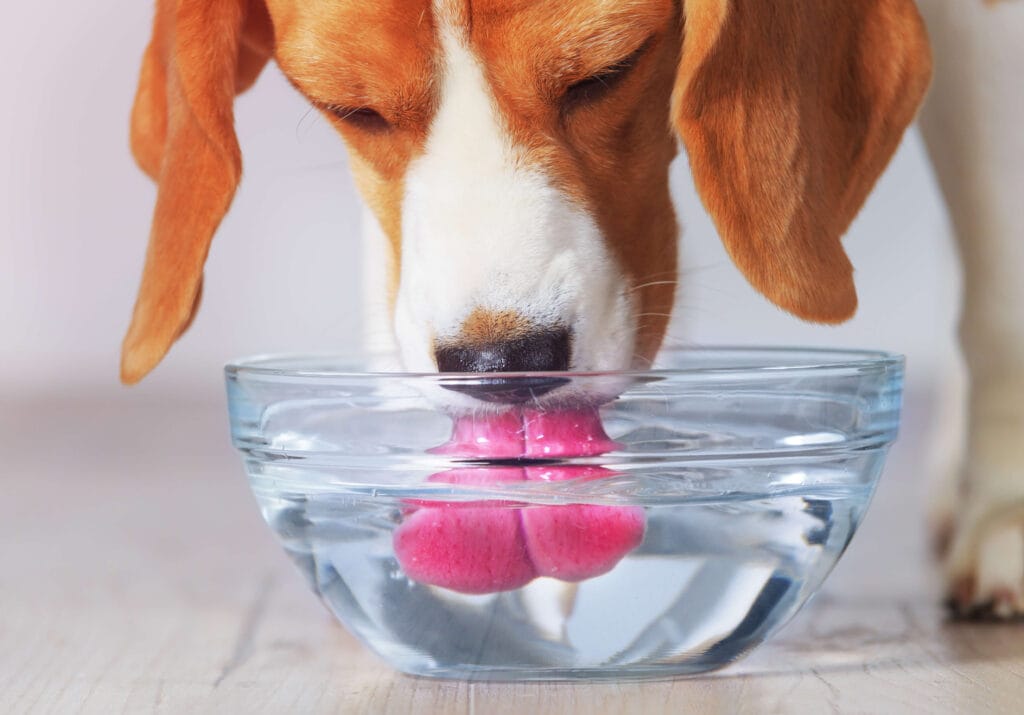
2. Make water more accessible and appealing
Sometimes, dogs simply aren’t drinking enough because of how or where water is presented. Here are ways to make water more appealing:
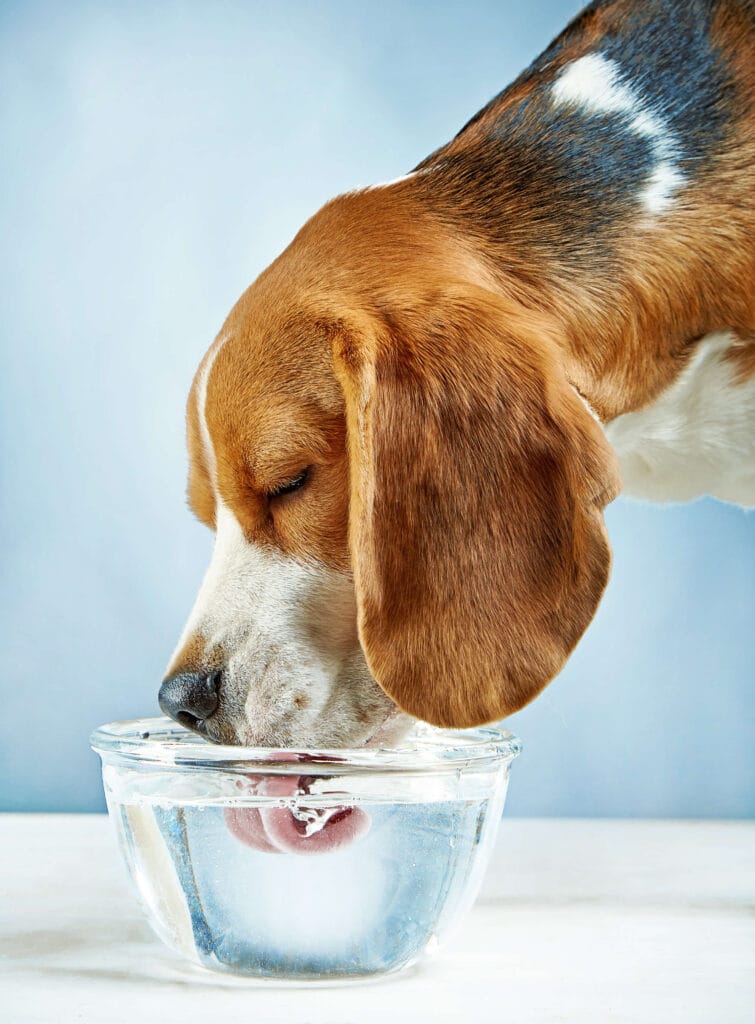
Keep water bowls clean: Dogs can be picky about the cleanliness of their water. Wash their water bowls daily to remove dirt, bacteria, and unpleasant odours.
– Provide multiple water sources: Place water bowls in various locations around the house, especially in areas where your dog spends most of their time. This can encourage more frequent drinking.
– Change the water frequently: Dogs are more likely to drink fresh, cool water. Refill their water bowl a few times a day to keep it enticing.
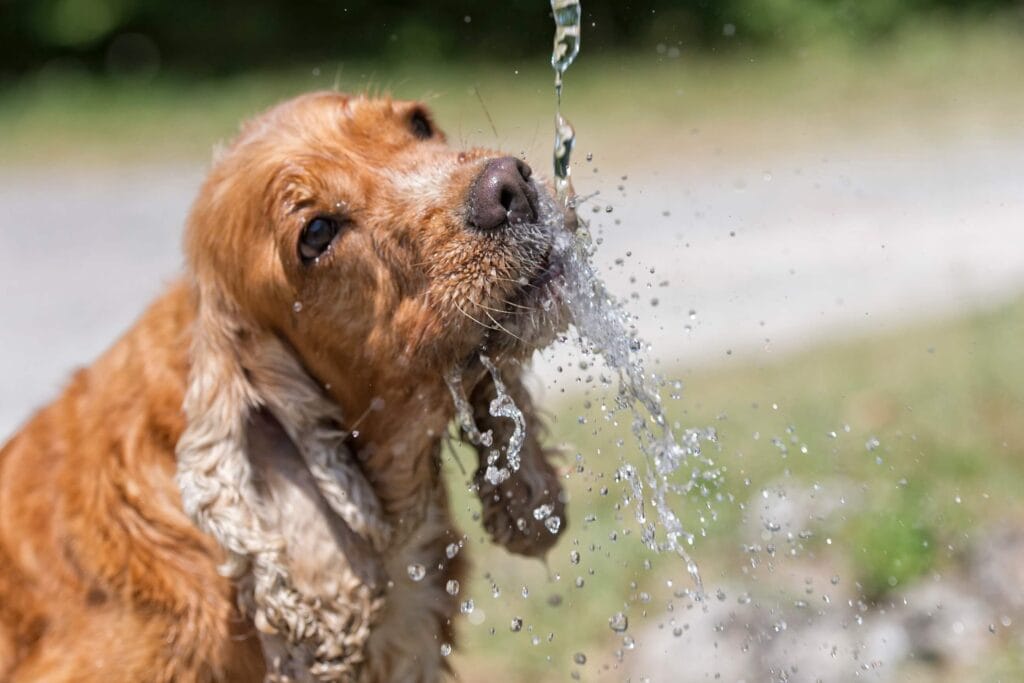
– Use a water fountain: Some dogs prefer running water, and pet water fountains can make drinking more exciting and appealing by keeping water fresh and oxygenated.
-
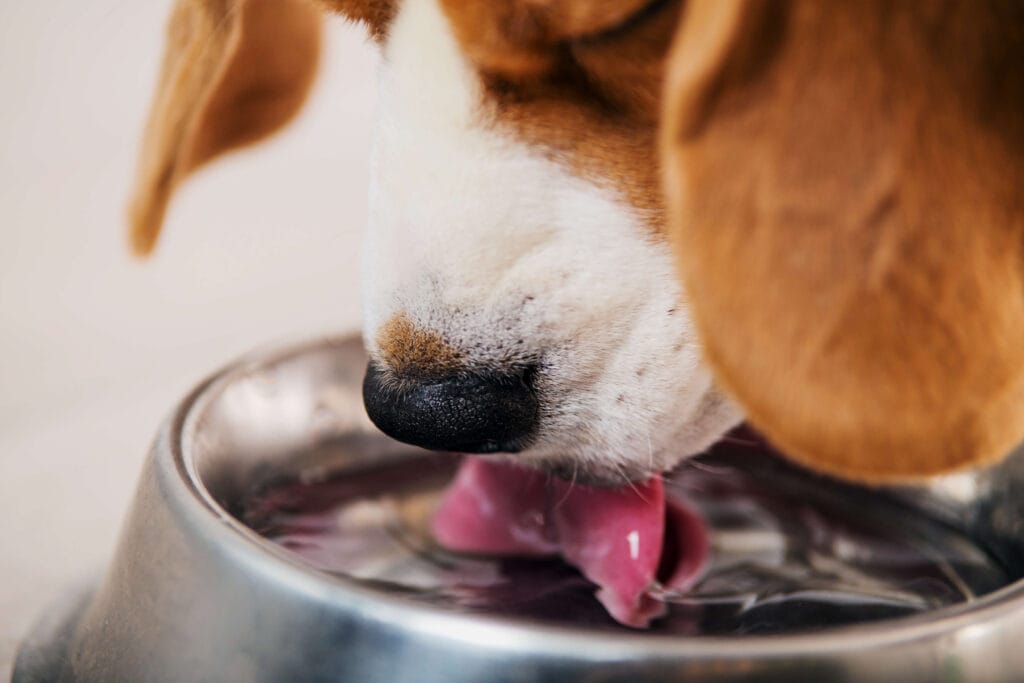
Add flavour to the water
If plain water isn’t motivating your dog, try enhancing the taste to make it more appealing:
– Low-sodium broth: Add a small amount of low-sodium chicken or beef broth to your dog’s water. This can encourage them to drink more, as the savoury flavour is enticing.
– Ice cubes: Some dogs enjoy playing with and licking ice cubes, especially on hot days. You can even make ice cubes from diluted broth or add small pieces of fruit like blueberries (if safe for your dog) for added appeal.
Electrolyte solutions: Veterinarian-approved electrolyte solutions can be added to dogs’ water in small amounts. Always consult your vet before giving your dog electrolyte solutions, especially if your dog has any medical conditions.
NOTE: If you add a flavour to your dog’s water or modify their water in any way, make sure that clean, fresh water is also available alongside the modified water.
4. Incorporate moisture into their food
If your dog isn’t drinking much, increasing the moisture content of their diet can be an effective way to boost their hydration.
– Switch to wet food: Canned dog food has a much higher water content compared to dry kibble, so feeding your dog wet food can naturally increase their water intake. You can mix wet food with their regular kibble if you don’t want to switch entirely.
– Add water to kibble: If your dog primarily eats dry food, try adding a small amount of warm water or broth to their kibble. Let it soak for a few minutes to soften the food and add extra moisture.
– Frozen treats: You can make homemade frozen dog treats using diluted broth, plain yoghurt, or dog-safe fruits. These treats can help hydrate your dog while giving them something fun to enjoy.
5. Encourage hydration during play
Some dogs drink more water after playtime or exercise, so incorporating hydration into fun activities can encourage drinking.
– Play near the water bowl: If your dog tends to drink after exercise, make sure their water bowl is easily accessible during and after playtime.
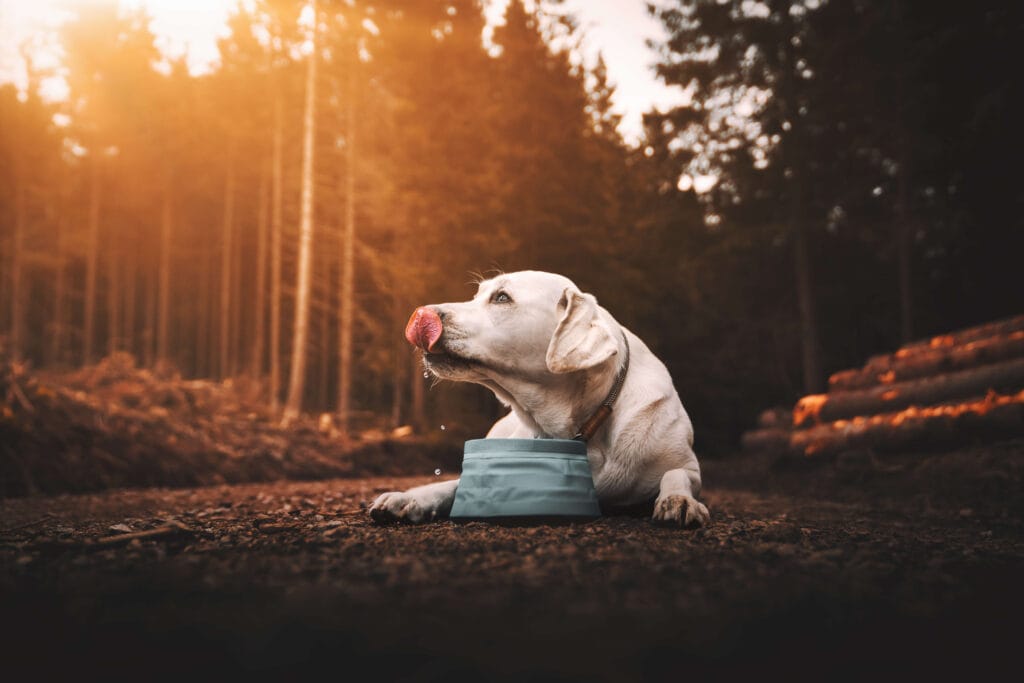
– Offer water breaks during walks: On long walks or hikes, carry a portable water bowl or a collapsible water bottle designed for dogs. Offer frequent water breaks, especially in warm weather.
6. Create a comfortable drinking environment
Some dogs may avoid drinking water if they are stressed, anxious, or uncomfortable in their surroundings. Here are ways to make their drinking experience more comfortable:
– Quiet location: Place their water bowl in a calm, quiet area of the house where they won’t be disturbed. Some dogs may feel anxious or distracted in busy, noisy areas.
– Temperature control: Ensure the water is at a cool, comfortable temperature, especially during hot weather.
7. Address any underlying health issues
If your dog consistently refuses to drink water, it could be a sign of an underlying health issue. Dehydration can result from medical conditions such as:
– Kidney disease: Dogs with kidney problems may not drink enough water, leading to dehydration.
– Urinary tract infections (UTIs): Some dogs may drink less if they are experiencing discomfort from a UTI.
– Dental problems: Mouth pain or tooth issues can make drinking uncomfortable, causing your dog to avoid water.
– Nausea: Dogs that feel nauseous may refuse food and water.
If you suspect any medical issues, it’s important to consult your vet for diagnosis and treatment. A vet can also recommend treatments like subcutaneous fluids if your dog is dehydrated and needs more immediate hydration.
Conclusion
If your dog isn’t drinking enough water, there are many strategies you can try to encourage better hydration. From adding flavour to their water and incorporating wet food into their diet to creating a more appealing drinking environment, these tips can help keep your dog hydrated and healthy. However, if your dog continues to avoid drinking or shows signs of dehydration, it’s essential to consult your vet to rule out any underlying health concerns.