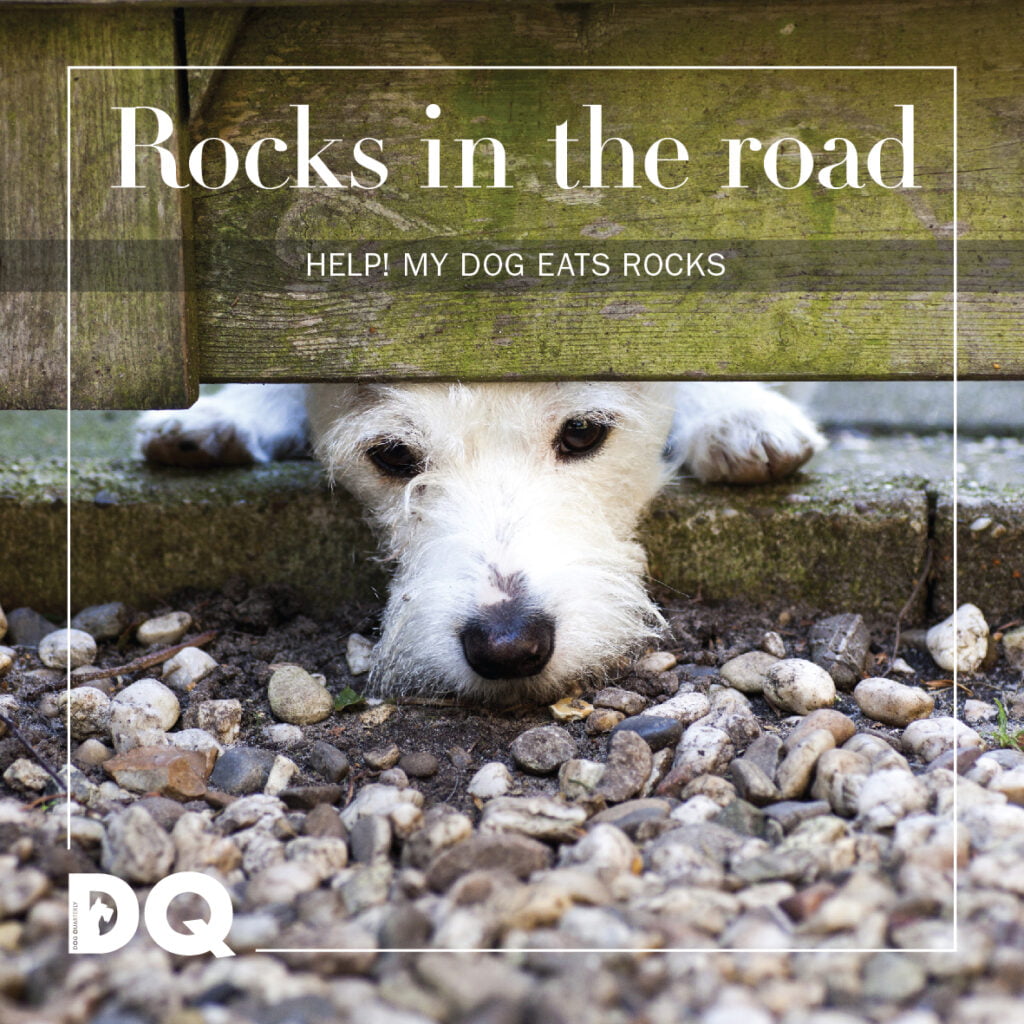
Dogs can do all kinds of strange behaviours, and while sometimes these oddities are just a personality quirk, many actually communicate serious health or welfare issues that need our attention. Eating rocks is one such issue that needs our urgent attention. Here we look at the causes of rock-eating, the dangers and what exactly we can do to manage the issue.
Why does my dog eat rocks?
Dogs eating rocks is a surprisingly common occurrence with several possible causes. These include:
- Boredom is a major reason for dogs eating rocks. Dogs without sufficient stimulation in their lives can resort to playing with and ultimately eating rocks as a form of entertainment.
- Pica (eating non-food items) due to a nutritional deficiency, certain medications (such as prednisolone or anti-seizure drugs) or liver disease can lead to dogs eating rocks.
- Teething in puppies can cause them to chew on rocks and even eat them in an attempt to ease the pain in their gums.
- General anxiety, separation anxiety and various compulsive disorders can cause dogs to eat abnormal objects like rocks. These disorders are usually accompanied by other symptoms as well, making them easier to identify.
- Spills on rocks from dog-enticing things like oil, food or blood.
What to do about the issue?
If you notice your dog eating rocks, the first step is to phone your vet and let them know. This is important due to the potentially serious medical conditions that could be causing the issue and the serious medical conditions that can result from your dog ingesting rocks.
If your vet feels the issue doesn’t require their management, you can try the following methods to prevent your dogs from chewing on rocks.
Ways to prevent dogs from chewing on rocks include:
- Adding a multivitamin to the diet to address any deficiencies.
- Giving your dog safe items to chew like dental sticks, frozen Kong treats and rawhide treats.
- Enriching your dog’s daily activities with exercise, training and mental stimulation.
- Providing interactive toys for his entertainment.
- Monitoring your dog outside when rocks are present and limiting access to rocks.
- Minimising stress in your dog’s life. NOTE: Anxiety in our pets is a serious issue and needs addressing with a vet and a qualified behaviourist.
- Employing training techniques for basic obedience, i.e. teaching the command ‘leave it’ and rewarding your dog when they leave the rock or other dangerous item and come to you.
- In extreme cases, a basket muzzle may be required when dogs are outside due to the potentially life-threatening consequences of rock eating.
When is it an emergency?
When a dog swallows a rock or injures himself chewing a rock, he must be taken straight to the vet. Chewing rocks can lead to broken teeth that require surgical removal, and swallowing rocks can lead to gastrointestinal blockage needing surgical removal from the gastrointestinal tract.
The sooner you can get your dog to the vet, the better in these instances. It is much easier for a vet to remove a rock from the stomach by using endoscopy or inducing vomiting than removing it from the GI tract, which will likely require surgery.
NOTE: Rocks can remain in the stomach for days or even months and cause limited symptoms like occasional vomiting and decreased appetite. This becomes a life-threatening emergency once the rock moves through and blocks the intestine. A rock blockage can lead to rupture of the intestine, which quickly leads to death.
Take home message
Rock eating in dogs is relatively common but still very dangerous. Monitor your dog or puppy for signs of this behaviour, and if you see it, chat to your vet to plan out the best course of action. In some cases, the situation will be as simple as more exercise and stimulation, and in others, nutritional deficiencies and more complex behavioural issues may need to be addressed.