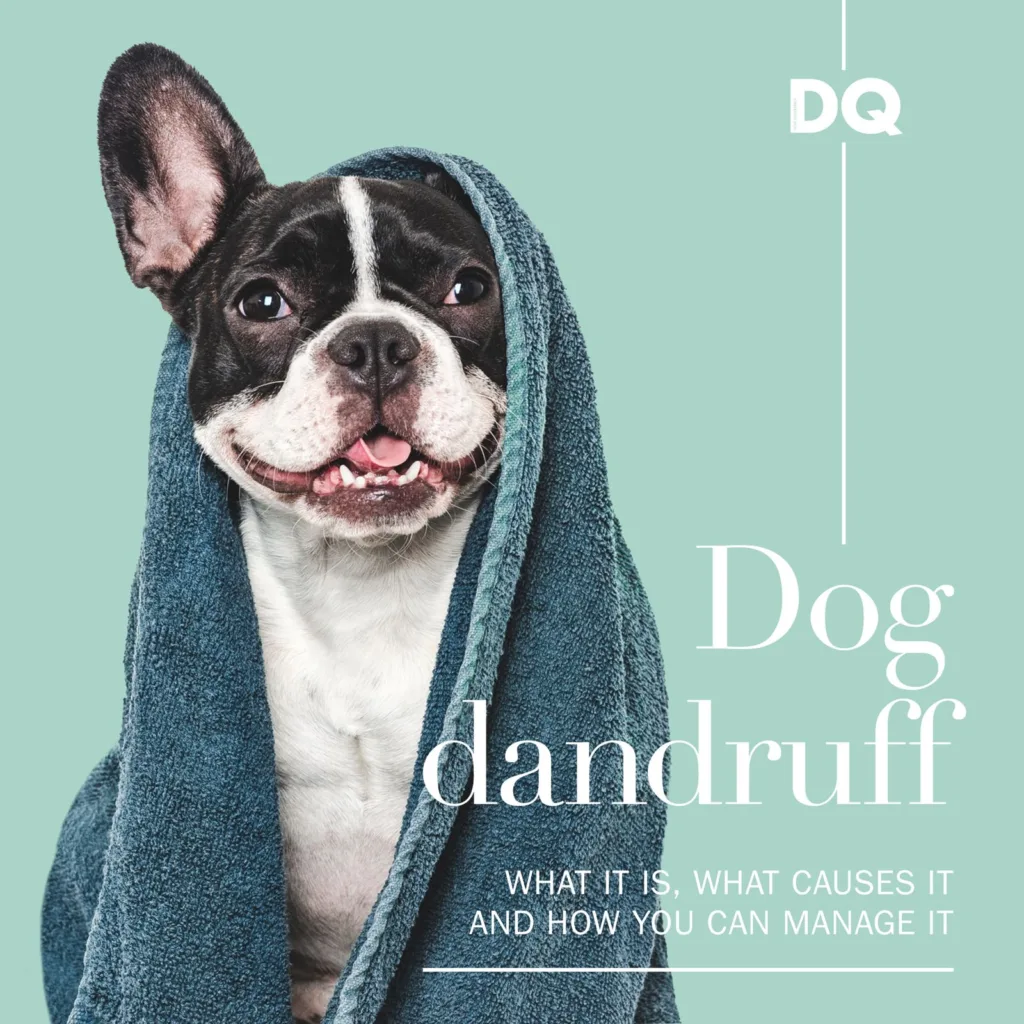
What it is, what causes it and how you can manage it
Just like humans, dogs can suffer from dandruff—a condition where dry, flaky skin sheds from their coat. While a few flakes here and there might not be a cause for concern, persistent dandruff could indicate an underlying issue that needs attention. In this article, we’ll explore what dog dandruff looks like, its possible causes, when to worry, and how to manage it effectively.
What does dog dandruff look like?
Dog dandruff appears as small, white flakes in your pet’s fur, often more noticeable on darker-coloured coats. It may be accompanied by dry or itchy skin, excessive shedding, and, in some cases, redness or irritation. If your dog is scratching frequently or seems uncomfortable, dandruff might be contributing to their discomfort.
Common causes
Dandruff in dogs can stem from several factors, including:
- Dry skin – Dry indoor air, cold weather, or inadequate hydration can lead to flaky skin.
- Poor diet – A lack of essential fatty acids and proper nutrition can affect skin health.
- Allergies – Environmental or food allergies can cause flaky, irritated skin.
- Parasites – Mites, fleas, and other pests can cause dandruff-like symptoms, especially in conditions like Cheyletiellosis (often called ‘walking dandruff’).
- Skin infections – Bacterial or fungal infections may result in excessive flaking and irritation.
- Underlying health conditions – Issues such as hypothyroidism or seborrhoea (a skin disorder causing excess oil production) can contribute to dandruff.
- Poor grooming habits – Infrequent brushing or bathing with harsh shampoos may dry out your dog’s skin.
When should you worry about dog dandruff?
Occasional dandruff is usually harmless, but there are times when it signals a more serious problem. Consult your vet if:
- Your dog is excessively scratching, licking, or biting at their skin.
- Sores, redness, or a bad odour accompany the dandruff.
- There are signs of hair loss or unusual patches on their coat.
- The flakes appear greasy or crusty, indicating a possible infection or medical condition.
- You notice other symptoms like lethargy, weight loss, or behavioural changes.
How to manage and treat dog dandruff
If your dog’s dandruff isn’t linked to an underlying illness, there are several ways to help keep their skin healthy:
- Improve their diet – Ensure your dog’s food contains high-quality proteins, omega-3 and omega-6 fatty acids, and essential vitamins.
- Regular grooming – Brush your dog’s coat frequently to remove dead skin and distribute natural oils.
- Proper hydration – Make sure your dog has access to clean water at all times.
- Use the right shampoo – Opt for moisturising, hypoallergenic, or medicated shampoos as recommended by your vet.
- Control parasites – Keep up with flea and mite prevention to avoid infestations.
- Increase humidity indoors – Running a humidifier in dry seasons can prevent skin dryness.
Final thoughts
Dog dandruff is a common issue but can usually be managed with the proper care and attention. By keeping an eye on your dog’s skin health, providing a balanced diet, and regularly grooming your dog, you can help prevent and treat dandruff effectively. However, if your dog’s condition worsens or doesn’t improve with at-home care, seeking veterinary advice is the best course of action. Your furry friend deserves to feel comfortable and itch-free!