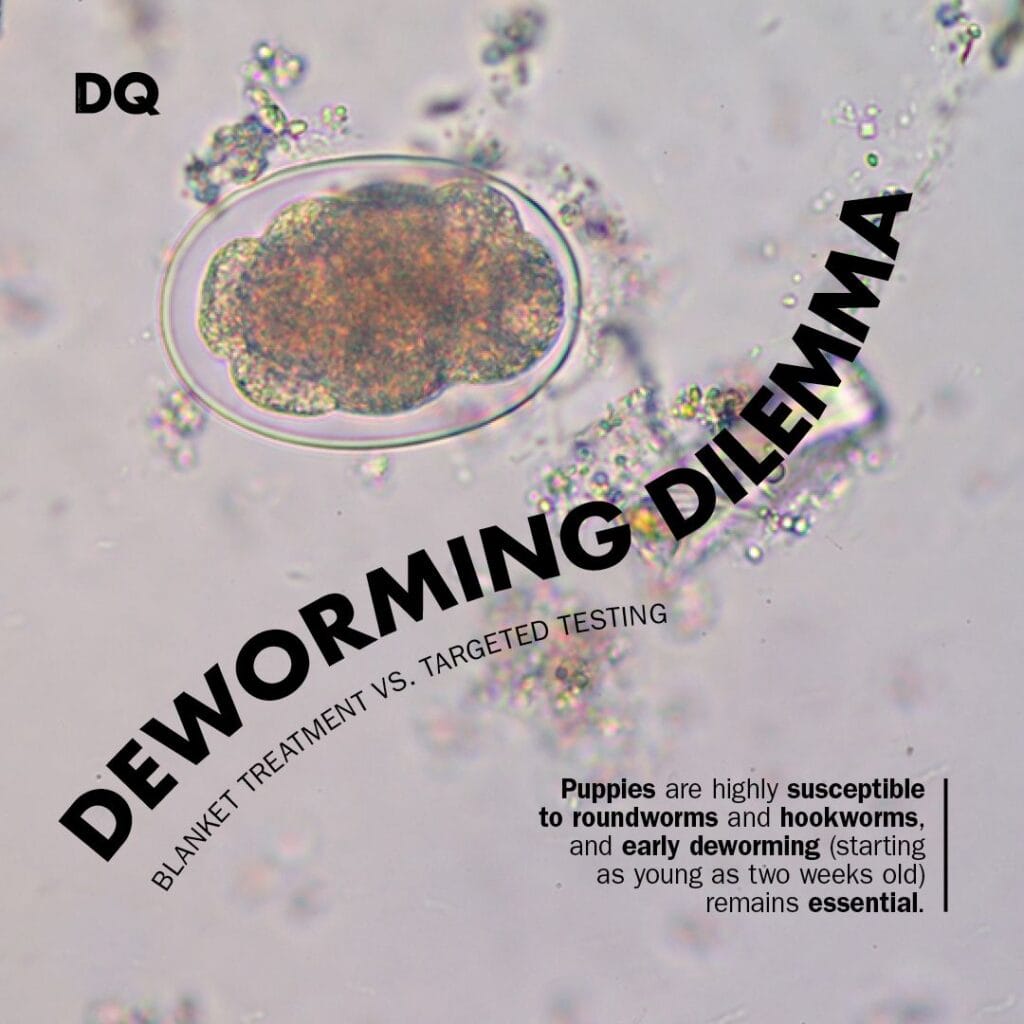
For decades, dog owners have followed a familiar routine: every few months, pop a deworming tablet into their pet’s mouth and rest easy knowing their dog is protected. But as science and veterinary practices evolve, there’s a growing debate in the dog world—should we continue with routine, blanket deworming, or is it time to test first and treat only when necessary?
Why worms are a concern
Worm infestations in dogs, caused by parasites like roundworms, hookworms, whipworms, and tapeworms, can lead to health issues ranging from mild digestive upsets to severe malnutrition, anaemia, and even organ damage. Puppies, seniors, and immunocompromised dogs are particularly vulnerable. Some worms can also pose risks to humans, especially young children, through zoonotic transmission (i.e. between animals and humans).
The case for blanket deworming
The traditional approach has been simple: deworm dogs every three to six months as a preventative measure. Blanket deworming is convenient, accessible, and often cost-effective. It’s also based on the understanding that dogs can pick up parasites from contaminated environments, raw meat, infected prey, and even from mother to pup.
By routinely deworming, pet owners can reduce the risk of worm build-up and potential health problems, especially in areas where parasitic loads are high. This strategy has been the go-to for busy households, shelters, and kennels where environmental exposure is constant.
The shift towards faecal egg counts
However, an increasing number of veterinarians and parasitologists are advocating for a more targeted approach. Faecal egg count (FEC) testing, which checks for parasite eggs in a stool sample, allows dog owners to identify if their dog is actually carrying a worm burden and if so, of which worms, before medicating.
What is a faecal egg count?
A faecal egg count quantifies the number of worm eggs in your pet’s faeces, which provides an indication of the number of adult female worms in your dog’s gut. Each species of worm egg is identified and, where appropriate, quantified to give an indication of the level of infestation.
Why test before treating?
- Antihelmintic resistance: Just as antibiotic resistance is a growing concern, the overuse of deworming medications can lead to resistant parasites.
- Gut health: Regular, unnecessary deworming can disrupt the gut microbiome, especially when broad-spectrum products are used.
- Individualised care: Not all dogs have the same lifestyle or exposure risk. A city apartment dog has a different parasite risk profile than a farm dog or one who frequents dog parks.
Faecal testing is particularly recommended for healthy adult dogs with lower exposure to high-risk environments and for owners who want to reduce unnecessary medication use.
When blanket deworming still makes sense
While the test-and-treat model is gaining traction, there are still scenarios where blanket deworming is advisable:
- Puppies: Young dogs are highly susceptible to roundworms and hookworms, and early deworming (starting as young as two weeks old) remains essential.
- High-risk environments: Dogs in shelters, breeding facilities, or those that roam freely in areas with known parasite problems often benefit from regular deworming schedules.
- Travel or relocation: Dogs moving to regions with endemic parasites like heartworm or certain tapeworms may require proactive treatment.
Striking a balance
Ultimately, the decision comes down to lifestyle, location, and your veterinarian’s guidance. A hybrid approach is often ideal:
- Regular faecal testing (e.g., once or twice a year) for healthy adult dogs.
- Deworming when a positive test occurs or if symptoms such as diarrhoea, weight loss, or scooting arise.
- Continuing blanket deworming for puppies and at-risk dogs.
The takeaway
While blanket deworming has long been the norm, there is growing awareness around targeted parasite control. Testing before treating helps promote responsible deworming, reduces the risk of resistance, and allows for tailored care. Before changing your dog’s routine, consult your veterinarian to determine what’s best for your dog’s unique situation.