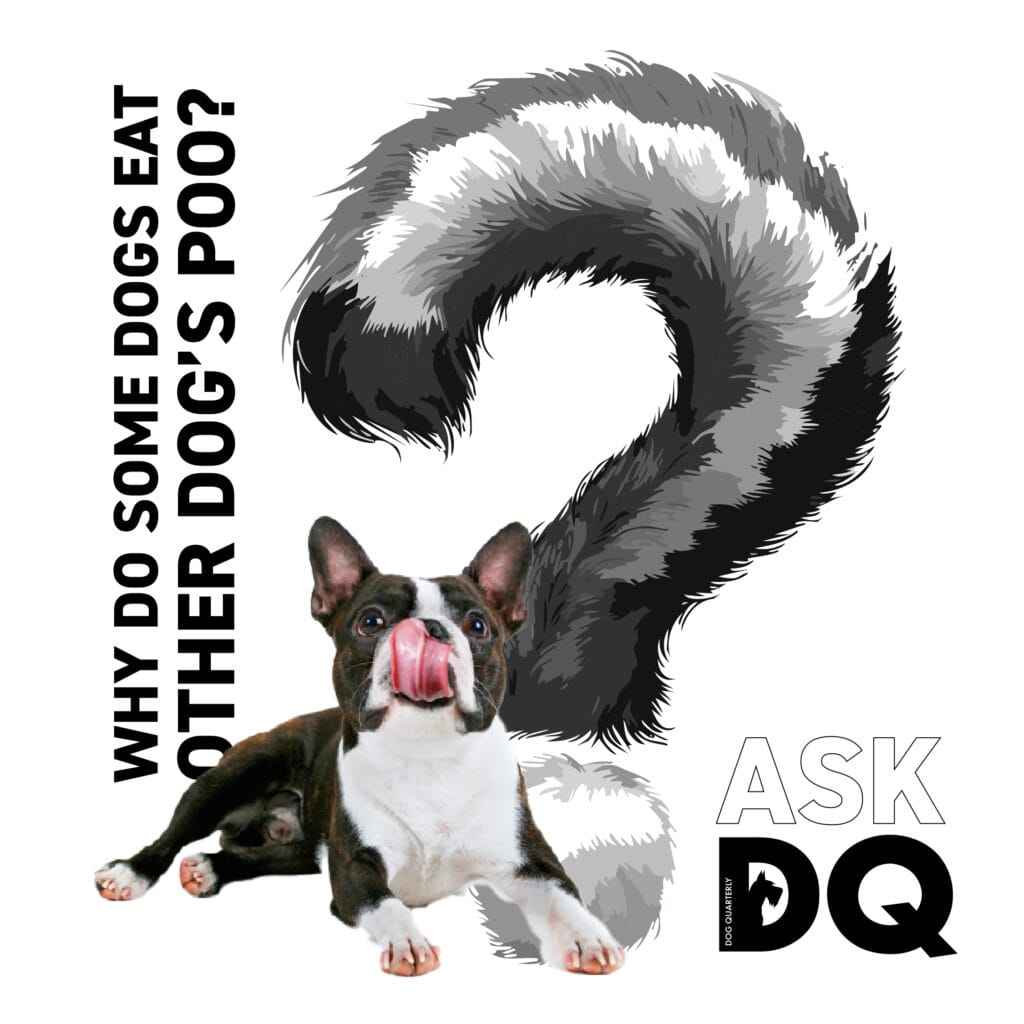
Q: Why do some dogs eat other dog’s poo?
A: Some dogs eat dog faeces, a behaviour known as coprophagia, for various reasons. Though it may seem odd or unpleasant to humans, it’s fairly common in dogs and can stem from several factors. Here are some of the most common reasons:
-
Nutritional deficiencies
One of the leading theories is that dogs may eat faeces when they’re lacking essential nutrients in their diet. This could be due to poor-quality food, insufficient digestive enzyme production, or malabsorption issues, making the dog seek out undigested nutrients in faeces.
-
Instinct
Consuming faeces might have been a way for wild dog ancestors to clean up their dens and prevent parasites or predators from being attracted to waste. For domesticated dogs, this instinct may still remain, particularly in puppies or nursing mothers who clean up after their young.
-
Attention-seeking
Sometimes, dogs engage in coprophagia to get attention from their owners, even if it’s negative. If an owner reacts dramatically to the behaviour, the dog may interpret this as a way to gain attention and repeat the behaviour.
-
Boredom or anxiety
Dogs left alone for long periods of time, understimulated or anxious, might engage in coprophagia to occupy themselves or relieve stress. In these cases, the behaviour can be similar to other destructive or self-soothing behaviours dogs may exhibit, like chewing or digging.
-
Imitation
Puppies often learn by watching other dogs. If they see an older dog eating faeces, they might mimic the behaviour out of curiosity. Some puppies outgrow this behaviour as they mature, but for others, it can persist.
-
Medical conditions
Certain medical conditions can trigger coprophagia. For instance, conditions like malabsorption syndrome, diabetes, Cushing’s disease, or thyroid problems can make a dog feel hungry all the time, causing it to seek out alternative sources of food like faeces.
-
Cleanliness
In some cases, dogs may eat poop to keep their environment clean. Dogs who spend a lot of time in confined areas, such as kennels or small yards, may try to ‘clean up’ after themselves to avoid soiling their space.
-
Taste or smell
Some dogs may find the taste or smell of faeces appealing, especially if it’s from a diet high in fats or if the faeces still contains undigested food particles. This could happen when dogs have eaten rich, fatty foods or when cat faeces (which can be more nutrient-rich) are available.
How to prevent coprophagia:
- Dietary changes: Ensure your dog is eating high-quality, well-balanced food to meet all their nutritional needs.
- Clean environment: Pick up faeces from the yard or environment as quickly as possible to reduce temptation.
- Provide stimulation: Make sure your dog is getting plenty of mental and physical exercise to combat boredom.
- Training: Teach a good ‘leave it’ or ‘come’ command to distract your dog when they show interest in faeces.
- Vet check-up: If your dog’s coprophagia is persistent, consult a vet to rule out medical conditions or dietary deficiencies.
While coprophagia is usually harmless, it can be an understandable source of concern for pet owners. Addressing the underlying cause often helps eliminate the behaviour.