Canine cognitive dysfunction is a behavioural syndrome affecting any breed of dog over the age of 10 years. It is very similar to dementia in humans both in terms of the physical symptoms and what is happening in the brain.
It is upsetting and worrying for owners to see their fit and healthy dog gradually becoming more disoriented. Still, there are things you can do to help your dog manage the condition and retain a good quality of life.
The pathology
In canine cognitive dysfunction, the connections between the billions of nerve cells that make up the brain are disrupted.
As dogs age, the brain atrophies, meaning that cells die. This particularly affects portions of the brain responsible for learning and memory (the cerebral cortex) and the areas responsible for coordination (the cerebellum).
Research has found that dogs with canine cognitive dysfunction, on top of this normal brain atrophy, have a build-up of an abnormal protein (beta-amyloid) in their brains. This protein build-up has been shown to result in decreased signalling between nerve cells in the brain. In dogs with canine cognitive dysfunction, the neurotransmitters in the brain that help send signals are also degraded by high levels of a compound called monoamine oxidase B (MAOB).
Prevalence
Studies have shown that around 30% of dogs aged 11 to 12 and 70% aged 15 to 16 show at least one sign associated with this progressive condition.
Sadly, studies have also highlighted that some dogs as young as seven can start to show these changes.
Dogs with epilepsy and dogs that lead a sedentary lifestyle have been shown to be at higher risk for developing canine cognitive dysfunction.
Symptoms
The acronym DISHAA has been used to describe the signs and symptoms of canine cognitive dysfunction:
- Disorientation – This can involve your dog getting lost on familiar walks, not recognizing people or surroundings or staring blankly at walls.
- Interactions – You may notice that your dog interacts differently with people and other animals. Some dogs can become much more needy, and others can become more isolated and even irritable.
- Sleep-wake cycle changes – Your dog may show abnormal sleep/wake cycles, such as sleeping more during the day but being awake and restless at night.
- House soiling, learning and memory – Some dogs can begin to urinate or defecate indoors when they were previously toilet trained. You may also find it hard to get your dog’s attention, or they may seem distracted and find learning new tasks difficult.
- Activity levels – There may be an overall decrease in activity levels or a decreased interest in activities they previously enjoyed. On the other hand, some dogs with increasing age can become restless and unsettled. These dogs may wander aimlessly or develop repetitive behaviours such as licking themselves, bedding or flooring, chewing, gazing or circling.
- Anxiety – Anxiety can increase, which might show as vocalizations (barking for no reason) or new fears or phobias, such as not wanting to go out for a walk or get in the car. Some dogs can also become more noise sensitive.
Diagnosis
If you suspect your dog is suffering from canine cognitive dysfunction, take them to your vet for a full examination and diagnosis so that any other medical conditions can be ruled out, such as liver problems, certain cancers or arthritic changes. Your vet may wish to do further investigations like blood tests, ultrasounds and X-Rays to rule out these other conditions.
Treatment
Unfortunately, there is no cure for canine cognitive dysfunction as it is a progressive, degenerative illness, and your dog will require care and management for the rest of his life.
However, several tools are at your disposal that may help improve your dog’s quality of life. These include:
- Medication – There are some prescription medications available that can be effective in helping with canine cognitive dysfunction. For example, selegiline is a prescription medication geared to dogs with canine cognitive dysfunction. This medication inhibits MAOB, allowing neurotransmitters to remain in the brain and signal as normal. Similarly, some dogs with canine cognitive dysfunction can benefit from anti-anxiety medications if anxiety-related symptoms are a major factor in the dog’s condition.
- Diet – There have been clinical studies performed which have revealed that an anti-oxidant-rich diet improves the learning ability of older dogs, resulting in a decrease in the symptoms of canine cognitive dysfunction. Ideally, a senior dog’s diet should include Omega 3s for cognitive health, vitamin E to help protect cell membranes from damage, vitamin C for maintaining oxidative protection, and L-Carnitine and fruits and vegetables rich in flavonoids and carotenoids. Various pet food companies on the market have tailored complete diets for dogs with brain ageing to help support normal brain function.
- Neutraceuticals – There is now a range of supplements that may help enhance or preserve brain function, so please ask your vet for more information.
- Making your home more accessible and safer for your senior dog. For instance, adding night lights can help your senior dog to navigate better in the dark. Potty pads near doors and in high traffic areas can also give your dog a place to go if they can’t wait until you wake up. Orthopaedic foam beds (with washable covers) can also make sleep more comfortable and thus more restful for older dogs.
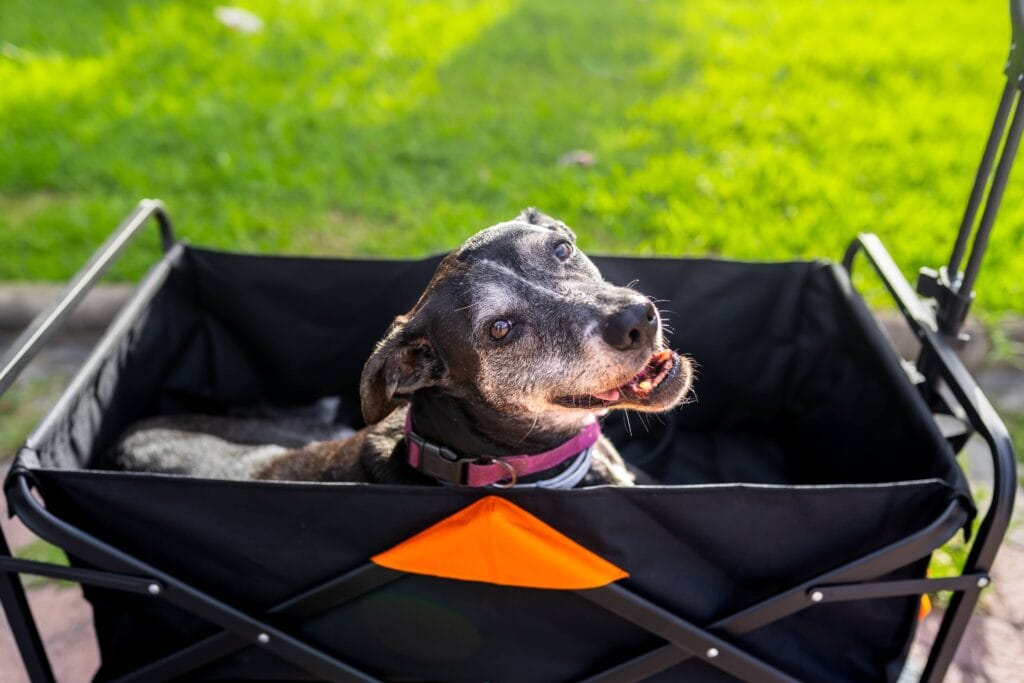
- Providing plenty of mental stimulation – Physical activity improves cognitive function and lowers the risk of impairment. This includes short walks in new places that can offer new sights and smells (or if your older dog finds it difficult to exercise, try and find a stroller or buggy so that they can still accompany you). Olfactory stimulation (using their nose) is also a powerful way of stimulating the brain, and this can be as simple as hiding treats in the home or garden or using food puzzles to get those brains working.
- Playing – Gentle play also provides mental stimulation, interaction and opportunities for bonding. You can also try to teach a few new tricks as this provides added stimulation – just make sure your dog is enjoying this and not finding it anxiety-provoking or fear-inducing.
- Reducing stress as much as possible – keep stress to a minimum to avoid causing further oxidative stress to the brain tissue.
- Complementary therapies – Massage, for example, will help your senior dog by addressing any tight, sore muscles, allowing him to relax fully. This can help to reduce anxiety and enhance a feeling of general well-being.
Life expectancy
Since canine cognitive dysfunction is a degenerative process that occurs in a dog’s senior years, life expectancy can be tricky to predict. If a dog is otherwise healthy, then dementia will eventually diminish your dog’s quality of life, but no specific timeframe has been established for this.
The best way to monitor your dog’s health and cognitive function is to work with your vet and keep track of your dog’s quality of life.
Vet check-ups
Your vet will evaluate your dog periodically to monitor their progression of symptoms. However, if you notice any behavioural changes in your dog, you must notify your vet immediately. In geriatric dogs, any change can be serious, so it’s important to flag this with your vet at the first sign of change. For stable patients, twice-yearly check-ups may suffice unless new problems arise.
Take-home message
Whilst none of us wants to see our dog deteriorate cognitively, canine cognitive dysfunction is not the end of the road. Adapt to your dog’s new needs, and you will still have many happy moments ahead with your best friend, allowing you both to enjoy his twilight years.