The Arctic explorers
With winter set in across South Africa, we felt it was time to look at the dogs of the colder climates, and what better breed to start with than the Samoyed? The Samoyed is a well-respected member of the working dog group, built to withstand tiring work in some of the coldest climates on earth. This breed has survived through relentless exposure to the cold to remain the smiling, devoted companions we know today.
History
This bond with humans was borne out of a tight bond formed initially with the breed’s original human companions, the Nenets, formerly known as the Samoyede people. These semi-nomadic groups came from the Taimyr Peninsula of Siberia, having emigrated from Asia over 1000 years ago.
The Nenets bred dogs for hard work in some of the earth’s coldest habitable places. They lived in tents in brutal conditions, often huddling with their dog packs for warmth during long Arctic nights.
In Nenets’ culture, the Samoyed was vital to the everyday life of its people, with tasks ranging from sledging heavy loads to hunting and serving as protective watchdogs. Since Nenets people relied on reindeers as a vital source of food, warmth and clothing, Samoyeds were trusted to hunt them. Capable of sledding a massive one and a half times their weight, there is little the breed didn’t do to help the Samoyedic people survive. In time, the Nenets’ culture shifted from hunting reindeer to herding them, which meant the Samoyed began to move and protect herds rather than hunting them as prey.
Despite challenges such as climate change and the search for natural resources, the nomadic traditions live on in smaller groups, with reindeer herding still integral to their way of life. With the help of the Samoyed, the Nenet move thousands of kilometres across frozen rivers in scarily low temperatures. In the Siberian town of Oymyakon, temperatures of -60 degrees Celsius are typical, and Samoyeds may be spotted sleeping with their tails cushioning their bare noses from the cold.
Today
Samoyeds have become a popular pet globally, particularly in the USA, England and Russia. The breed is loved for its family-friendly nature and is generally more commonly found than other Spitz-type dogs.
Did you know?
A Samoyed, called Antarctic Buck, is thought to have been the first to be brought to England.
Appearance
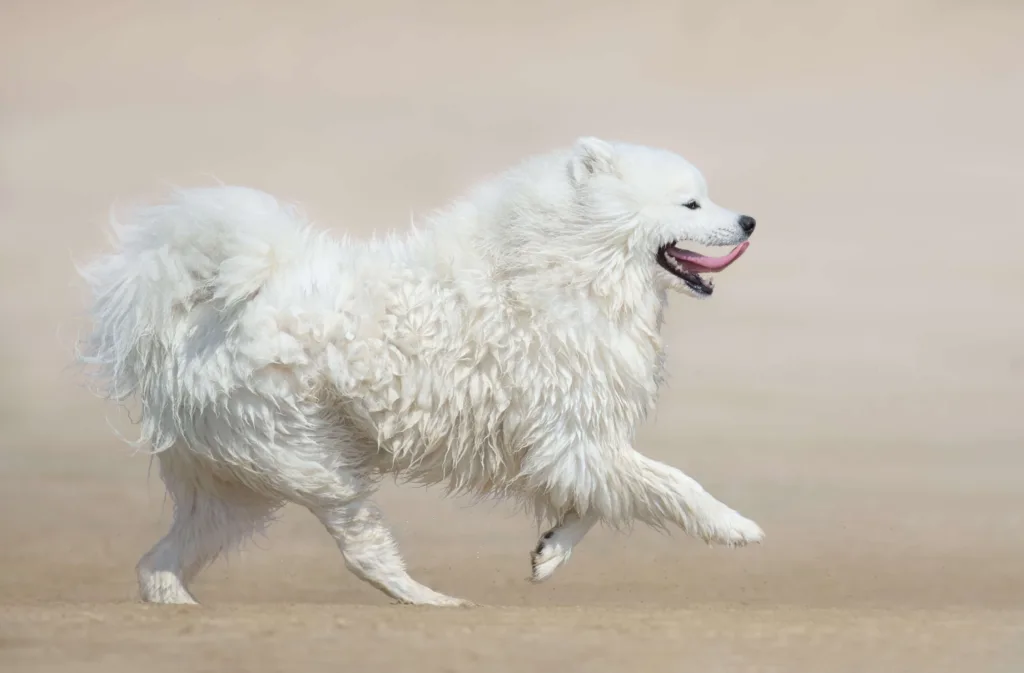
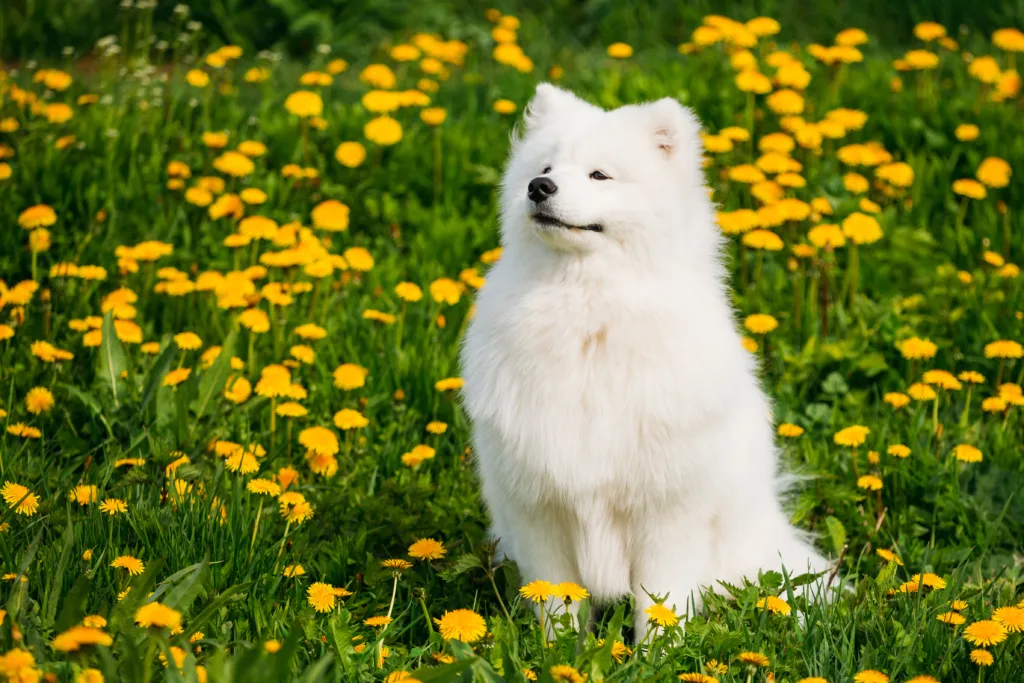
The beautiful appearance of the Samoyed has been critical to aiding its traditional roles. A double-layered coat protects the Samoyed from the icy elements whilst cooling it in the harsh sun. Their bright white coat has been bleached by the Arctic suns and snows.
Did you know?
Like many other royals, Queen Alexandra (22 January 1901 to 6 May 1910) was a dog enthusiast. She was particularly fond of the Samoyed breed, and as such, many present-day English and American Samoyeds are descended from her kennels. The first breed standard for the Samoyed in England was adopted in 1909. The Samoyed Club of America has been the official AKC Parent Club of the Samoyed since 1923.
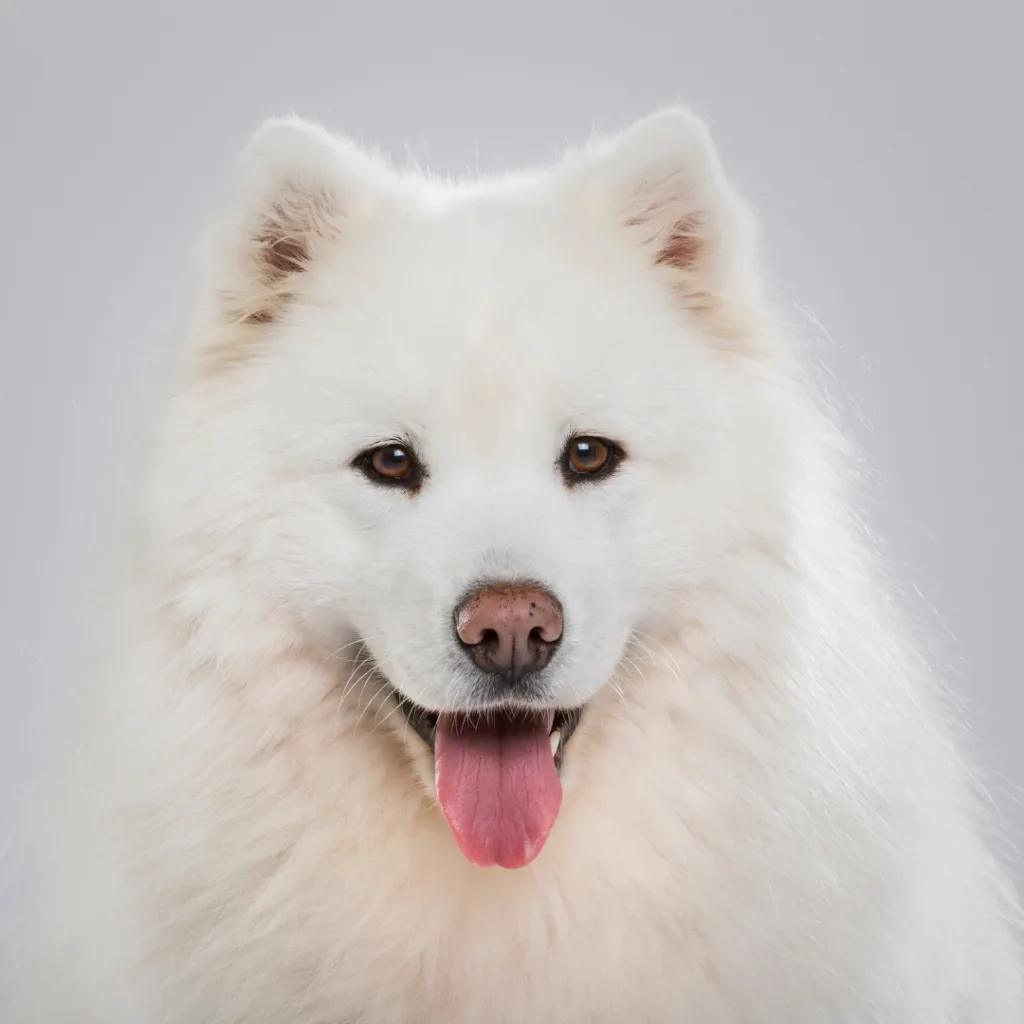
The head is powerful and wedge-shaped, housing a broad, flat skull and a medium-length muzzle. It is supported by a strong, arched neck and set on muscular, sloping shoulders. The muzzle is of medium length and width, tapering gently towards the nose.
Their black gums and lips stand out against their white fur. Known as the ‘smiling dogs’, the Samoyed’s enduring smile has a practical function born from evolution: the mouth’s upturned corners keep them from drooling, preventing icicles from forming. The nose is usually black but may be brown or flesh-coloured. The gorgeously dark almond-shaped eyes of the Samoyed are unmistakable: medium to dark brown, they are surrounded by black eye rims and set slanted and well apart. They convey an intelligent and alert expression. The ears are well coated in the beautiful Samoyed hair. They are triangular with slightly rounded tips. Set well apart, they are thick and stand tall above the head in adults.
The back is medium in length, broad in width and very muscular, making the Samoyed hugely strong and athletic. A deep chest houses well-sprung ribs with plenty of room to cushion the heart and lungs. The hindquarters are very muscular with well-angled stifles. When viewed from behind, the legs are straight and parallel. The feet are flat, long, slightly spread and well feathered by the coat. The soles are also well cushioned with hair.
The beautiful, coated tail is long and carried over the back and to the side when alert.
The ideal heights for Samoyeds measure 51-56cm at the shoulder for males and 45-51cm for females.
Did you know?
The Samoyed is one of fourteen breeds identified as ancient through DNA analysis of the canine genome. As such, they can give us a good idea about what some of the earliest dogs that existed looked like.
Health
Despite being a generally healthy breed, the Samoyed is prone to certain health conditions throughout his life. The most common conditions for Samoyeds to develop include obesity, hip dysplasia and gastric dilation.
Obesity can be a significant risk for Samoyeds; it can cause or worsen joint problems, metabolic and digestive disorders, back pain and heart disease. Keeping the Samoyed at a healthy weight is one of the best ways to prolong their lifespan.
Hip dysplasia is an inherited disease that causes the joints to develop improperly and leads to arthritis. As Samoyeds mature, the joint stiffness secondary to this condition may become noticeable. They may be lame or struggle to get up from lying down. This condition requires prompt management.
Gastric dilation or volvulus, also known as bloat, occurs in dogs with deep chests, such as Samoyeds. When a dog bloats, the stomach twists on itself and fills with gas. The twisting cuts off the blood supply to the stomach and sometimes the spleen, and dogs can die very quickly. Symptoms include retching, restlessness, an enlarged abdomen and laying a prayer position with front feet down and rear end up. If you notice any of these signs, you should seek emergency assistance.
Caring for a Samoyed
Caring for a Samoyed requires considerable effort, particularly regarding grooming and training. The long coat should be groomed two to three times per week since it sheds heavily. In some seasons, it may be necessary to brush daily!
When it comes to training, it is best to start early. Samoyeds are very clever, which can pose a challenge. Their tendency to become bored and their need for stimulation mean training sessions are more effective when they are short, fun and positive. Due to their need for stimulation, Samoyeds tend not to do well when left alone for extended periods and require plenty of attention.
Samoyeds are also very active dogs and need lots of exercise. It is important to determine whether you can meet these dogs’ exercise requirements, as obesity significantly shortens their lifespans and boredom can lead to destruction at home.
In terms of family relationships, Samoyeds are hugely affectionate. They love to be a family member and can be great with children. They tend to be gentle with youngsters and active and enthusiastic with older children. They are not inclined to be either shy or aggressive, and their gentle nature is a massive part of their wonderful personalities.
Having said all of this, one of the most apparent problems for Samoyeds here in South Africa is the temperatures. Many argue that these kinds of dogs should simply not be kept here, while others feel that, provided that measures are taken to keep these dogs cool, the breed can still thrive in this climate.
Did you know?
A Samoyed is believed to be the first non-native creature to set foot (or paw) on the South Pole. This is due to a Samoyed serving as the lead dog on Ronald Amundsen’s expedition in 1911.
Take-home message
These dogs are intelligent, loyal and people-oriented and can bring us great joy. For centuries, they have proven to have a bond with humans, almost like no other breed, providing critical companionship, strength and love, whatever the situation. These special dogs deserve special owners who can give them all the love they need!