Q: At what age should you start to socialise your dog?
A: The optimal age for socialising a dog with other dogs begins during the critical period of socialisation, which is typically between three and 14 weeks of age. During this time, puppies are more receptive to new experiences, and positive interactions can have a lasting impact on their behaviour. However, it’s important to note that socialisation should be an ongoing process throughout a dog’s life and that dogs must have had their required vaccines to socialise safely.
Here are some general guidelines for socialising dogs with other dogs at different stages of their lives:
-
Puppyhood (3-14 weeks):
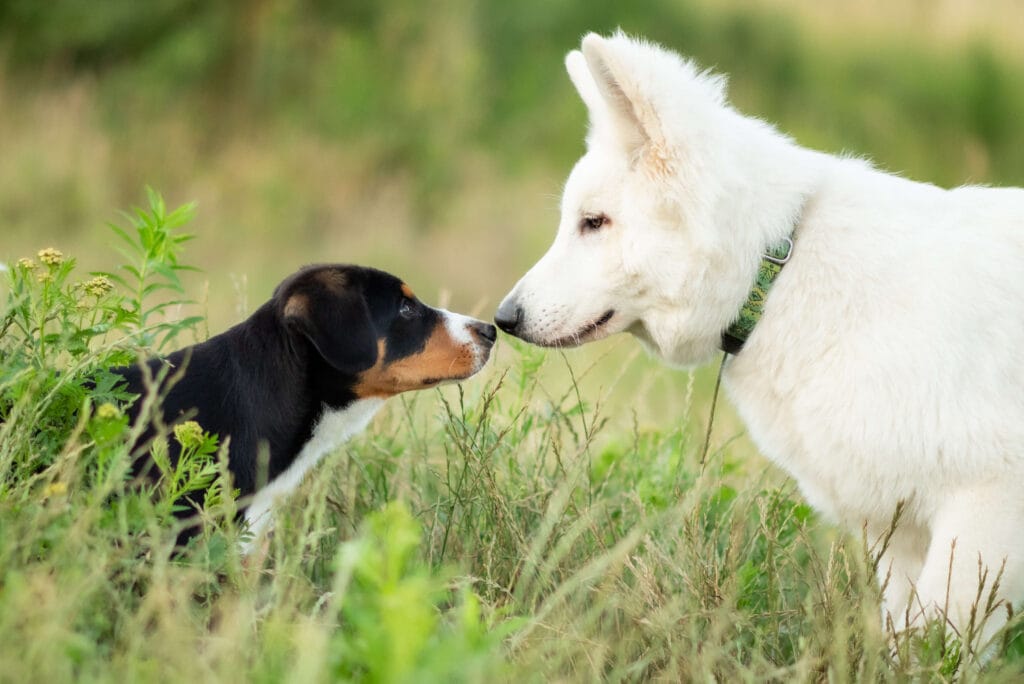
This is a crucial period for socialisation. Puppies can start meeting and interacting with other dogs in a safe and controlled environment during this time. Puppy socialisation classes, where puppies of similar ages play together under supervision, can be beneficial.
-
Adolescence (3-6 months):
As puppies enter adolescence, they may go through a period of increased independence and curiosity. Continue socialising them with other dogs, but be aware of any behavioural changes. Positive experiences during this stage can help shape a well-adjusted adult dog.
-
Adulthood (6 months and older):
Socialisation should continue throughout a dog’s life. Adult dogs can still benefit from positive interactions with other dogs, but it’s important to be mindful of their individual temperament and behaviour. Some adult dogs may need more gradual introductions or may not enjoy the company of other dogs as much as they did when they were younger.
Tips for dog socialisation:
-
Positive experiences:
Ensure that early interactions with other dogs are positive and supervised. Use treats and praise to reinforce good behaviour.
-
Gradual introductions:
Introduce dogs to new dogs one at a time in a controlled environment. Allow them to sniff and observe each other before allowing closer interaction. Ideally, you don’t want to do these interactions on either dog’s home territory; it is best to choose somewhere neutral to begin with.
-
Watch for signs of discomfort:
Pay close attention to your dog’s body language. If your dog shows signs of fear, anxiety, or discomfort, give them space and consider consulting with a professional trainer for your next socialisation attempt.
-
Varied environments:
Expose your dog to various environments, people, and dogs to promote adaptability.
-
Positive reinforcement:
Use positive reinforcement techniques to reward calm and appropriate behaviour during interactions with other dogs.
Remember that every dog is an individual, and their comfort levels with other dogs may vary. Some dogs are naturally more social, while others may be more reserved. Always prioritise your dog’s well-being, and if you have concerns about their behaviour or socialisation, consult a professional dog trainer or behaviourist for guidance.