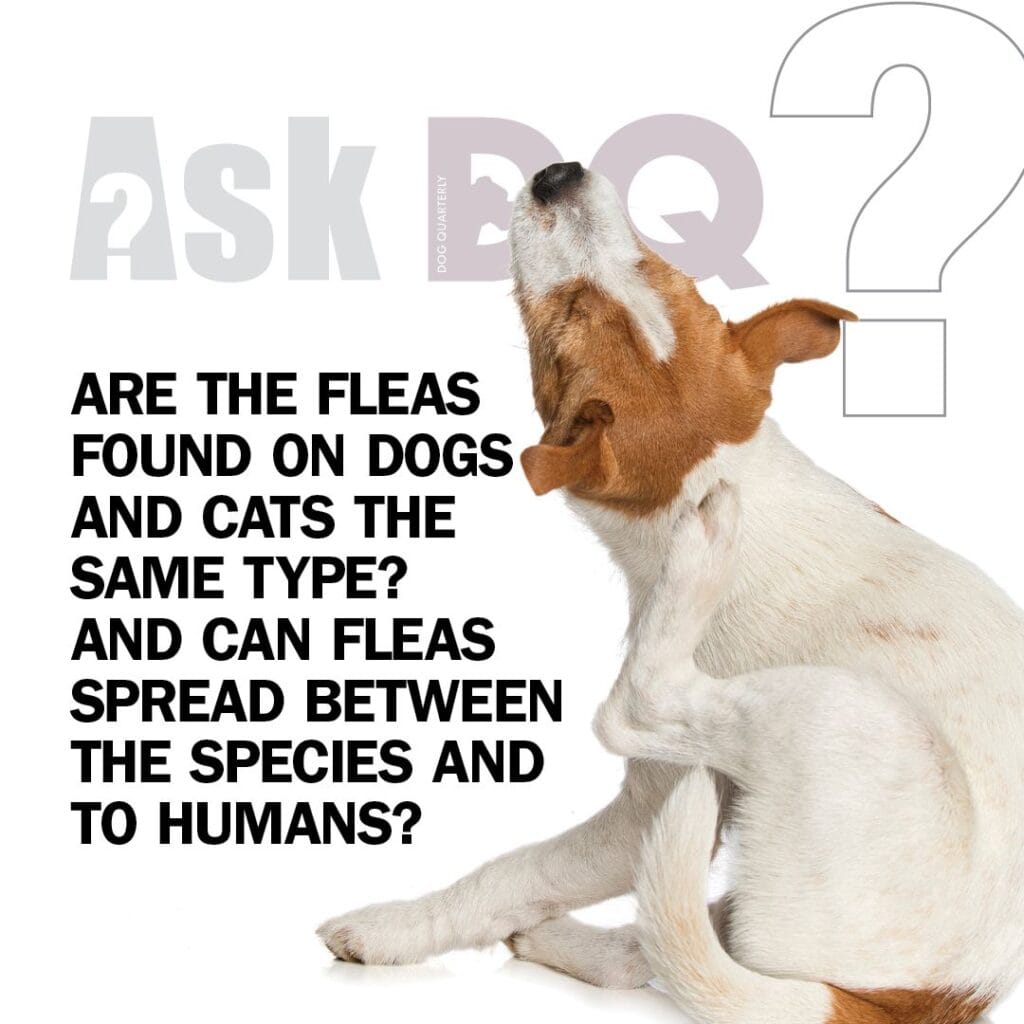
Q: Are the fleas found on dogs and cats the same type? And can fleas spread between the species and to humans?
A: Fleas found on dogs and cats can be similar but not always identical, and they can spread between pets and occasionally to humans. The most common flea species found on both dogs and cats is the cat flea (Ctenocephalides felis). Despite its name, this flea can infest dogs, cats, and even wild animals. It is highly adaptable and the primary culprit in most flea infestations. Dogs can also be infested by the dog flea (Ctenocephalides canis), but this species is less common. In general, Ctenocephalides felis is responsible for the majority of flea problems in both cats and dogs.
Did you know?
Fleas are wingless, parasitic insects that feed on blood. They can jump 20cm high and 30cm across, so they can easily spread between animals.
Unfortunately, fleas can jump between cats and dogs if they share the same environment. Fleas are opportunistic and will infest any suitable host in close proximity. If one pet in your household has fleas, all pets are likely at risk.
In terms of spread to humans, fleas prefer animal hosts, but they can bite humans, especially if the infestation is severe or if pets aren’t available. Both cat and dog fleas are known to bite humans, causing itchy red bumps, particularly on the legs and ankles.
Fleas are not only irritating but can also transmit diseases like tapeworms and, in rare cases, bacterial infections such as cat scratch fever (caused by Bartonella bacteria). Some dogs also develop an allergy to flea saliva, leading to flea allergy dermatitis (FAD), which can cause intense irritation. For humans, flea bites are usually more of a nuisance than a health threat, though allergic reactions or secondary infections from scratching can occur.
If you suspect your dog or cat has fleas, you should take the following steps to treat them:
- Treat all pets: Use vet-approved flea preventatives for every pet in your household. Even if only one pet shows signs of fleas, all animals should be treated.
- Clean the house: Vacuum carpets, wash bedding, and treat furniture with flea sprays or powders. Fleas lay eggs in the environment, not just on pets, so thorough cleaning is crucial. It is advised that treating the environment for fleas is performed for three months after a confirmed infestation.
- Check outdoor areas: Keep your yard flea-free by mowing the lawn, removing debris, and using pet-safe outdoor flea treatments.
- Inspect regularly: Check your pets for signs of fleas, such as scratching, redness, or flea dirt (tiny black specks in their fur). Early detection helps you to intervene early and prevent the flea lifecycle from taking hold.