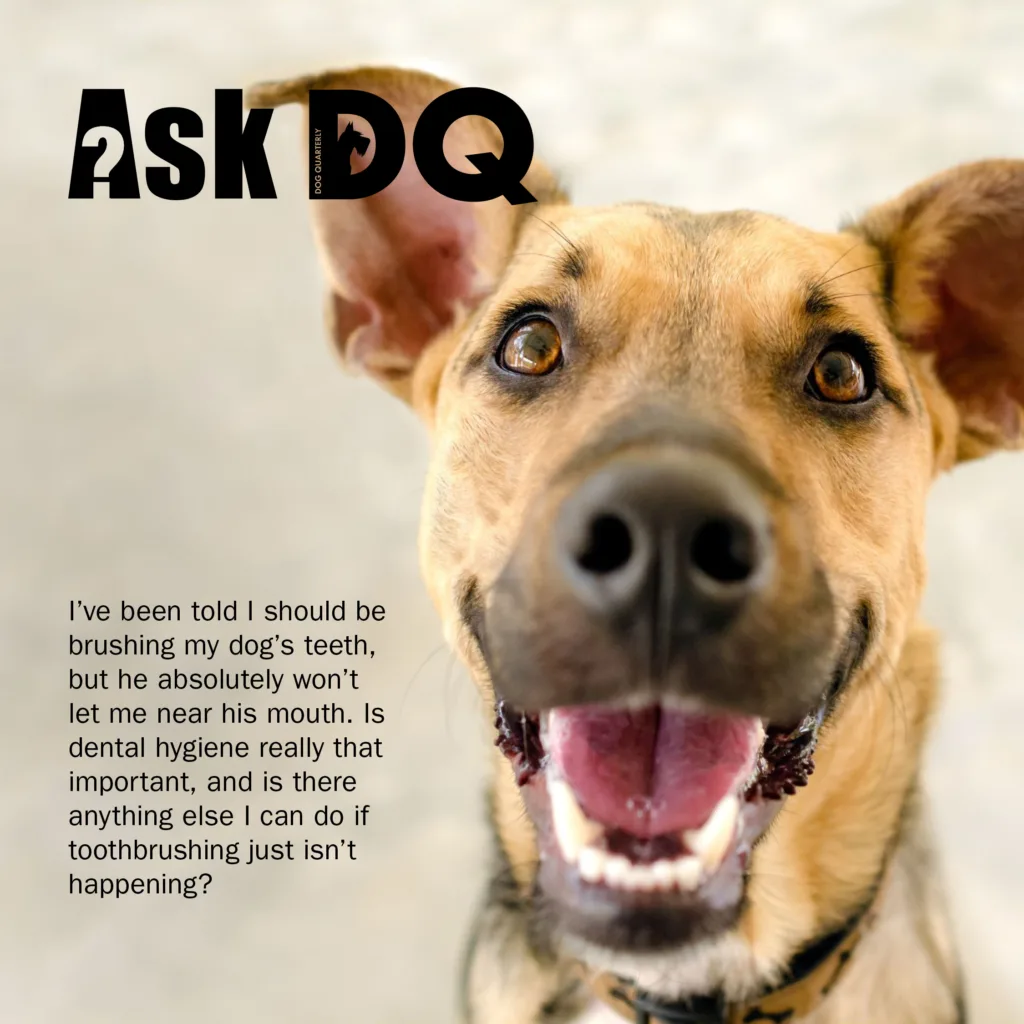
ASKDQ: I’ve been told I should be brushing my dog’s teeth, but he absolutely won’t let me near his mouth. Is dental hygiene really that important, and is there anything else I can do if toothbrushing just isn’t happening?
A: Hand on heart: yes, dental hygiene really is that important, and it’s one of the most consistently underestimated aspects of dog care. Dental disease is extraordinarily prevalent in dogs – studies suggest the majority of dogs over three years old have some degree of periodontal disease – and the consequences go beyond bad breath. Chronic dental infection has been linked to heart, kidney, and liver problems, because bacteria from the mouth can enter the bloodstream, so this is genuinely worth persisting with.
That said, we hear you – many dogs find having their mouths handled deeply uncomfortable, particularly if it wasn’t introduced in puppyhood. The good news is that toothbrushing, while the gold standard, isn’t the only tool in the box. Enzymatic toothpastes (always dog-specific – never use human toothpaste) can do some work even with minimal brushing contact. Dental chews that carry the VOHC (Veterinary Oral Health Council) seal of approval have good evidence behind them. Dental diets and water additives also have their place, though with variable effectiveness.
For the brushing itself, it’s worth going back to absolute basics – starting with just touching the outside of the lips, progressing to gently lifting the lip, and only introducing a brush (or a finger brush) much later, once he’s relaxed at each stage. It takes patience, but most dogs can get there.
Do chat to your vet at your next check-up about his dental health, specifically as many practices offer dental assessments and can advise whether a professional scale and polish under anaesthetic might be a good reset before you work on the home care routine.